
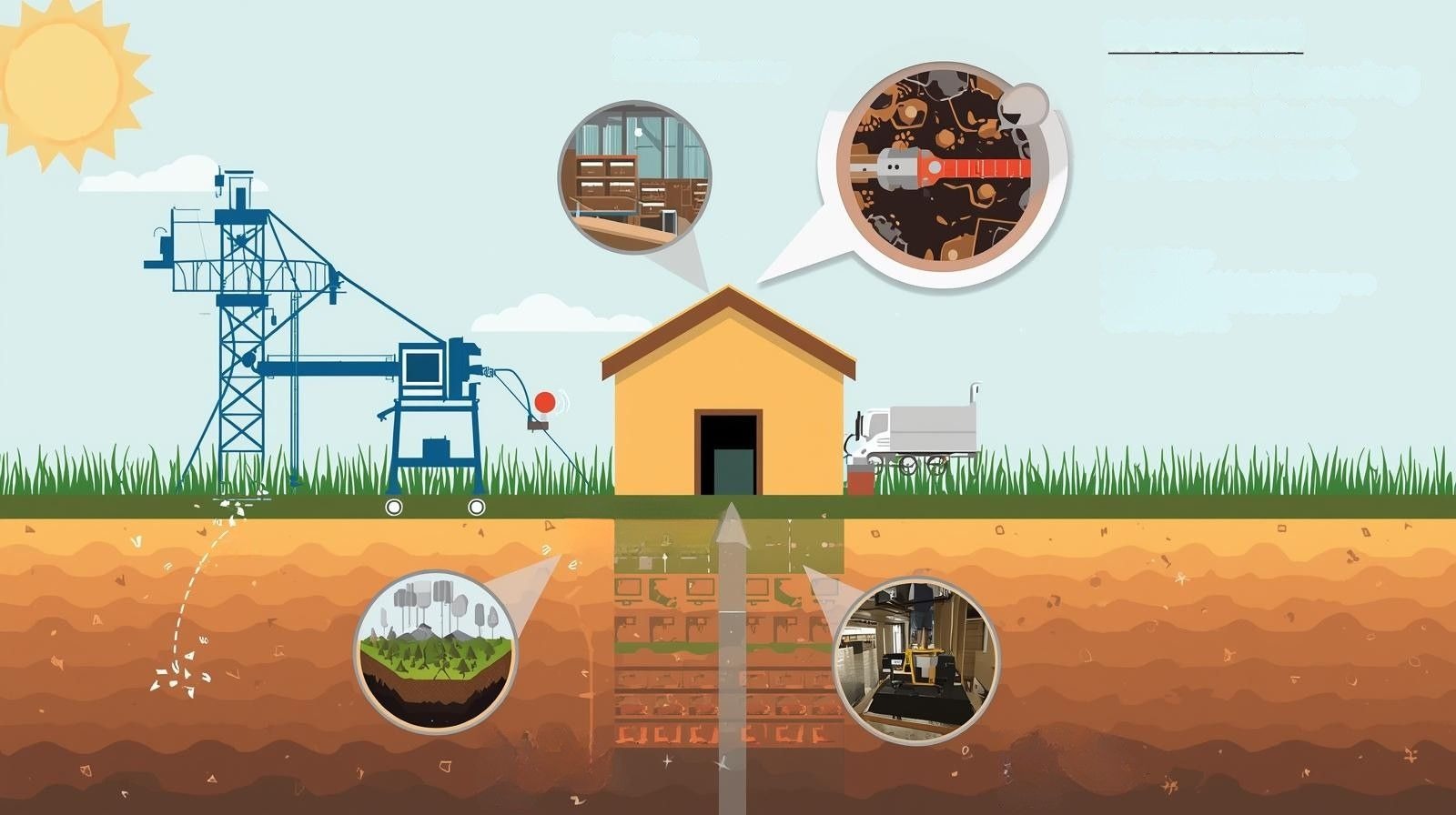
If you want a clear and practical view of how strong your ground is before you build, an in situ CBR test gives you the most direct insight. You test the soil in its natural condition, so you see how it responds to load on the actual site. You can explore the basics on cbrtesting.com, though this guide will walk you through the full process, the meaning behind your CBR values, and how you apply the results to pavement design, foundation design, and road construction.
Understanding the California Bearing Ratio
The California Bearing Ratio is a simple way to compare the penetration resistance of subgrade soil with a standard crushed rock material. The approach came from the California State Highway Department and the California Division, and it remains one of the most practical methods in civil engineering. When you run a California Bearing Ratio test, you press a penetration piston or cylindrical plunger into the soil at a constant rate and measure the force needed at specific depths.
What the CBR Test Measures
The CBR test looks at how much pressure the ground can resist as the plunger moves downward. You take readings at regular intervals, record the corresponding penetration, and convert the measured pressure into CBR values. These figures are crucial for a wide range of civil engineering purposes, from assessing soil strength to designing safe, durable pavements.
Why In-situ Testing Matters
An in situ CBR test gives you a realistic picture of the soil. You avoid the risks linked to moving a soil sample, which can disturb its structure. You also see the natural moisture content, which has a major impact on the soil’s mechanical strength. Clays lose strength when wet, while granular soils stay more stable. Your results reflect the ground you must build on, not an altered version of it.
The Role of Subgrade and Subbase Materials
Your subgrade soil forms the foundation of any paved surface. Above it sits the subbase materials, which add stiffness and distribute load. Your cbr test results help you determine the thickness you need for each layer. Strong soils need thinner layers. Weak soils often need thicker layers or compaction to improve performance.
In-situ CBR Testing Procedure
During situ testing, you prepare a test area, seat the piston, and apply load at a constant rate. You take readings, log the load required, and follow the standard method to compare them with a standard material. You may support the procedure with tools such as a dynamic cone penetrometer, which helps you build a wider picture of your soil conditions.
Interpreting CBR Values
High CBR values point to soils with strong load-bearing characteristics. A higher CBR value often signals material suitable for pavements, car parks, haul roads, or temporary works. Low values flag weak soils that need improvement. You may also compare your results to equivalent CBR values from laboratory testing to check consistency.
What Influences CBR Test Results
Soil type, density, moisture, and local ground structure all influence the test results. You may also encounter changes from traffic, rainfall, excavation, or grading. By testing across several locations on your site, you identify patterns, strong areas, weak zones, and the need for reinforcement.
Applying CBR Results to Real Projects
You use your numbers to assess load demands, plan thicknesses for pavement layers, and make structural decisions. You also use the results to calculate construction needs, estimate costs, and guide planning across your project. Engineers rely on CBR data to support design compliance with European standards and industry specifications.
Bearing Capacity and Ultimate Strength
Although the CBR test is not a direct bearing capacity calculation, it gives a strong indication of how the soil responds. When you relate your results to ultimate bearing capacity, you gain confidence in your design. You avoid underbuilding, overbuilding, and costly surprises.
When to Consider Plate Tests
Alongside your CBR testing, you may carry out a plate load test or even a plate bearing test. These measure reaction under a larger loaded surface, which helps you build a better view of settlement and stiffness. You gain valuable insight for heavier structures.
Moisture Content and Soil Behaviour
Your moisture content influences almost everything. Dry soils often show higher readings. Saturated soils show weaker values. You should always test in conditions similar to those the structure will face during service life. Testing in summer for a structure used in winter may not reflect reality.
Foundation and Road Design Decisions
Your CBR data guides choices in foundation design and road construction. High readings support lighter structures. Low readings call for stabilisation, soil replacement, or thicker layers. Your values help you optimise design decisions and maintain safety across the project.
Managing Weak or Variable Ground
If you run into low readings, you may improve the ground with:
- better compaction,
- introducing new materials,
- adjusting the design,
- or delaying construction until the soil dries.
You can also use CBR to track improvements and compare preliminary results with final ones.
How CBR Testing Supports Pavement Design
The CBR method remains a cornerstone of pavement design. It helps you understand how loads distribute through the soil, how thick your layers must be, and how the ground will respond over time. With accurate testing, you reduce future failure risk and extend pavement lifespan.
Practical Use in Civil Engineering
In practice, you use CBR results to guide compaction targets, material selection, and structural thickness. Engineers rely on the test because it is quick, simple, and highly useful across a wide range of civil engineering applications.
Using CBR on Your Site
You may run several tests across your site to capture the full picture. Soil rarely behaves the same in every location. Testing gives you confidence in your design and a reliable guide to future performance.
Final Thoughts
The in situ CBR test offers simple, trusted insight into soil behaviour. From penetration and pressure readings to meaningful CBR values, you gain the knowledge you need to plan safe, cost-effective structures. With the right approach to measuring, understanding materials, and assessing your ground, you give your project a strong start and reduce the risk of costly surprises.