
Key Takeaways
- Hydroseeding promotes rapid vegetation growth and is ideal for parks and public spaces.
- The process delivers robust erosion control and soil stabilization, especially on sloped terrain and high-traffic areas.
- Hydroseeding is budget-friendly for expansive projects due to reduced labor and materials.
- Custom seed mixes support biodiversity and match local conditions for optimal, sustainable results.
- Hydroseeding encourages the growth of native plants, helping preserve local habitats and ecosystems.
Hydroseeding is a powerful solution for revitalizing lawns, parks, and open community areas, delivering quick, sustainable results where traditional seeding methods often fall short. With the unique combination of seed, mulch, water, and nutrients, hydroseeding ensures that even large, challenging spaces achieve uniform, lush growth in just weeks. For communities in specific climates and soil types, such as those seeking grass seed Southern California, the flexibility and adaptability of hydroseeding make it a leading choice for landscape development and environmental restoration.
Municipalities and neighborhood associations often seek landscape solutions that not only beautify but also provide long-term resilience and sustainability. Hydroseeding services stand out for their ecological benefits, cost savings, and ease of customization, enabling projects to meet local needs while staying within budget. By embracing this technique, community spaces become vibrant, accessible environments that foster wellness, recreation, and civic pride.
Understanding Hydroseeding
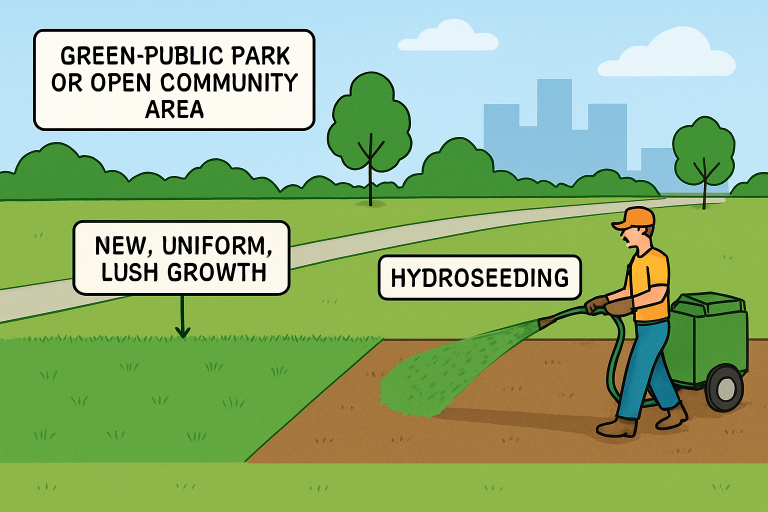
Hydroseeding is an advanced process that blends seed, mulch, fertilizer, and water into a slurry, which is sprayed uniformly over prepared soil using specialized equipment. This slurry is engineered to create the ideal germination environment by retaining moisture and anchoring seeds in place, which enhances the rate and uniformity of plant growth. Hydroseeding is particularly effective for large developments and public spaces, where efficient soil coverage and rapid establishment are crucial. Additionally, the technique greatly decreases the risk of the seed being washed away, as the mulch acts as a protective barrier.
The ability to tailor the seed mix and additives means hydroseeding works for various climates and soil types. Whether in parks in dry southern California or in urban greenways in temperate regions, landscape planners can design mixes that thrive under specific conditions, supporting drought tolerance, wildlife habitat, or aesthetic goals. This versatility has made hydroseeding a go-to practice for cities and townships aiming to expand green infrastructure efficiently.
Benefits of Hydroseeding for Community Spaces
Rapid Vegetation Establishment
The speed of results is one of hydroseeding’s top advantages. Once applied, most grass and plant species begin germinating in as few as seven to ten days, depending on environmental conditions. Lush green spaces not only enhance the visual appeal of parks, school grounds, and medians, but they are also significantly more usable for local residents much more quickly than traditional seeding or even sod installation. Research from the U.S. Environmental Protection Agency recognizes rapid vegetation establishment as central to urban greening efforts, contributing to healthier, cooler, and more inviting public environments.
Erosion Control
Effective erosion control is essential for maintaining the safety and longevity of community spaces, especially those on slopes or near waterways, where hydromulching nsw can be highly effective. Hydroseeding covers soil rapidly and uniformly, minimizing the risk of erosion by wind and rain. The mulch and tackifiers in the hydroseeding mixture bind the soil and help retain moisture, reducing runoff and protecting against both gradual soil loss and sudden damage. Municipalities often deploy hydroseeding not only for parks but for stormwater management projects, trails, and roadside rehabilitation.
Cost-Effectiveness
Compared to traditional sod installation, hydroseeding is attractively priced for municipalities, public schools, and community organizations working within tight budgets. Costs are lower per square foot, and the process requires significantly less labor and fewer materials than laying pre-grown sod. This makes it feasible to green large areas at once, such as athletic fields, civic greens, and undeveloped community lots, promoting equitable access to green space.
Customizable Seed Mixtures
One of hydroseeding’s greatest strengths is its adaptability. Seed blends can be customized for almost any purpose: from low-maintenance native grasses that support pollinators to hardy turf that withstands heavy recreational use. Customization means landscapes can be built for long-term sustainability and reduced maintenance, supporting ongoing environmental and budgetary goals for cities. According to StateImpact Oklahoma, native plantings are winning attention for their role in restoring regional ecosystems and reducing the need for excessive irrigation and fertilizers.
Implementing Hydroseeding in Community Projects
Site Preparation
Successful hydroseeding starts with proper site preparation. Crews first clear away debris, weeds, and any compacted soil, then grade the site to ensure even drainage and water infiltration. Soil tests are conducted to verify adequate pH and nutrient levels, with amendments added as needed. Proper preparation maximizes seed-to-soil contact and creates the optimal environment for vigorous plant growth.
Choosing the Right Seed Mix
The right seed mix depends on local climate, soil conditions, traffic patterns, and intended landscape use. For example, drought-prone communities may select water-wise grasses and natives, while public athletic fields require resilient species that recover from frequent use. City planners and hydroseeding professionals collaborate to select and blend seeds and additives that ensure the landscape’s long-term success.
Maintenance and Care
Post-seeding care is crucial for establishing healthy landscapes. The new plantings need regular watering, especially in the first weeks, along with monitoring for potential pests or diseases. Education on ongoing maintenance can be invaluable for local staff and volunteers, ensuring the continued vitality of public green spaces and efficient use of municipal resources.
Environmental Impact and Sustainability
Hydroseeding aligns with sustainability goals by supporting the rapid establishment of native or regionally adapted plants that thrive with minimal intervention. Such plants strengthen soil structure, filter runoff, and enhance local biodiversity, contributing to healthier urban environments. The resulting landscapes become more resilient to drought, reduce heat-island effects, and provide vital habitat for birds and pollinators, enriching both environmental and community health.
Conclusion
Hydroseeding offers transformative benefits for cities and communities seeking to rejuvenate public spaces quickly, efficiently, and with long-term resilience. The approach fosters community spirit, supports environmental health, and provides a practical solution for greening even extensive or challenging landscapes. For decision-makers and residents alike, hydroseeding services represent a smart investment in the future of vibrant, sustainable, and accessible public spaces.