
In customer service, the phone isn’t ancient history — it’s more raw and real than ever. But how we handle calls has shifted a lot from just putting warm bodies on phones. As we step into 2026, a simple truth has begun to sink in for many businesses: there’s no one-size-fits-all solution for handling calls. What works best depends on the type of interaction, the customer’s expectations, and the value of the task at hand.
When a caller dials a business number today, they expect speed, clarity, and minimal friction. They don’t want to tap through endless menus or repeat basic info to a human who knows nothing about them. This is where the debate between ivr calling systems and live agents gets real.
The Long Shadow of Traditional IVR
Interactive Voice Response systems were once a novelty — a way to handle calls without needing an army of agents. The idea was simple: automate the routine so humans could focus on the meatier conversations.
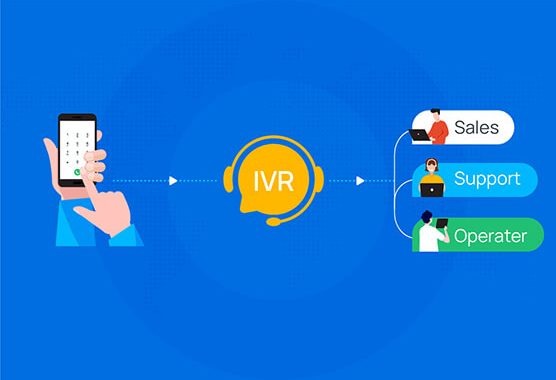
Modern IVR calling systems, especially cloud-based ones like EasyGoIVR, have improved significantly. They’re no longer just rigid menus that frustrate callers. Instead, they can welcome callers with personalized greetings, route calls intelligently to the right department, and provide basic self-service options without human help. Features such as automatic call routing, real-time reporting, and integration with back-end systems allow even smaller teams to handle high call volumes without waiting on hold or dropped calls.
From a practical standpoint, this matters. If someone is calling just to check operating hours, verify account details, or get status updates, a well-configured IVR can get them where they need to be — fast and without unnecessary human intervention. That reduces the pressure on agent teams and can increase overall efficiency, especially in situations where call traffic spikes unexpectedly.
But Not All IVRs Are Created Equal
Anyone who’s used an IVR knows the stereotype: press 1 for this, press 2 for that, your estimated wait time is eight minutes. And that stereotype isn’t entirely undeserved. Poorly designed IVR systems still exist and can make a caller feel trapped or confused, pushing them to hang up instead of staying in the queue.
The difference now is that modern IVR doesn’t have to feel like a maze. Good systems, like the hosted solution mentioned above, allow customization of menus, voice prompts, and routing logic so it feels less like a game of telephone menu roulette and more like a guided experience. This alone can make a big difference in customer satisfaction — especially for straightforward support tasks that don’t require emotional intelligence or deep context.
Where Live Agents Still Shine
No matter how advanced the IVR, humans still win in situations that require empathy, complex problem solving, or judgment calls that don’t fit neatly into predefined paths. A live agent brings context, can pivot mid-conversation, and understands nuance. For example:
- A frustrated customer whose issue isn’t just a missing order, but a missed deadline.
- A prospective buyer cis omparing products and needing personalized guidance.
- Support requests that require technical diagnosis or escalation.
These interactions demand a human touch. Automated systems can route and queue, but they don’t know the business the way a human does — at least not yet.
Enter the Best AI Voice Agent
This is where things start to feel genuinely different.
Rather than relying on rigid menu trees, the new generation’s best AI voice agent combines natural language understanding with context awareness. They don’t just say “press one for sales.” They listen, interpret spoken intent, and can respond naturally to queries, much like talking to a junior support rep who knows your business rules. In 2026, this is rapidly becoming the new frontier of call automation.
Intelligent voice agents can handle a variety of tasks: booking appointments, answering FAQs, routing requests based on customer needs, and even executing actions in connected systems like CRMs. They work 24/7 and can reduce operational costs by automating repetitive tasks that would otherwise eat up valuable agent time.
I’ve spoken to operational leads in multiple industries who have tried these systems. Their honest take isn’t that voice AI replaces humans — it doesn’t — but that it absorbs repetitive, high-volume tasks so live agents can tackle the ones that require human judgment.
The Hybrid Reality — Not “AI vs Humans”
If you listen to real practitioners — not marketing teams — you’ll hear a recurring theme: the future isn’t IVR vs live agents or AI vs humans. It’s a hybrid. Automated systems filter and handle the simple stuff; human agents handle the complex. And between those two lies a space where voice AI agents can fill the gap.
Some real-world insights from companies experimenting with these technologies show that when voice AI is implemented well:
- Average wait times drop
- Caller frustration decreases
- More calls get resolved without human intervention
- Human agents are freed up to do higher-value work
This isn’t theoretical — it’s being reported by teams on the ground who have replaced traditional menu-based systems with more conversational, intent-oriented voice AI systems.
What This Looks Like in Practice
A common flow in 2026 looks like this:
- Caller dials the business number.
- IVR greets and quickly routes common requests — “track order,” “speak to support,” “billing questions.”
- If the task is simple and rule-based, the system provides an automated response.
- If the task requires interpretation or problem-solving, a voice AI agent engages.
- Only complex or emotional cases go to a live agent — with context already passed along.
This layered approach eliminates most of the pain points older systems were known for — long menus, robotic responses, and dead ends.
The Real Test in 2026
At the end of the day, what works isn’t about shiny technology — it’s about results in the real world: lower wait times, fewer abandoned calls, better first-call resolution, and higher customer satisfaction. For routine interactions, modern ivr calling systems are indispensable. For nuanced conversations, live humans still matter. And in between, the best AI voice agent solutions bring the two together without friction.
If you think of customer calls as a spectrum rather than a binary choice, you start to see why the hybrid model is winning in 2026.