
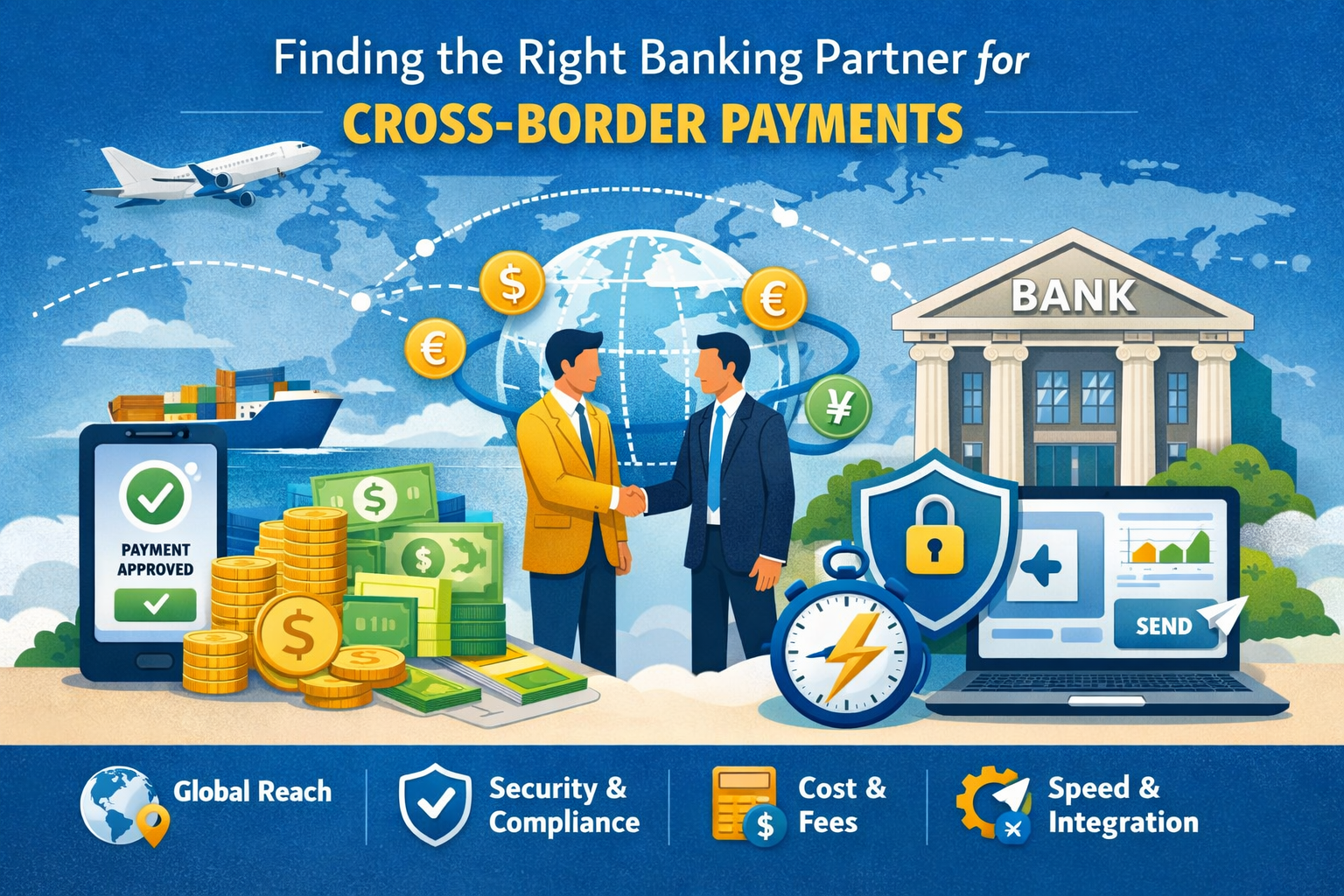
Running a business that reaches across borders brings plenty of opportunities, but it also brings unique challenges. One of the biggest hurdles companies face is managing payments across different countries, currencies, and banking regulations. Picking the right banking partner can make a huge difference in efficiency, cost, and overall financial management.
In this post, we’ll talk about what matters when choosing a banking partner for cross-border payments and why the right fit can simplify your operations.
Understanding Your Needs
Before you even start looking at banks, it’s important to have a clear picture of your own requirements. Different businesses have different priorities depending on their size, markets, and payment volume. For instance, a small e-commerce business selling internationally might have very different needs than a multinational company handling large corporate transactions.
Consider factors such as the countries you operate in, the frequency of your cross-border transactions, and your preferred currencies. Not only does this help narrow down suitable partners, but it also ensures your banking partner can meet your specific operational needs.
For many companies, global e-commerce payment solutions are critical. Online businesses often need systems that integrate seamlessly with their platforms while managing payments efficiently for customers worldwide. Similarly, if your operations involve multiple currencies, you’ll want a banking partner capable of offering robust multi-currency accounts and fast conversions.
Reliability and Security
Admittedly, security is non-negotiable. Cross-border payments can expose businesses to a higher risk of fraud or regulatory challenges. Therefore, a banking partner with a strong track record in secure transactions is essential.
Look for partners that comply with international standards, such as anti-money laundering (AML) protocols and Know Your Customer (KYC) procedures. Obviously, a bank’s reputation in managing risks and regulatory compliance can affect your business indirectly, especially if any delays or issues arise in payment processing.
Similarly, the technical infrastructure matters. A bank with outdated or unreliable systems can cause delays, errors, and even loss of funds. Modern platforms that support secure, real-time processing will save time and reduce stress in managing cross-border payments.
Service Offerings for Global Businesses
Not all banks offer the same level of support for international transactions. Some might provide basic accounts for sending and receiving money, while others offer specialized services that make running a global business easier.
For example, global payment solutions may include automated clearing and settlement, foreign exchange tools, and reporting dashboards. These features help you track payments efficiently and reduce administrative overhead. In comparison to traditional banking services, these specialized solutions can significantly improve operational flow.
Additionally, customer support is crucial. Your business may require immediate assistance with transactions, currency conversions, or compliance matters. A banking partner with dedicated international support teams can resolve issues faster, which is especially important in time-sensitive business environments.
Transaction Costs and Fees
One of the most obvious considerations is cost. Cross-border payments often involve multiple fees, including transaction charges, foreign exchange margins, and intermediary bank costs.
It’s important to look beyond just the advertised fees. For instance, some banks may offer low transaction costs but impose hidden charges on currency conversions. Likewise, recurring monthly fees or minimum balance requirements can add up over time.
Comparing pricing across potential banking partners allows you to make a practical choice. In particular, check how transparent their fee structures are. A partner who clearly communicates costs upfront can help you avoid unpleasant surprises later.
Speed and Efficiency
Time is money, especially when dealing with international payments. Slow transfers can disrupt cash flow, delay shipments, or impact customer satisfaction. Consequently, the speed of transactions is a major factor to consider when selecting a banking partner.
Banks that offer faster clearing times or support real-time cross-border payments can improve your business efficiency. Similarly, automated reconciliation tools can reduce the time your finance team spends managing payments. This matters not only for day-to-day operations but also for long-term planning and financial reporting.
Integration Capabilities
For businesses operating online or using multiple financial systems, integration is key. A bank that offers APIs or tools compatible with your accounting, invoicing, and payment platforms can streamline workflows.
Global e-commerce payment solutions often require integration with shopping carts, marketplaces, and other digital tools. Not only does this save time, but it also reduces errors caused by manual input. In the same way, for businesses handling multi-currency operations, integration with forex management tools ensures accurate conversions and reporting.
Global Reach and Local Expertise
Even if a bank has international coverage, local expertise is essential. Banking regulations, tax laws, and payment practices vary from country to country. A bank familiar with the regions you operate in can help navigate local rules and avoid delays.
Similarly, a banking partner with offices or partners in multiple countries can offer more flexible options for currency management, payment routing, and dispute resolution. This reduces the friction of cross-border payments and keeps your operations running smoothly.
Technology and Innovation
Banking technology is evolving rapidly. Modern digital platforms offer features that were unimaginable a few years ago. For cross-border payments, innovations such as instant settlement, blockchain-based transfers, and advanced fraud detection tools can make a significant difference.
Obviously, working with a partner that invests in technology ensures that your payments are processed efficiently and securely. At the same time, it allows your business to stay competitive in an environment where fast and seamless transactions are expected.
Customization and Flexibility
No two businesses are identical, and neither should their banking arrangements be. A banking partner that offers flexible solutions can accommodate unique transaction needs.
For instance, some banks allow businesses to manage multi-currency accounts under a single dashboard, set up recurring international payments, or customize reporting tools. Not only does this save time, but it also provides greater control over financial operations. Especially for businesses with fluctuating transaction volumes or seasonal demands, flexibility is a key advantage.
Choosing a Partner: Firm EU
One example of a banking partner that supports global businesses is Firm EU. They specialize in global payment solutions and provide services tailored for companies handling cross-border transactions. Their platform simplifies international transfers, supports multiple currencies, and integrates with a range of digital tools.
In particular, businesses that rely on global e-commerce payment solutions will find Firm EU’s offerings helpful. Their systems are designed to reduce delays, minimize fees, and ensure secure processing across borders. In the same way, they provide support for regulatory compliance, making it easier to manage international operations without unexpected complications.
Building a Long-Term Relationship
Selecting a banking partner is not just about immediate needs; it’s about building a relationship that will support growth. As your business expands, your payment volumes, currency requirements, and operational complexity may change.
A good banking partner adapts with you, offering new solutions and maintaining reliability even as your needs evolve. Admittedly, switching banks frequently is costly and disruptive. Choosing the right partner from the start can save significant time, money, and stress over the long term.
Key Takeaways
- Start by assessing your business needs, including countries, currencies, and transaction volume.
- Security and compliance are essential to protect your business from fraud and regulatory issues.
- Look for specialized services that simplify cross-border payments and provide operational support.
- Compare transaction fees, conversion costs, and overall transparency to avoid hidden expenses.
- Consider speed, integration, and technology features to maintain efficiency.
- Partner with banks that have both global reach and local expertise.
- Flexibility and customization can make banking more efficient and reduce administrative burden.
- Establish a long-term relationship with a partner that grows with your business.
Working with a banking partner that understands the complexities of cross-border payments can be a game-changer. Not only does it save time and money, but it also allows you to focus on expanding your business rather than managing operational headaches.
Firm EU is an example of a partner that supports businesses in navigating international payments efficiently, offering solutions that cater to global e-commerce operations, multi-currency management, and secure transactions. With the right partner, managing cross-border payments becomes a smoother, more predictable part of running your global business.