
Table of Contents
- Limited Liability Protection
- Tax Benefits and Flexibility
- Enhanced Credibility
- Perpetual Existence
- Access to Capital
- Separation of Personal and Business Assets
- Name Protection
- Conclusion
Incorporating a business can offer significant advantages for both new entrepreneurs and established business owners. Whether you want to protect your personal assets, access new growth opportunities, or simply formalize your operations, the process of incorporation provides many practical and financial benefits. Understanding these advantages can help you make a well-informed decision about your company’s future.
Taking the step to incorporate is a major milestone for any business, impacting everything from legal structure and tax planning to day-to-day credibility with partners and clients. While the process involves paperwork and regulatory compliance, the long-term gains can be transformative, laying a strong foundation for growth, investor interest, and enduring success.
Some businesses may also consider expanding beyond their home province, making it important to understand how Extra-Provincial Registration helps maintain legal status and compliance across different regions of Canada. Registering in additional jurisdictions ensures that companies remain authorized to conduct business wherever they operate and access new markets with confidence.
Limited Liability Protection
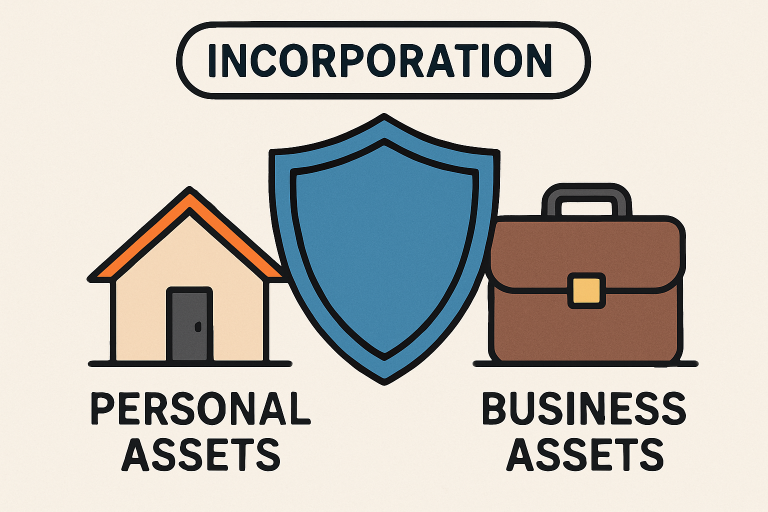
One of the most important reasons to incorporate is to protect business owners’ personal assets. Once a business becomes a corporation, it is recognized as a separate legal entity. This legal distinction means that owners and shareholders are generally not personally liable for the company’s debts or legal obligations, provided there is no fraudulent or illegal conduct. According to Investopedia’s overview of limited liability, this protection allows entrepreneurs to take risks and invest in their businesses without the threat of losing their personal savings, homes, or possessions if the company encounters financial trouble.
Tax Benefits and Flexibility
Incorporated businesses often enjoy several tax advantages not available to sole proprietors or partnerships. These can include lower corporate tax rates, income splitting with family members through dividends, and the ability to retain earnings in the company to defer personal taxes. Corporations can also access a broader range of tax deductions and credits, including those for employee benefits, health expenses, and certain types of business investments. According to the Canada Revenue Agency, proper tax planning within a corporation can make a significant difference in overall tax obligation and cash flow.
Enhanced Credibility
Incorporation lends legitimacy and professionalism to a business, which can be a decisive factor in securing contracts or forming partnerships. The designation of “Inc.” or “Ltd.” allows suppliers, clients, and investors to quickly assess a company’s seriousness and reliability. Incorporated businesses may also find it easier to establish relationships with banks or lenders. Larger organizations and government agencies often prefer working with incorporated partners due to stricter reporting requirements and established governance structures. This can translate into greater business opportunities and sustainable growth.
Perpetual Existence
Unlike sole proprietorships or partnerships that can dissolve upon the retirement or death of an owner, corporations have perpetual existence. This means the corporation continues to exist regardless of changes in management or share ownership. Perpetual existence allows for long-term planning, greater stability, and smoother transitions in leadership or ownership. It also enables businesses to build legacies that extend beyond the founding members and assures clients and partners of continuous service and reliability.
Access to Capital
One of the most significant advantages of incorporating is the ability to raise funds more easily. Corporations can issue various classes of shares to attract investors or raise equity capital from public or private sources. This flexible structure can support expansions, research, acquisitions, and other major initiatives. Access to capital is frequently cited as a major roadblock for small businesses, and incorporation gives companies the tools and credibility needed to overcome this hurdle and pursue larger, more ambitious goals.
Separation of Personal and Business Assets
Incorporation establishes a clear financial boundary between personal wealth and business resources. This separation makes record-keeping more straightforward and offers transparency in accounting, which can be particularly useful during tax season or when seeking investment. It also means that personal property is generally protected from business liabilities. Over time, this clear distinction helps new and growing businesses maintain better fiscal discipline and operational clarity.
Name Protection
Once a company is incorporated, its name gains legal protection within the jurisdiction of registration. This prevents other businesses from using the same or a confusingly similar name, reducing the risk of costly disputes and protecting the brand’s identity. Unique business names are key to reputation management and long-term recognition in crowded markets. Companies can also apply for further name protection or trademark status as they expand or diversify their offerings.
Conclusion
Incorporating your business delivers several compelling benefits, from safeguarding personal assets and unlocking tax strategies to boosting credibility and opening doors to new markets and funding options. The steps involved require careful planning and ongoing compliance, but the advantages typically outweigh the initial investment for most entrepreneurs. For those looking to operate in more than one province, understanding the specifics of Extra-Provincial Registration is equally important for continued compliance and business growth. With the right foundation in place, incorporation can be one of the most strategic decisions a business owner makes for future success.