
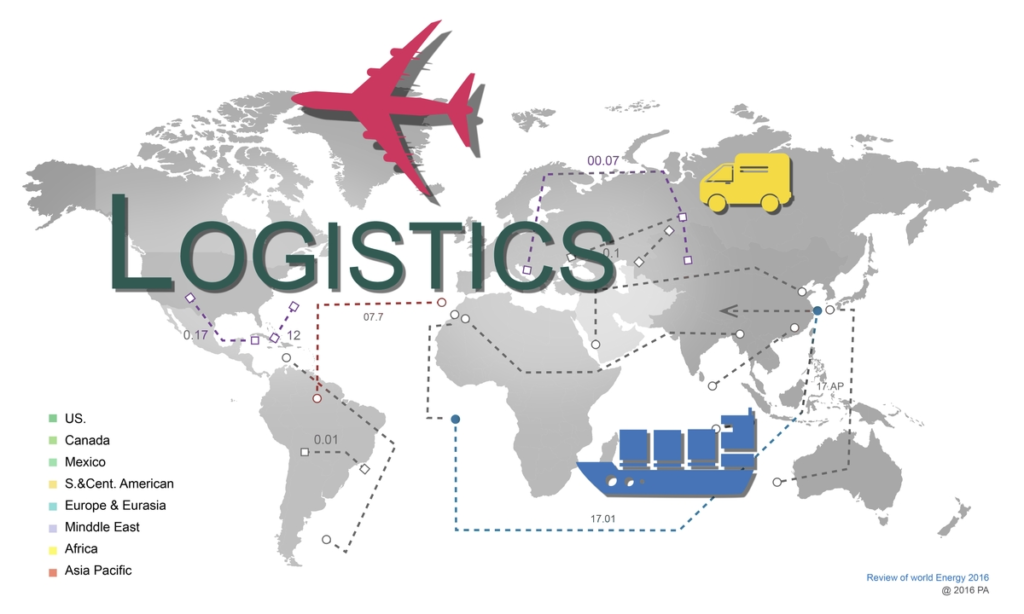
Logistics companies continue to face growing operational pressure. Supply chains have become more complex, delivery expectations continue rising, and businesses must process larger volumes of operational data across warehouses, fleets, suppliers, and distribution centers.
In 2026, generative AI is becoming one of the technologies helping logistics providers improve operational speed, automate decision-making, and reduce manual coordination work. What started as experimental automation is now moving into core logistics operations.
Businesses increasingly invest in advanced logistics software development to integrate generative AI into transportation management systems, warehouse operations, route planning, customer communication, and predictive analytics platforms.
Why generative AI matters in logistics
Conventional automated solutions rely on pre-existing rules and processes to perform specific functions. However, Generative AI differs from this traditional paradigm since it provides significant analytical capabilities for operational data by analyzing large amounts of data about how an organization operates; generating recommendations based on that data; automating the coordination of work as well as interactions with employees via multiple channels; and supporting real-time, dynamically driven decision-making.
This advanced analytical capability is particularly important within logistic sectors where operations continuously change due to the following reasons:
- weather conditions
- fuel price fluctuations
- supplier delays
- changing delivery routes
- warehouse congestion
- customer demand variability
Generative AI helps logistics organizations process operational complexity faster while reducing manual coordination efforts.
As supply chains continue expanding globally, operational agility becomes increasingly important.
AI-driven route optimization
Route planning is still one of the most important logistics processes affected by generative AI.
Traditional routing systems frequently employ a static optimization model for route planning. As such, they do not adapt efficiently when road conditions change quickly. Generative AI improves traditional route planning by analyzing traffic patterns, delivery schedules, driver behaviour, weather conditions, fuel costs, and warehouse capacity simultaneously.
Whereas traditional routing systems are limited to producing predetermined routing plans, an AI system can dynamically produce or suggest alternative routing plans as needed throughout the day, in real time.
This helps logistics providers:
- reduce delivery delays
- improve fleet utilization
- lower fuel consumption
- increase operational efficiency
Real-time adaptation becomes especially valuable for last-mile delivery operations where traffic conditions change continuously.
Automated logistics documentation
Masses of paperwork are produced daily within logistics operations. Shipping manifests, customs declarations, invoices, delivery confirmations, warehouse reports, and compliance documentation require significant time and resources to process and verify. The amount of manual document handling can create delays and increase the risk of operational errors. By utilizing generative AI technology, logistics companies can automate the creation, validation, summarization and categorization of documents across logistics workflows.
AI systems can use unstructured documents to extract key locations and generate standardized reports, eliminating a large portion of the repetitive administrative work required in the overall documentation process. This allows logistics teams to devote more energy to coordinating operations and managing exceptions rather than completing paperwork.
AI-powered warehouse operations
Warehouse Management (WM) is getting more complicated from a data perspective due to an ever-growing order volume. Warehouse personnel now have the advantage of a Generative Artificial Intelligence (AI) type of application that enhances Inventory Visibility by predicting possible operational delays or bottlenecks, as well as supporting workforce planning.
AI applications in warehouse management utilize historical demand patterns, seasonal demand swings, and supplier performance to produce better-than-ever inventory forecasting suggestions.
In addition, Warehouse Managers can increase their ability to mitigate risk associated with Operational Congestion via the use of AI-generated Operational summaries that allow them to identify Risk-Congestion conditions, improve storage and allocation decisions, and make adjustments to their Order Fulfillment workflows.
As warehouse operations become more automated (e.g., more robotic processes), AI is becoming the coordination layer that interacts with inventory systems, robotics infrastructure, and Operational Analytics Systems.
Predictive maintenance for fleet management
Logistics has a significant operational risk in the form of Fleet Downtime.
When an unexpected vehicle fails, it can cause delivery delays, disrupt delivery schedules and lead to increased operating costs. Traditional maintenance practices are typically based on a fixed schedule rather than actual operations.
By using Generative AI to assist with Predictive Maintenance, we can continuously analyze Sensor Data, Vehicle Diagnostics, Driver Behavior and Operational History.
By being able to provide Maintenance Recommendations prior to a piece of equipment failing, AI Systems enable Logistics Companies to reduce their Fleet Downtimes and Extended Lifespan of their Vehicles while improving operational reliability.
Predictive Maintenance also provides Companies with Improved Resource Allocation by enabling more efficient repair scheduling without disrupting their Delivery Operations.
AI-assisted customer communication
Customer expectations around logistics visibility continue growing rapidly.
Clients increasingly expect:
- real-time shipment updates
- accurate delivery estimates
- proactive notifications
- fast support responses
Logistics providers can enhance automation in their communications and make their customers’ experiences better using generative AI.
AI-based assistants allow logistics providers to automatically create summaries of shipments, respond to questions about deliveries and delays, and give operational updates.
In contrast to traditional chatbots, generative artificial intelligence (AI) systems utilize more contextual information and produce responses that are more natural based on operational data.
This can help logistics providers reduce their support workload, provide consistent communication, and respond more quickly by providing the same service as a human support representative.
Supply chain risk analysis
Global logistics operations continue to be disrupted by supply chain issues such as political unrest, extreme weather events, congestion in ports, worker shortages, and supplier issues, which all create uncertainty for organisations that operate on a transportation network.
AI technologies like Generative AI have accelerated risk analysis for logistics organisations by allowing them to evaluate both structured and unstructured data in parallel.
Using these AI systems, logistics organisations can identify the risk levels of managing their supply chain operations and producing summary reports by identifying and quantifying the vulnerable segments of their supply chain, along with providing recommendations in scenarios related to those segments’ weaknesses. This enables logistics decision-makers to make faster decisions under pressure.
A growing number of logistics organisations rely on AI-generated forecasts for their supply chain resiliency and contingency planning.
Demand forecasting and inventory planning
Accurate forecasting is extremely important in the planning and management of inventory levels.
When it comes to predicting future demand or sales, traditional forecasting methods can have difficulty dealing with very dynamic markets, since most use historical data as a predictor of future behaviour.
Generative AI can improve the demand planning process by integrating both historical operational data with a wider set of external data signals, such as seasonality and customer buying behaviours, economic trends, and supplier performance.
As a result, logistics companies can make better-informed decisions regarding inventory distribution while also reducing the prevalence of stock shortages or overages.
Accurate forecasts also tend to yield improved efficiencies in warehousing and transportation.
AI in multimodal logistics coordination
Today’s supply chain includes numerous transportation modes, including truck, rail, ocean, and air, which makes the manual management of these many interconnected workflows more difficult as operational complexities increase.
With Generative AI, Logistics Providers will have a more efficient way of coordinating multimodal transportation by using real-time information on schedules, delays, availability of cargo, customs, and capacity.
Together with improved visibility throughout the entire Supply Chain through the use of AI-generated operational summaries and recommendations, teams will be able to respond to disruptions more quickly.
This can be especially important for Global Logistics operations that require the movement of large amounts of international freight at once.
Why data quality matters for generative AI
Quality of operation data is critical to the success of generative artificial intelligence systems.¹ Logistics data that is poorly structured or incomplete has a negative impact on the accuracy of AI and also limits how effectively automation can be implemented.². Many organizations in logistics still rely on fragmented systems and separate data environments.³ Infrastructure modernization, centralization of operational data and visibility of analytics across systems are often required before AI will be effectively deployed in the organisation.⁴. Cloud-based computing solutions have become even more important with the increasing amounts of operational data being processed by AI systems on an ongoing basis.⁵ Enterprises that focus on modernizing their infrastructure before implementing AI generally have greater long-term performance from their AI than once their AI has been implemented.6
Challenges businesses face during AI adoption
Generative AI implementations present distinct operational challenges. One major operational challenge is the complexity of system integration due to the number of legacy systems used within logistics environments that were designed without AI-driven workflows. Another operational challenge with AI implementations is that AI-generated recommendations will always require humans to oversee them in critical logistics decisions regarding compliance, safety, and financial risk. Additionally, businesses will need to thoughtfully manage data privacy and cybersecurity because logistics systems constantly process sensitive operational and customer data. By having a solid implementation plan in place prior to implementing generative AI technologies, companies can significantly decrease the degree of risk associated with these and other operational challenges.
Future trends for generative AI in logistics
Logistics operations will see continued growth in the area of generative AI over the next few years. AI-powered operational assistants, autonomous coordination systems, intelligent warehouse environments, and predictive supply chain analytics will all be more widely used in logistics. Logistics providers will also put more emphasis on measuring operational outcomes rather than using AI as an experimental tool.
Organizations increasingly expect AI systems to improve:
- operational efficiency
- delivery speed
- forecasting accuracy
- customer communication
- infrastructure visibility
As adoption grows, generative AI is gradually becoming part of the operational backbone of modern logistics ecosystems.
Final thoughts
AI technology has changed the way logistics is done. It enhances decision-making ability, automates processes, and increases operational transparency throughout the supply chain.
Companies should strategically implement AI as part of their larger logistics capability to enable a greater ability to scale up faster. As well, they will be able to coordinate activities at an accelerated rate and be more adaptable when facing disruptions in business.
There are four key components to successfully implement a logistics AI capability: scalable architecture, clean operational data, strong integration, and long-term infrastructure planning.
Logistics AI systems are more than stand-alone automation tools; they are intelligent operational layers working to enhance visibility, efficiency, and responsiveness throughout the supply chain.