
Key Takeaways
- Handle antique glass, crystal, and porcelain only when necessary, using two clean, dry hands.
- Inspect every object before cleaning, moving, packing, or displaying it.
- Use gentle dust removal and avoid soaking pieces with cracks, old repairs, painted decoration, or unstable surfaces.
- Keep heirlooms away from direct sun, intense heat, damp storage areas, and unstable shelves.
- Do not use household glue, abrasive cleaners, or force on stuck lids and loose parts.
- Seek professional help for objects with sentimental, historic, artistic, or financial value.
Houston homes often contain treasured crystal stemware, decorative bowls, Japanese porcelain, art glass, and family pieces passed down over generations. For owners considering japanese porcelain antique repairs Houston, TX, careful everyday care is just as important as repair work. Simple choices, such as where an item sits and how it is lifted, can help reduce avoidable damage. Heat, sunlight, indoor humidity, busy households, and frequent seasonal storms can all create risks for delicate décor in the Houston area. The goal is not to make antique glass look brand new. It is to preserve its character, original surface, and structural stability while making it safe to enjoy at home.
Why Care Matters for Antique Glass and Crystal
Glass may feel hard and permanent, but it is vulnerable to impact, scratching, thermal shock, and stress around thin or repaired areas. A decorative bowl can appear sturdy until the rim lifts, and a hidden crack near the base opens further. Crystal stems, handles, lids, finials, and applied ornaments deserve particular caution because they often project from the main body of the object. Older objects can also have finishes that are less durable than they look. Painted details, gilding, enamel, foil, and earlier adhesives may react poorly to water or rubbing. Some historic glass develops cloudy, iridescent, weeping, or fine crackled surfaces as it deteriorates. These changes should be treated as a reason to pause, not as dirt that must be scrubbed away.
What to Check Before Cleaning
Before bringing out a cloth or water, place the object on a thick, clean towel over a stable work surface. Good lighting helps reveal chips and old repairs without repeatedly turning the piece in your hands.
- Look for fresh chips, hairline cracks, cloudy areas, flakes, and discolored adhesive.
- Check the rim, base, handles, stems, lids, feet, and other thin sections.
- Notice whether painted or gilded decoration is lifting or rubbing away.
- Take clear photographs from several angles before moving or cleaning the object.
- Set aside loose fragments, labels, or removable parts in a marked container.
Do not soak a piece with a crack, an unknown repair, loose decoration, or signs of surface deterioration. Condition notes and photographs also create a useful record if the item later needs assessment or restoration.
A Safe Cleaning Process
Gather Gentle Materials
- Soft, lint-free cloths
- A soft natural-bristle or cosmetic brush
- A thick towel for cushioning
- A clean basin, if washing is appropriate
- Lukewarm water for stable, undecorated, unrepaired pieces only
Clean in Small Sections
Start with dry dusting whenever possible. Use a soft brush to guide loose dust away from open, stable surfaces, rather than rubbing a cloth across fragile decoration. Support the object from underneath with one hand while using the other hand to steady it. Never lift a glass by a handle, spout, stem, or lid. If an undecorated and structurally sound piece truly needs washing, use lukewarm water and work carefully in a padded sink or basin. Avoid sudden temperature changes, harsh cleaners, abrasive pads, and vigorous rubbing. Pat the object dry and allow it to finish drying naturally on a protected surface. The Smithsonian’s overview of handling, cleaning, and storing glass objects reflects why cleaning should be tailored to an item’s condition rather than treated as a routine chore.
How to Store Delicate Pieces
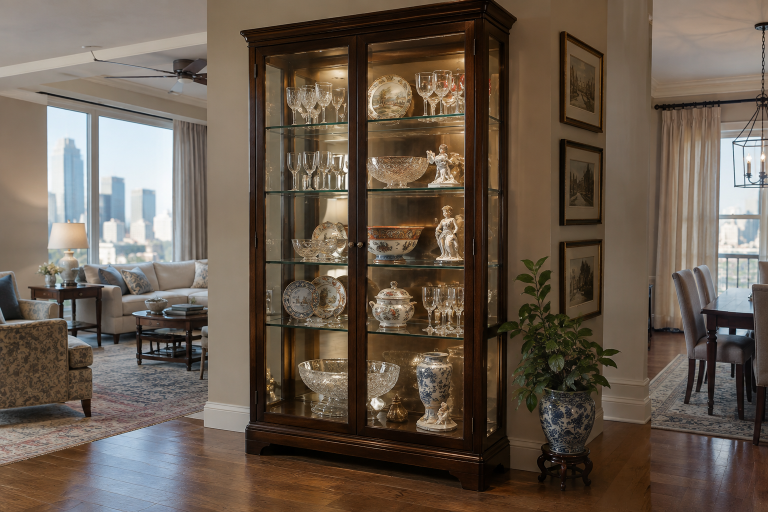
For Houston households, choose an interior storage area with stable conditions rather than an attic, garage, shed, or damp basement. Keep items away from exterior windows, air vents, heaters, and locations where sunlight falls directly on them. A solid cabinet or shelf that does not flex or shake is preferable to a crowded open shelf.
- Leave space between objects so they cannot knock together.
- Use clean, inert-looking padding beneath heavy or irregular bases.
- Keep lids and removable pieces in labeled containers near, but not resting on, the main object.
- Avoid wrapping fragile surfaces tightly in newspaper, loose cardboard, or materials that may transfer color or trap moisture.
Padding should prevent impact without pressing on painted motifs, gilding, or applied decorations. If a piece must be boxed, fill the space so it cannot shift during transport.
How to Display Glass and Crystal at Home
Display is part of preservation. Place glass and crystal on a level, sturdy surface away from door swings, playful pets, children’s reach, and high-traffic walkways. Avoid placing a heavy object above delicate stemware or porcelain. Use stable lighting that does not generate excessive heat, and limit direct sun exposure. Rotate displayed objects only when the new location is equally safe. For highly detailed works, conservators may use specialized approaches because ordinary rubbing or solvents can cause loss of detail. The V&A’s work on cleaning intricate glass micromosaics illustrates why complex surfaces should not be treated with ordinary household methods.
Signs of Damage That Need Attention
- New hairline cracks or sharp chips along a rim, base, or foot
- Loose handles, stems, lids, mounts, or decorative elements
- Yellowing, brittle, or separating adhesive from an earlier repair
- Flaking paint, gilding, enamel, or printed decoration
- Cloudy, iridescent, sticky, damp, or finely crackled glass surfaces
Damage does not need to be dramatic to matter. A small change can indicate structural stress or a failing repair, especially after a move, a fall, or exposure to heat and moisture.
Common Care Mistakes to Avoid
- Using hot water: Temperature changes can place stress on delicate glass.
- Scrubbing with rough materials: Abrasives can scratch surfaces and damage decoration.
- Forcing stuck components: Twisting a tight lid can break the neck, rim, or lid itself.
- Applying super glue: Household adhesives can discolor, fail, and complicate later treatment.
- Overcleaning: Frequent handling and washing increase the chance of accidental damage.
- Ignoring old repairs: A repaired object should be considered weaker than an intact one.
When to Seek Professional Conservation
Professional advice is sensible when an item is broken into multiple pieces, has a crack near a stress point, shows unstable surface changes, contains mixed materials, or has an earlier repair that is stained or failing. It is also wise when the object may be rare, insured, historically important, or irreplaceable to the family.
A Simple Care Checklist
- Inspect before moving.
- Clear and pad the work area.
- Support the base with two hands.
- Dust gently before considering water.
- Keep stable pieces away from heat, sun, vibration, and dampness.
- Record new damage with photographs.
- Ask for expert help before attempting a repair.
Antique glass and crystal remain enjoyable when care is deliberate and unhurried. Inspect first, clean conservatively, store thoughtfully, and treat professional conservation as protection for the object’s history, not a last resort.
Conclusion
Caring for antique glass, crystal, and porcelain requires patience, gentle handling, and attention to the object’s condition. Simple habits such as supporting pieces with two hands, inspecting for damage, limiting direct sunlight and moisture, and avoiding harsh cleaners can help prevent unnecessary wear. Houston homeowners should also consider the effects of heat, humidity, and frequent household activity when choosing where to store or display delicate heirlooms. When an item has cracks, unstable repairs, damaged decoration, or significant sentimental or historical value, professional conservation is often the safer approach. With thoughtful handling and proper storage, antique pieces can remain part of the home while preserving their character and history for years to come.