
The customer support software market shifted between 2024 and 2026. The price of tools appeared reasonable when compared to the cost of employee recruitment.
The initial low cost of these tools became expensive after I evaluated the expenses for AI implementation.
For businesses evaluating AI customer support solutions right now, the landscape is mature enough to make real comparisons.
The year 2026 has proven that these particular methods deliver successful outcomes.
The AI Customer Support Software Landscape 2026
Most modern customer support platforms have AI. The differences aren’t “this one has AI” vs. “this one doesn’t.” The differences are:
- How easily AI deploys (days vs. weeks)
- What the AI actually does (answers questions vs. runs workflows)
- How you pay for it (per-agent vs. per-conversation vs. flat rate)
- Who it’s designed for (ecommerce vs. SaaS vs. service businesses)
Here’s the honest breakdown:
| Platform | Entry Price | Real Cost (10 Users) | AI Included? | Best For | Deploy Speed |
|---|---|---|---|---|---|
| ThriveDesk | $29/mo | $29-89/mo | Yes, built-in | WooCommerce ecommerce | Days |
| Gorgias | $10/mo | $350-1,800/mo | Separate ($0.90/resolution) | Shopify stores | Weeks |
| Help Scout | $25/user/mo | $250-1,500/mo+ | Separate ($0.75/resolution) | SaaS / Service | Days |
| Tidio | $29/mo | $98-438/mo | Separate ($39+/mo) | Fast deployment / ecommerce | Days |
| Zendesk | $19/user/mo | $1,900+/mo | Extra cost | Enterprise / Complex | Weeks |
| Freshdesk | $19/user/mo | $1,900+/mo | Extra cost | Mid-market teams | Days |
This table hides the real story, though. Let’s break down what each platform actually does.
ThriveDesk: The Small Business Workhorse
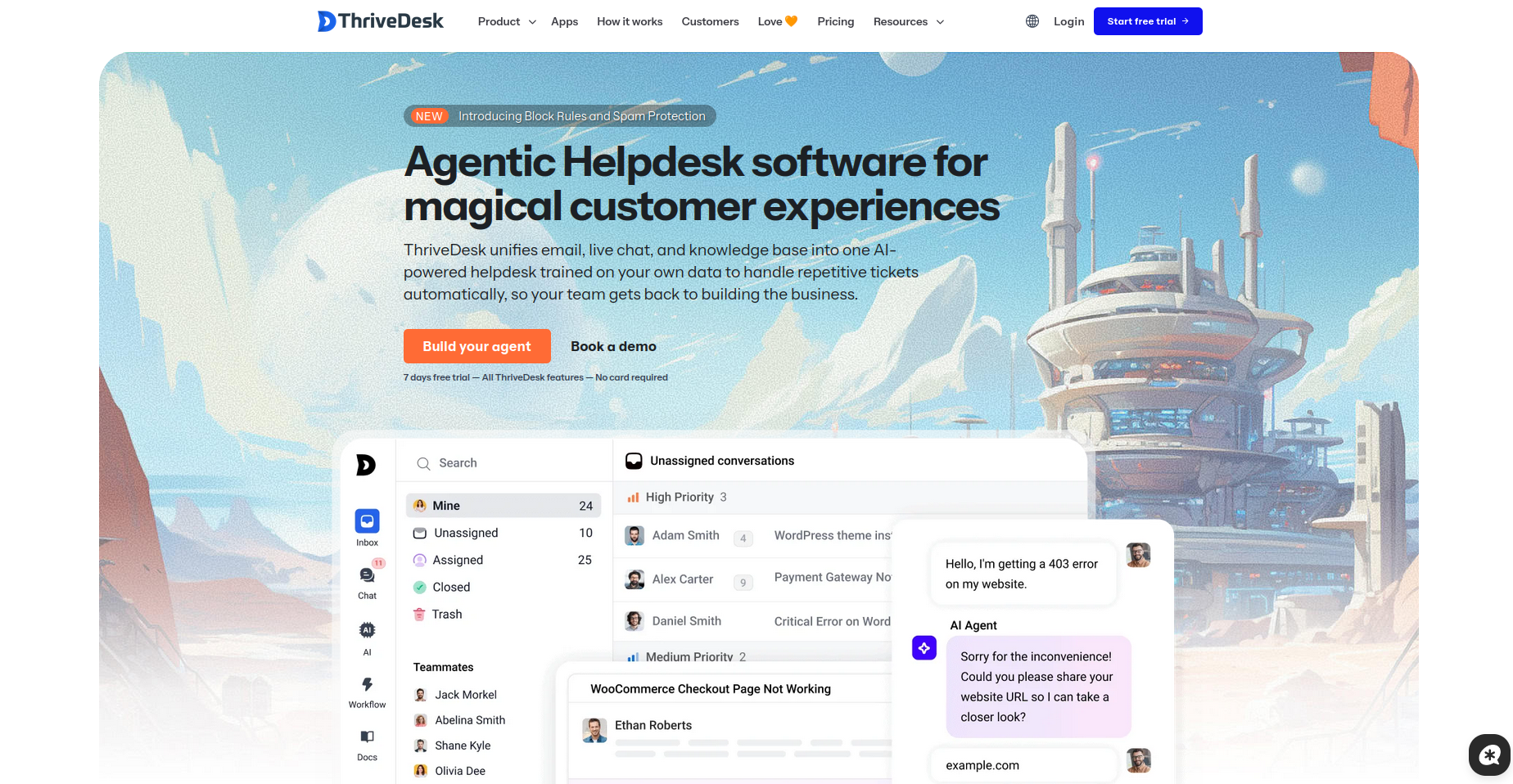
What it is: Shared inbox + live chat + automation workflows + knowledge base. Built for small teams on WooCommerce or WordPress.
Pricing: $19-89/month depending on features and scale. No per-user charges. No hidden tiers.
AI Implementation: Built-in automation workflows. Not “magic AI” but “if-then rules that work.” Customer asks about shipping. Auto-response with your policy. Auto-tag ticket “shipping inquiry.” Auto-assign to shipping team. Done. No human needed to type anything.
Real usage: A store with 300 monthly conversations might use ThriveDesk at $29-39/month. AI handles 30% of tickets. That’s 90 tickets requiring zero human touch.
When it works: You’re running WooCommerce. Your team is small (1-3 people). You want setup in days, not weeks. You hate surprise bills.
When it doesn’t: You need deep CRM integration. You have 50+ support agents. You need voice support.
Real example: A Etsy-to-WooCommerce seller handling 200 monthly conversations uses ThriveDesk at $29/month. First week: inbox organized. Second week: automation rules set up. Third week: 30% of questions answered by automation. Cost per ticket: $0.15. Hiring one support person would cost $2,500/month minimum.
Gorgias: The Shopify Native
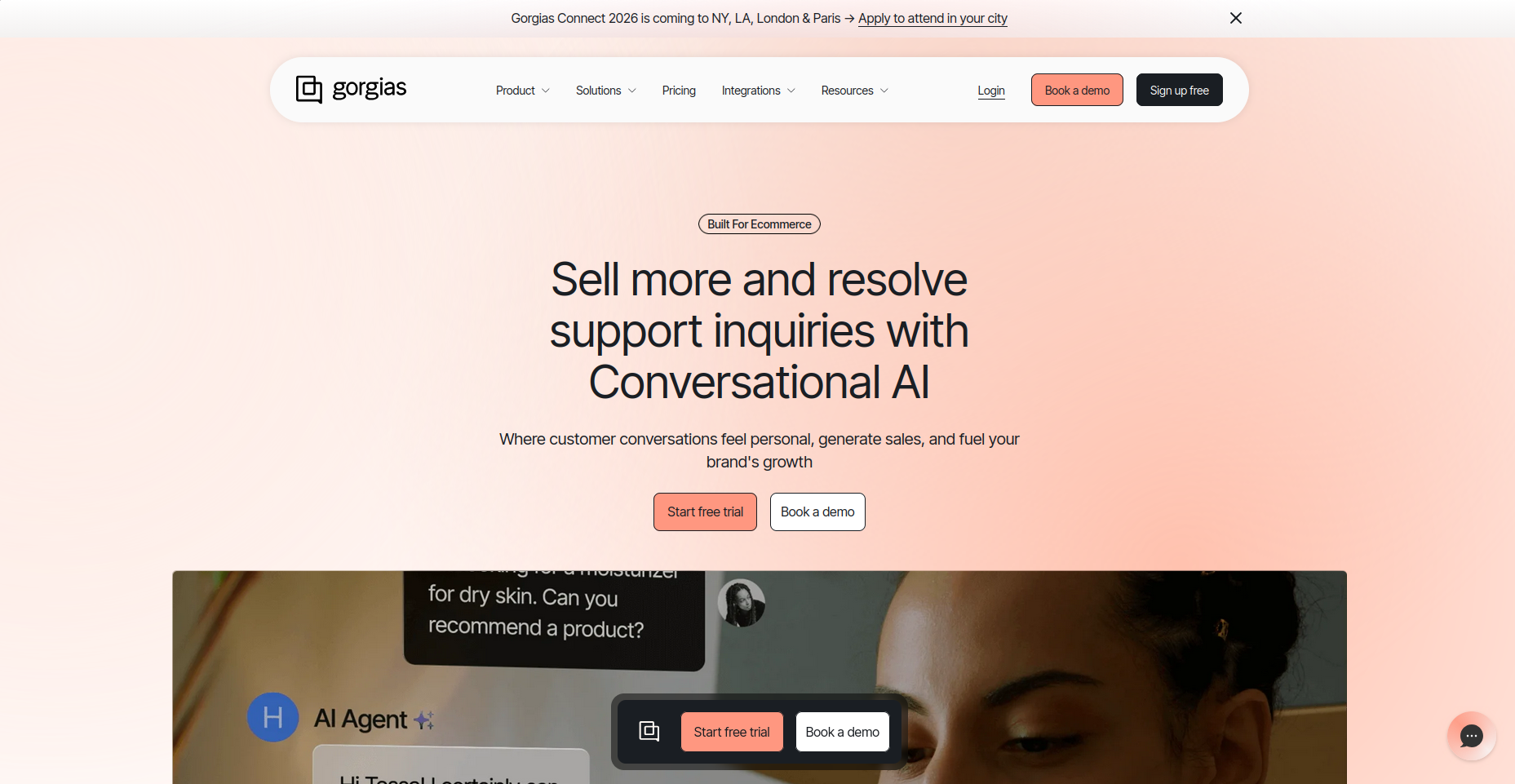
What it is: Helpdesk built into Shopify’s ecosystem. Reads your inventory, order history, and customer data natively.
Pricing: $10-900/month depending on ticket volume. Then add $0.90-1.00 per AI resolution on top.
The math looks scary until you understand it: Gorgias charges per ticket because that matches your actual cost. More orders = more support questions. The pricing scales with your business.
AI Implementation: Gorgias AI reads your Shopify data in real-time. Customer asks, “Where’s my order?” AI checks your fulfillment status, shipping carrier, and tracking number. Responds with exact details without human lookup.
More advanced: Customer wants to extend their subscription. AI reads their subscription data, calculates a new charge, updates Shopify, and sends a confirmation. No human involved. No dashboard navigation. Just pure AI workflow.
Real automation rates: Gorgias merchants report 26-50% of tickets fully resolved by AI. The range is wide because setup quality varies.
When it works: You’re running Shopify. Your growth is fast (AI ROI is higher at scale). You don’t mind complexity if it saves money. You sell physical products.
When it doesn’t: You’re on WooCommerce (use ThriveDesk instead). Your ticket volume is low (per-ticket pricing gets expensive). You need per-agent pricing for budget predictability.
Real example: A Shopify store doing $2M annual revenue handles 1,500 monthly conversations. Base Gorgias Pro: $300/month. AI resolutions: 500/month × $0.90 = $450/month. Total: $750/month for full helpdesk + AI. Hiring two support people would cost $5,000/month minimum. ROI is massive.
Help Scout: The Email-First Backbone
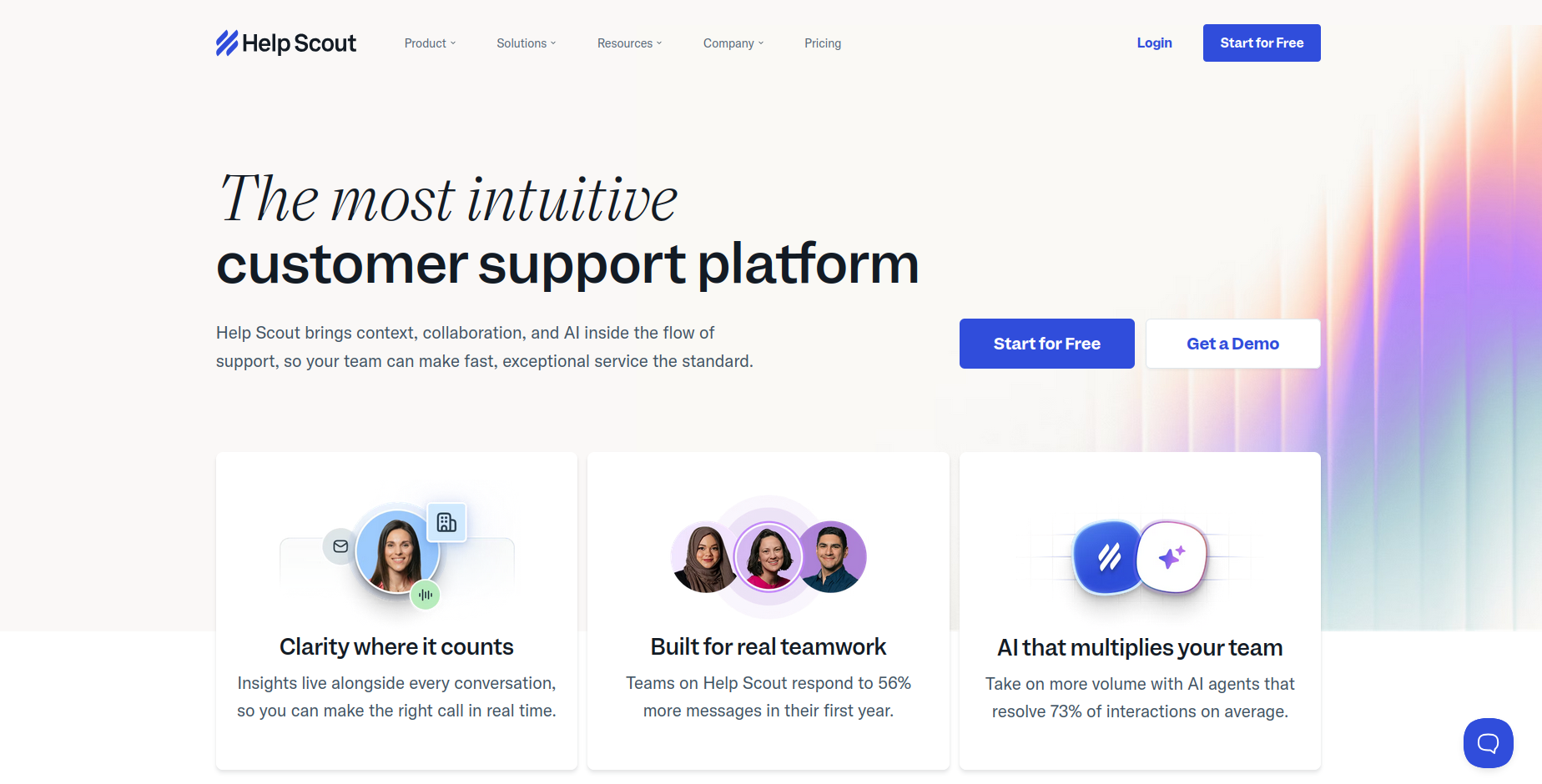
What it is: Email-centric helpdesk with live chat, knowledge base, and solid reporting. Designed for teams who love clean UI and straightforward features.
Pricing: $25-75/user/month depending on tier. Plus $0.75 per AI-resolved ticket.
A 10-person team on Plus costs $450/month. Add 300 monthly AI resolutions: $225. Real total: $675/month.
AI Implementation: AI Answers reads your knowledge base and past tickets. When a question comes in, AI reads what might answer it and drafts a response. Human reviews and sends, or AI can auto-send if confidence is high.
It’s less “full automation” than Gorgias. More “AI helps the human write faster.”
When it works: You’re email-first. Your team loves clean software. You need strong reporting and compliance. You’re SaaS or service-based (not retail).
When it doesn’t: You need ecommerce-specific features. You need a fast setup. You hate per-user pricing.
Real example: A SaaS startup with 15 support staff runs Help Scout at $45/user/month = $675/month. AI handles 200 monthly resolutions at $0.75 each = $150/month. Total: $825/month. They integrate with Salesforce to pull customer data. Reporting shows resolution time per agent. CSAT tracking shows quality.
Tidio: The Fastest Setup
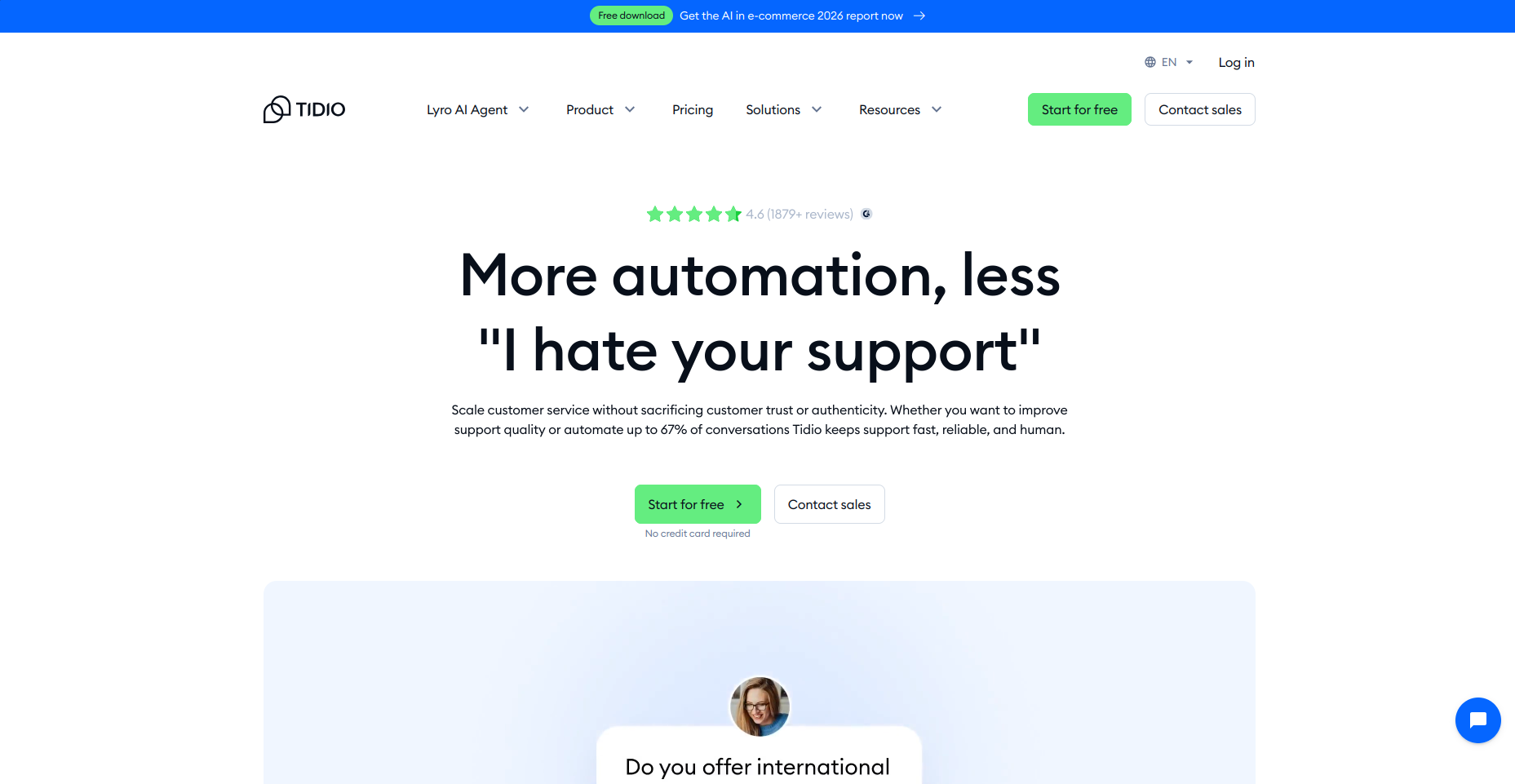
What it is: Live chat + chatbots + email + AI in one interface. Minimal configuration needed.
Pricing: Free (50 conversations/month), $29-59/month for paid plans, plus Lyro AI at $39+/month.
A small store on Tidio Growth ($59) + Lyro AI ($39) = $98/month. That’s competitive with most single support people.
AI Implementation: Lyro AI trains on your FAQ and help articles. No rules to write. No workflows to build. You upload your content. AI reads it and generates responses that sound like you.
Flows (Tidio’s rule-based automation) are pre-built for common scenarios. “Where’s my order?” “Refund status?” “How do I…?” Templates exist. You modify them. Done.
Real deployment: 30 minutes to add chat widget, 30 minutes to train AI on your FAQ, 30 minutes to set up three flows. Total: 90 minutes. It’s live.
When it works: You want the absolute fastest setup. You don’t have developers on staff. You need live chat more than ticketing. You want lead capture as a feature.
When it doesn’t: You need enterprise features like SSO. You need per-user permissions control. You’re already on Zendesk (switching isn’t worth it).
Real example: A freelancer running the Tidio free plan + Lyro (one-time $50) sets up live chat and chatbot in two hours. Customer asks questions at midnight. Tidio AI responds automatically. Customer satisfied. The next morning, the freelancer reviews the conversation and adds similar patterns to the FAQ. AI gets smarter.
Zendesk: The Enterprise Default
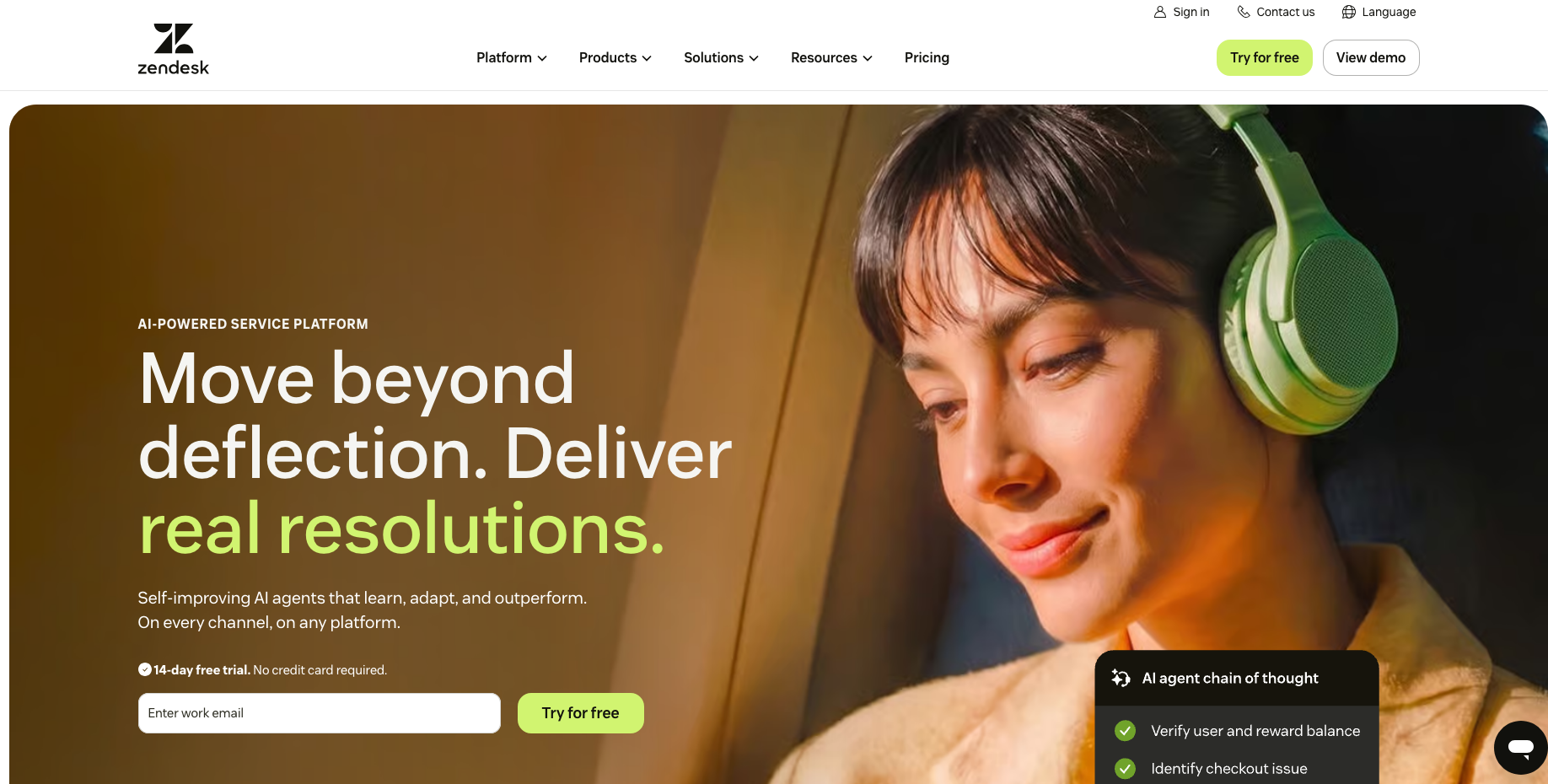
What it is: Full-featured helpdesk for complex organizations. Ticketing, multi-team structure, advanced routing, compliance tools.
Pricing: $19-99/user/month depending on tier. Enterprise teams budget $50,000+/year.
A 20-person team on the Professional tier costs $1,980/month minimum.
AI Implementation: Advanced. Zendesk has multiple AI products. Sentiment analysis flags emotional tickets. Answer suggestions, draft responses. Automated routing sends tickets to the right teams automatically.
When it works: You’re enterprise-sized. You need multiple teams with different permissions. You already use Salesforce/HubSpot. You need compliance and audit trails.
When it doesn’t: You’re under 10 people. You need a fast setup. You care about price. You’re trying to save money, not spend it.
Real example: A 50-person support team at a B2B SaaS company uses Zendesk. Cost: $3,000+/month. They integrate with Salesforce, Jira, Slack, and HubSpot. Ticketing routes by skill level. Automated workflows handle escalations. Compliance reporting tracks every conversation for legal reasons.
Without automation, they’d need 60 support people. With automation, 50 is enough. ROI is 6-7x over three years.
Freshdesk: The Affordable Middle Ground
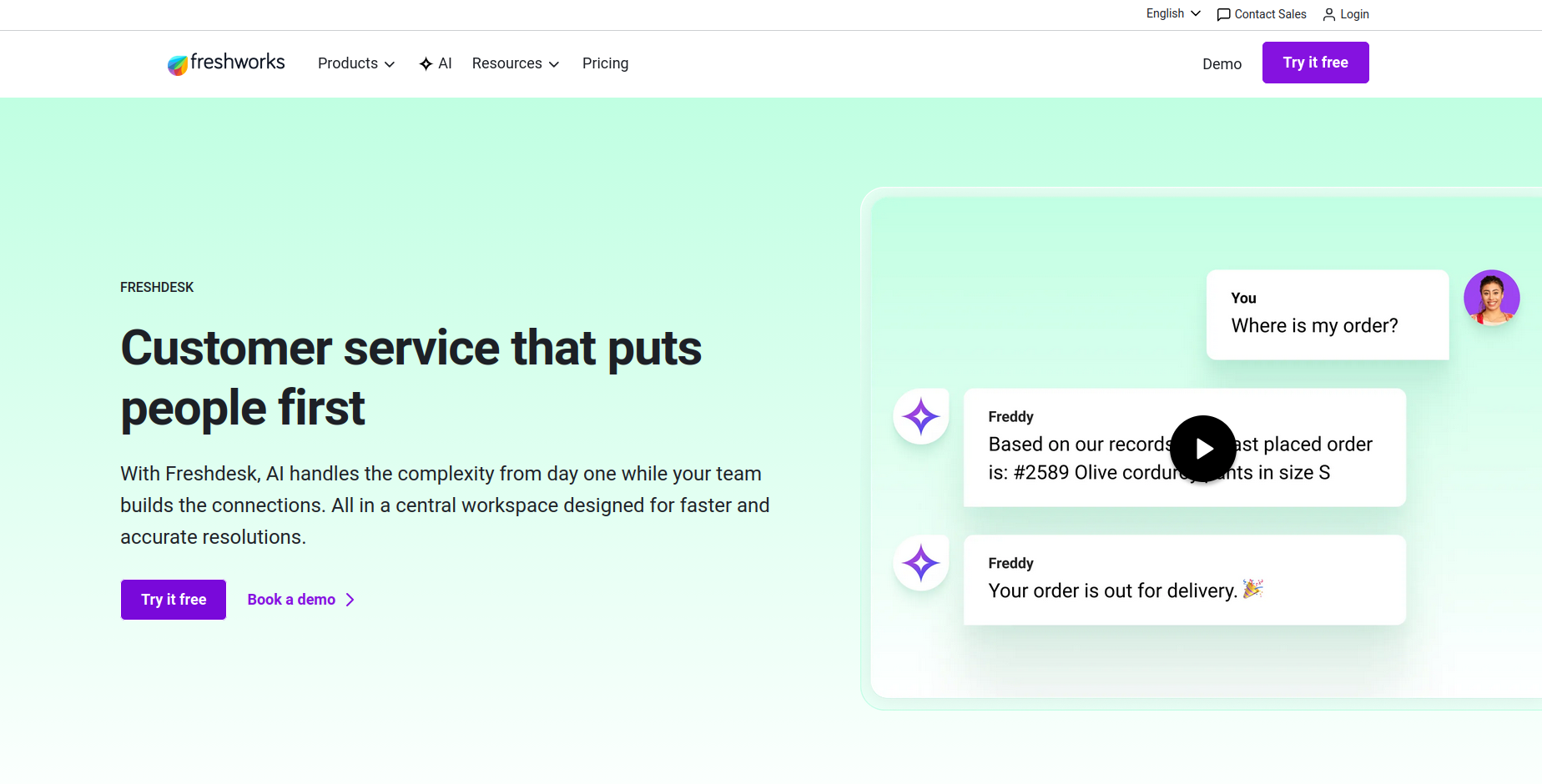
What it is: This helpdesk solution provides an all-in-one system that offers Zendesk functionalities at a more affordable price. Email, chat, phone, ticketing, knowledge base.
Pricing: $19-99/user/month depending on tier. A 10-person team on the Growth tier costs $450/month.
AI Implementation: Freshworks AI (Freddy) performs sentiment analysis while it categorizes tickets and generates automated response recommendations. The system functions at a basic level, which does not match Zendesk’s advanced capabilities.
When it works: The system needs Zendesk features, but the Zendesk solution exceeds your budget. You have between 10 and 30 people working in your support department.
Your business requires customer support through all available channels, which include email, chat, phone, and social media platforms.
When it doesn’t: You want the absolute fastest setup. You want ecommerce-specific features. You’re trying to minimize costs.
The Decision Matrix
Pick ThriveDesk if:
- You’re running WooCommerce or WordPress
- You want the lowest cost
- You need setup in days, not weeks
- You’re handling under 1,000 monthly conversations
Pick Gorgias if:
- You’re running Shopify
- You want e-commerce-specific AI features
- You’re doing $500K+ annual revenue
- You don’t mind a complex setup
Pick Help Scout if:
- You’re SaaS or service-based (not ecommerce)
- You love clean, simple interfaces
- You need strong reporting and compliance
- You have 5-30 support people
Pick Tidio if:
- You want the absolute fastest setup
- You need live chat + lead capture
- You’re not technical
- You don’t need enterprise features
Pick Zendesk if:
- You’re enterprise-sized
- You need a complex multi-team structure
- You’re already integrated with Salesforce/HubSpot
- Budget isn’t a constraint
Pick Freshdesk if:
- Zendesk is too expensive, but Tidio is too simple
- You need omnichannel support
- You have 10-30 support people
- You want to save money vs. competitors
The Real Question: What’s the AI Actually Doing?
Here’s where most comparisons go wrong. They compare features. They should compare outcomes.
ThriveDesk’s AI: Handles “I need to respond to this and the customer needs [standard info].” Automation fills in standard information. Humans type nothing. Saves 3-5 minutes per ticket. At 300 tickets/month, that’s 15-25 hours saved.
Gorgias’s AI: Handles “I need to resolve this ticket without human hands.” Customer asks for refund status. AI checks Shopify. Reads fulfillment state. Sees if the return is approved. Responds with a decision and tracking. Customer satisfied. Zero human touch. Saves 5-10 minutes per ticket. At 1,500 tickets/month, that’s 125-250 hours saved.
Help Scout’s AI: Handles “I need to draft a response faster.” AI reads past tickets and drafts a reply. Human reviews. Hits send. Saves 2-3 minutes per ticket. At 200 tickets/month, that’s 7-10 hours saved.
Tidio’s AI: Handles “I need to respond 24/7 without hiring night shift.” Lyro AI is trained on FAQ. Responds to 40% of night/weekend questions. Saves 100% of those hours. At 100 night messages/month with 40% automation, that’s 100+ hours if you were hiring night shift support.
Zendesk’s AI: Handles “I need to route complex tickets optimally.” AI reads ticket content. Routes to the best-skilled agent. Flags sentiment. Suggests templates. Saves 15-30 minutes through better routing efficiency. At 5,000 tickets/month, that’s 1,250-2,500 hours saved through better resource allocation.
The impact looks different because each platform solves a different problem.
The Hidden Truth About AI Customer Support Software
Here’s what nobody says out loud: AI customer support software isn’t optional in 2026. Your competitors are already using it.
A support team without AI is like a business without email. Technically possible. Practically uncompetitive.
The question isn’t “should we use AI support software?” It’s “which platform fits our business?” and “when do we implement it?”
Teams that implement early (2025-2026) will hit “AI resolves 30-40% of tickets” in 2027. Teams starting in 2027-2028 will take longer to optimize.
The window for competitive advantage through AI adoption is closing fast.
Implementation Timeline
Month 1: Choose a platform based on your business (Gorgias for Shopify, ThriveDesk for WooCommerce, Help Scout for SaaS, Tidio for fast setup).
Month 2: Deploy platform. Import past conversations if possible. Set up basic automation (email rules, chat widget, knowledge base).
Month 3: Train AI. For ThriveDesk/Gorgias: upload FAQ, product guides, and past tickets. For Tidio: upload FAQ and help articles. For Help Scout: import knowledge base. For Zendesk: configure sentiment analysis and routing rules.
Month 4: Optimize. Look at AI automation rates. What’s working? What’s escalating to humans unnecessarily? Adjust rules.
Month 5+: Measure. Track response time, resolution rate, and customer satisfaction. AI should be handling 25-40% of tickets. If lower, ask why.
Your team needs to achieve a 30% increase in productivity by the end of the sixth month. The same number of tickets arrived. The staff members replied to their requests with increased speed. The staff members
The Real Comparison Nobody Makes
How much does it cost to hire one more support person?
- Salary: $30,000/year
- Payroll taxes: $4,500/year
- Benefits: $6,000/year
- Training: $2,000/year
- Productivity ramp-up (3 months at 50% efficiency): $7,500
- Total: $50,000/year
That person handles 400 tickets/month = 4,800 tickets/year.
Cost per ticket: $10.42
Now compare:
ThriveDesk: $600/year for 4,800 tickets = $0.13 per ticket
Gorgias: $4,320/year base + $4,320 AI (assuming 500 monthly AI resolutions) = $8,640/year for 4,800 tickets = $1.80 per ticket
Help Scout: $6,000/year for 10 users + $3,600 AI (assuming 300 monthly resolutions) = $9,600/year for 4,800 tickets = $2.00 per ticket
Tidio: $1,500/year + $468 AI = $1,968/year for 4,800 tickets = $0.41 per ticket
Zendesk: $2,280/year minimum for one agent (won’t scale to enterprise needs, so multiply by 5-10)
AI customer support software isn’t “save money on support.” It’s “handle 2-4x more support volume for the same cost.”
That’s the transformation.