
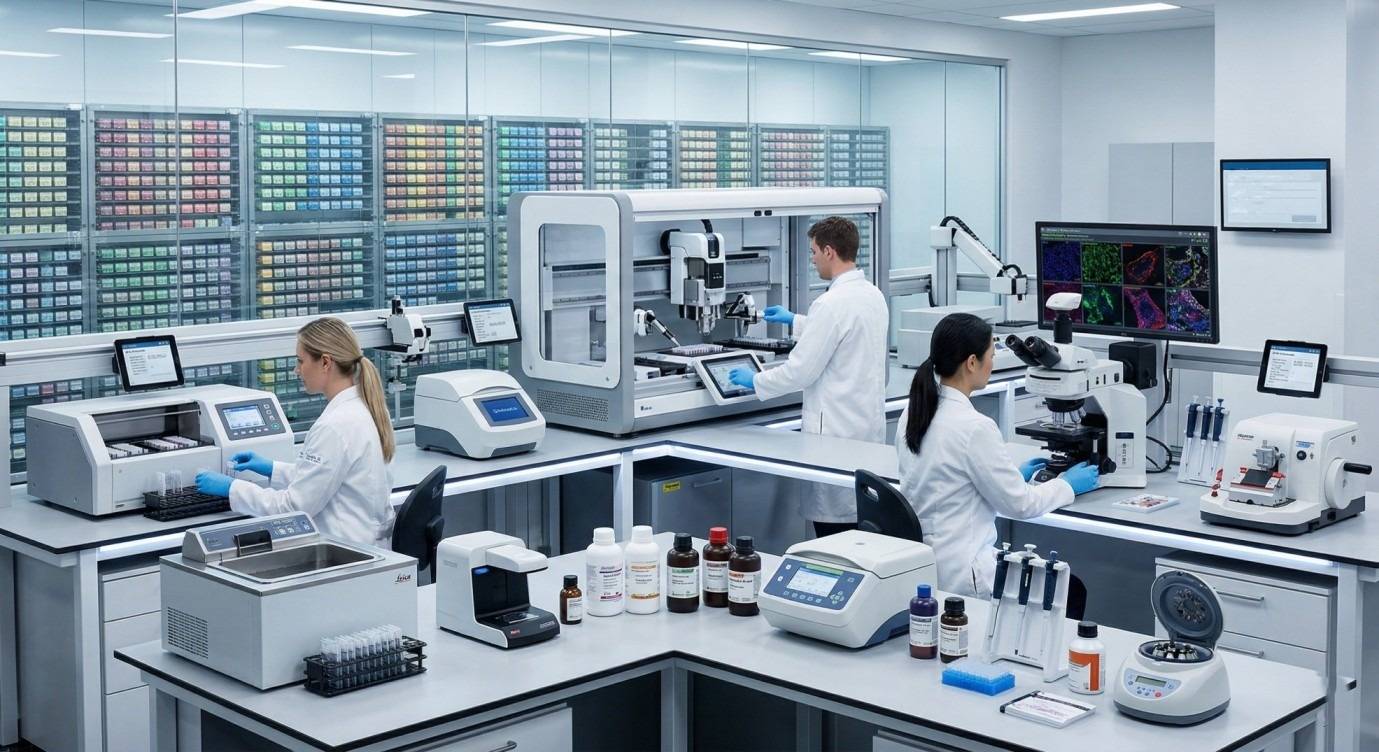
Effective tissue flotation is extremely important for producing high-quality microscope slides. However, there are various common errors that can often hamper your research process.
These errors include over-expansion, trapped air bubbles, and cross-contamination. These problems can be attributed to improper management of tissue flotation baths.
In this article, let’s explore some essential tips that will help you avoid common section errors while using a tissue flotation bath during research.
Tips for Avoiding Common Section Errors with Tissue Flotation Bath
Here are some essential tips that you need to consider to avoid errors while using a tissue flotation bath:
- Maintain Precise Temperature Control:
The temperature of your flotation bath can directly impact the integrity of tissue samples and expansion. For that:
- Always aim for 40-50 degrees Celsius, usually 5-10 degrees Celsius below the melting point of the paraffin wax that is being used.
- If the water is too cold, sections will not spread properly. This may leave visible wrinkles and folds on the slide.
- If the bath is too hot, the paraffin wax may melt, resulting in over-expansion, tissue disintegration, or cellular damage.
- Reduce the temperature for fatty tissues, such as the brain or breast, to prevent them from breaking apart.
- Prevent Contamination of Artifacts:
Contaminants in the water can result in inaccurate diagnosis or poor slide clarity.
- Always use distilled or deionized water to avoid microbial growth, such as fungi or molds.
- Use a lint-free laboratory wipe to skim the water surface between different specimen ribbons to avoid floaters or cross-contamination from other cases.
- Empty and clean the reservoir on a daily basis. Keep it covered when you’re not using it to block dust and airborne fibers.
- Avoid touching hair or skin near the bath to prevent the contamination of squamous cells.
- Optimize Handling and Floatation Time:
The way you place and time your sections can determine their final quality.
- Time Limit: Leave sections on the water only long enough to flatten for a few seconds. Prolonged exposure will result in over-expansion of the tissues, leaving them cracked.
- Eliminate Bubbles: Check for air bubbles before laying down a section. Bubbles trapped underneath can cause the tissue to lift or distort during staining.
- Surface Tension: Adding a small amount of 95% alcohol to the water can help you lower surface tension, which makes it easier for sections to unfold and remove wrinkles.
- Ensure Proper Adhesion of Slides:
Poor adhesion can cause sections to lift or fall off during downstream straining. Here’s what you need to do to get the slides’ proper adhesion:
- Drain Vertically: Briefly drain slides vertically after picking up sections to remove excess water before placing them in a dryer or on a hotplate.
- Slide Choice: Use charged or “sticky” slides for difficult tissues and procedures that require heat, such as immunohistochemistry(IHC).
- Check Slide Cleanliness: Ensure slides are free of dust or grease before use to prevent irregular staining and poor adhesion.
Why Do You Need to Avoid Common Section Errors?
Here are some essential reasons that will help you understand the requirement to avoid common section errors:
- Preservation of Morphological Integrity:
The primary goal of histology is to observe tissue in a state that most accurately mimics its natural architecture. Temperature control is the most important factor here. If the water is too hot, the paraffin will expand beyond its elastic limit, leading to its explosion.
This distortion can mimic pathological conditions like edema or cellular swelling, potentially leading to a misdiagnosis. On the other hand, water that is too cold fails to remove wrinkles, which can obscure nuclear detail or create artificial “double layers” of cells.
- Prevention of Misdiagnosis:
Cross-contamination is one of the most serious errors in a histology lab. If a technician fails to skim the water surface between different cases, a small fragment of tissue from a previous specimen can adhere to the slide of the current patient.
If that fragment happens to be malignant, it can result in a false-positive diagnosis for a healthy patient, leading to unnecessary and potentially harmful treatments.
That’s why it is important to adhere to cleaning and skimming protocols strictly to maintain medical ethics and patient safety.
- Mitigating Artifacts and Surface Interference:
The use of distilled water and the removal of air bubbles are essential for preventing artifacts that distract pathologists. Microbial growth from tap water can create “pseudoparasites” or fungal-like structures that mimic infections.
Air bubbles trapped under the tissue create “domes” that prevent the tissue from lying flat on the slide. During the drying process, these domes often collapse or burst, leaving holes in the section or causing uneven staining.
These artifacts force the pathologist to work harder to “ignore” the noise, increasing the risk of missing subtle diagnostic clues.
These are the reasons why you need to avoid common section errors while using tissue flotation baths.
To Summarize
Maintaining tissue samples is the most important thing for your research. More importantly, you need to keep them clean and unharmed while using them for research on a tissue flotation bath. The abovementioned tips will help you ensure that your tissue samples are intact and that your research gets conducted effortlessly.