
Key Takeaways
- Pipeline smoke testing is a non-invasive, effective method for detecting hidden leaks.
- The approach can quickly uncover structural defects and unauthorized pipeline connections.
- Routine testing protects against environmental incidents and can reduce costly emergency repairs.
Ensuring the integrity and safety of pipeline systems is an ongoing priority for both municipalities and industrial operations. Undetected leaks or unauthorized connections can result in costly repairs, environmental contamination, and regulatory headaches over time. One reliable solution for efficient leak detection is pipeline smoke testing. Using specialized equipment such as the smoke pump tester, technicians can quickly pinpoint issues that might otherwise go unnoticed, helping maintain the longevity and reliability of key infrastructure.
This technique stands out for its minimally invasive approach to diagnosing issues within pipes or sewer lines. By revealing problems before they escalate, smoke testing supports proactive maintenance strategies. The process has gained widespread acceptance among utility managers, building inspectors, and environmental agencies as a proven method for uncovering concealed defects, including unauthorized connections and poorly sealed joints, that traditional inspections may miss.
Pipeline smoke testing is gaining attention for its swift results and minimal disruption. Not only does it speed up the repair timeline, but it also aids in regulatory compliance by ensuring systems remain leak-free. Residences, businesses, and public assets all benefit from a well-maintained pipeline system free from the hazards posed by undetected leaks.
Conducting regular smoke testing can also lead to significant long-term savings by preventing infrastructure failures that necessitate costly emergency repairs or environmental remediation. Safety and environmental stewardship are at the heart of this practice.
What Is Pipeline Smoke Testing?
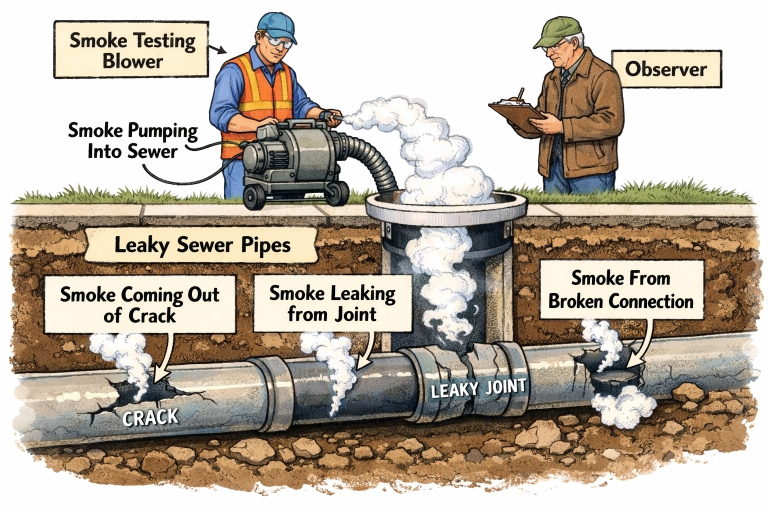
Pipeline smoke testing is a well-established diagnostic procedure used to identify leaks, cracks, and malfunctioning connections in pipeline systems. The process involves introducing non-toxic, artificially generated smoke into a closed section of the system. Any place where smoke escapes to the above ground typically signals a defect or fault, such as a cracked pipe, a loose joint, or an unauthorized connection to the main line.
This approach is particularly valuable for detecting issues that are otherwise hidden underground or behind surfaces. It works across a range of pipeline types, though it is most prominently used in sewer and stormwater lines. According to the U.S. Environmental Protection Agency, this technique plays an essential role in identifying problems early and preventing groundwater infiltration into sewer systems.
How Does Smoke Testing Work?
The smoke testing procedure typically starts with isolating a segment of pipe and setting up blowers to inject smoke under controlled, low pressure. Non-toxic smoke moves through the system, following the path of least resistance. Where structural flaws exist, smoke will emerge at the surface, visually marking the exact location of the problem. This allows inspectors and technicians to map leaks in real time, often without excavating or disassembling the system.
Observers are stationed near manholes, building connections, and any surface vents to watch for smoke emissions. The method delivers clear, easy-to-interpret visual confirmation, making it ideal for field teams with varying levels of technical experience. This makes the technology appealing for quick, on-the-spot diagnostics during maintenance operations.
Benefits of Smoke Testing
- Non-Invasive Detection: Smoke testing uncovers leaks and faults without digging up the line or disrupting service, minimizing the risk of property damage and business interruptions.
- Cost-Effective: This approach efficiently surveys large stretches of pipeline in a short time, offering a lower cost than techniques that rely on excavation or high-tech scanning equipment.
- Environmental Protection: Immediate identification and repair of leaks reduces the risk of untreated wastewater or contaminants entering the surrounding environment, meets evolving regulatory standards, and protects local water supplies.
- Documentation and Planning: The visual results aid in compiling detailed maintenance records, allowing asset managers to prioritize repairs and budget for future upgrades more accurately.
Common Applications
Smoke testing is common in a variety of settings. Municipalities frequently use it in sewer systems to pinpoint issues such as illegal connections and defective joints, while utility companies apply the method to stormwater drainage systems to detect undesirable cross-connections. Industrial plants rely on smoke testing to verify the integrity of pipelines transporting chemicals and hazardous materials, adding a layer of risk management to daily operations.
- Sewer Systems: Identifies leaks, unauthorized connections, and infiltration points in municipal or residential sewer lines, ensuring public systems operate efficiently.
- Stormwater Drains: Helps ensure stormwater drains and sanitary sewers remain separate, a critical requirement for modern infrastructure projects and regulatory compliance.
- Industrial Pipelines: Detects structural weaknesses in conduits carrying toxic or hazardous substances, significantly minimizing the risk of workplace hazards and environmental spills.
Complementary Leak Detection Methods
While smoke testing is remarkably effective, pairing it with other detection strategies can deliver a more complete assessment. Acoustic leak detectors, for instance, listen for unusual sounds that indicate escaping fluids, while technologies such as infrared thermography detect temperature changes associated with leaks. Fiber-optic monitoring systems are gaining popularity for continuous surveillance, providing instant alarms when changes are detected.
Combining smoke testing with these tools ensures comprehensive coverage, reducing the likelihood of leaks slipping through undetected. For further technical background, consult the resource material on multi-method leak detection strategies discussed in ScienceDirect.
Best Practices for Effective Smoke Testing
- Preparation: Notify local residents, building occupants, and relevant municipal departments before beginning the test to minimize confusion or alarm.
- Safety Measures: Only use non-toxic, well-vented smoke mixtures. Ensure proper safety measures for field crews and the public, especially when working near occupied buildings or sensitive environments.
- Documentation: Thoroughly document all findings using photos, maps, and written records. Comprehensive documentation streamlines repairs and supports regulatory reporting, making ongoing maintenance easier to manage.
Final Thoughts
Pipeline smoke testing remains a cornerstone of modern infrastructure management. Its ability to swiftly and non-invasively highlight hidden issues makes it essential for municipal, commercial, and industrial pipeline maintenance programs. When backed by best practices and used in tandem with advanced technical solutions, smoke testing provides a clear path to safer, more resilient, and more sustainable pipeline systems. Building on regular inspections with smoke testing ensures public health, environmental safety, and long-term cost savings for all stakeholders.