
Drug development programs require exact quantification of therapeutic molecules and biological responses in clinical samples. Scientists evaluate absorption, exposure, and biological activity to establish safe dosing regimens during clinical studies. Quantitative ligand binding platforms provide high specificity for measuring large therapeutic proteins in complex matrices. Applying a validated ELISA assay method generates precise concentration profiles across diverse clinical trial cohorts. These analytical results support critical decision-making throughout preclinical evaluation and human clinical trial phases. Reliable data ensures accurate pharmacokinetic and pharmacodynamic characterization for regulatory drug submissions.
Ligand Binding Principles in Pharmacokinetic Studies
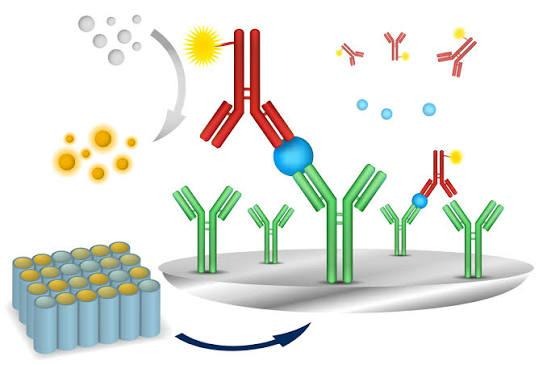
Pharmacokinetic studies track how therapeutic drugs are absorbed, distributed, metabolized, and excreted over time. Biopharmaceutical developers use precise analytical tools to measure drug concentrations in blood plasma and serum. Standard ELISA Assays use specific antibody pairs to capture target molecules on microplate surfaces, while enzymatic reactions generate measurable color changes that indicate drug concentration.
Accurate quantification helps researchers establish exposure profiles and determine key pharmacokinetic parameters such as half-life, clearance, and volume of distribution. These measurements support appropriate dosing strategies and help minimise toxicological risks during clinical development. Consistent drug quantification also confirms that therapeutic concentrations remain within defined ranges across different clinical study sites.
Pharmacodynamic Marker Measurement and Biological Activity
Pharmacodynamic assessments measure biological responses produced by candidate molecules within target tissues during testing. Researchers monitor downstream biomarker expression levels to confirm drug target engagement in clinical trial subjects. Executing a reliable ELISA method allows laboratory analysts to measure low-abundance cytokines and soluble receptors accurately. Measuring biological responses clarifies therapeutic efficacy and confirms whether candidate molecules hit intended pathways. Tracking biomarker concentration changes provides objective evidence regarding compound potency and biological duration of action. Standardized operational workflows support precise target detection in complex human biological matrices:
- Measuring endogenous protein alterations following acute drug administration during early safety studies.
- Quantifying circulating biomarker levels across longitudinal patient treatment schedules in clinical trials.
- Detecting low picogram protein concentrations in human serum without experiencing matrix interference effects.
- Validating target receptor saturation rates using standardized secondary antibody detection systems. Standardized assay protocols preserve sample stability and ensure consistent analytical results across multi-center clinical trials.
Must Read: GLP Labs and Their Role in Investigational New Drug Applications
Laboratory Infrastructure and Method Validation
Operational precision in a GLP-compliant ELISA lab remains necessary for generating submission-ready regulatory data packages. Analysts validate assay accuracy, linearity, precision, and lower limits of quantification before testing patient samples. Utilizing a validated ELISA immunoassay reduces batch-to-batch variation during long-term clinical trial evaluations. Rigorous validation guarantees that assay performance parameters remain consistent across different operator teams and instruments. Maintaining controlled laboratory conditions prevents experimental variability during high-throughput clinical sample analysis. Quality control teams perform rigorous routine checks during each analytical microplate run:
- Evaluating matrix stability across multiple freeze-thaw cycles prior to primary sample testing procedures.
- Monitoring standard curve linearity to ensure accurate concentration calculations for unknown samples.
- Assessing intra-assay and inter-assay precision using verified quality control reference samples.
- Reviewing automated microplate reader audit trails to maintain complete data traceability standards. Strict quality management protocols ensure that bioanalytical results meet international regulatory compliance expectations.
Role of ELISA in Clinical Trial Decision-Making
ELISA-based measurements provide valuable data for evaluating drug exposure, target engagement, and biological responses throughout clinical development. Researchers compare biomarker and drug concentration profiles across treatment groups to assess pharmacological effects and identify meaningful changes over time. These results can help establish relationships between drug exposure and therapeutic response.
In pharmacokinetic and pharmacodynamic studies, longitudinal ELISA measurements support dose optimization and help researchers evaluate whether observed biological effects align with expected drug concentrations. Consistent biomarker monitoring also helps identify variations between patient cohorts and treatment stages. When combined with clinical and bioanalytical data, ELISA results provide a stronger evidence base for assessing efficacy, safety, and overall therapeutic performance.
Integrating Orthogonal Bioanalytical Strategies
Biopharmaceutical developers often combine ligand-binding assays with orthogonal technologies to achieve comprehensive drug characterization. Routine ELISA analysis supports rapid, high-throughput screening of therapeutic proteins, while liquid chromatography-mass spectrometry enables precise quantification of small molecules and peptides. Evaluating cellular potency alongside biomarker concentrations also requires validated Cell-based Assay workflows.
During early discovery, cell-based screening assays help identify promising candidates, while cell-based functional assays assess receptor signaling and mechanisms of action. Developing a customized bioanalytical assay can address specific regulatory requirements, while CROs offering regulated bioanalytical services provide specialized testing support. Integrating these complementary approaches strengthens data reliability and supports efficient drug characterization across preclinical and clinical development.
Summary
The ELISA assay method supports pharmacokinetic and pharmacodynamic studies by accurately quantifying drug concentrations and target biomarkers. Ligand binding assays deliver the sensitivity and specificity needed for large-molecule drug exposure evaluations. Precise biomarker measurements confirm target engagement and clarify therapeutic mechanism of action in clinical cohorts. Standardized validation protocols ensure reproducible data that support successful investigational drug submissions to regulatory agencies. Integrating ligand-binding assays with orthogonal bioanalytical tools provides complete characterization of complex therapeutic candidates. Executing compliant analytical workflows ensures data integrity and advances therapeutic candidates through regulatory approval pathways.