
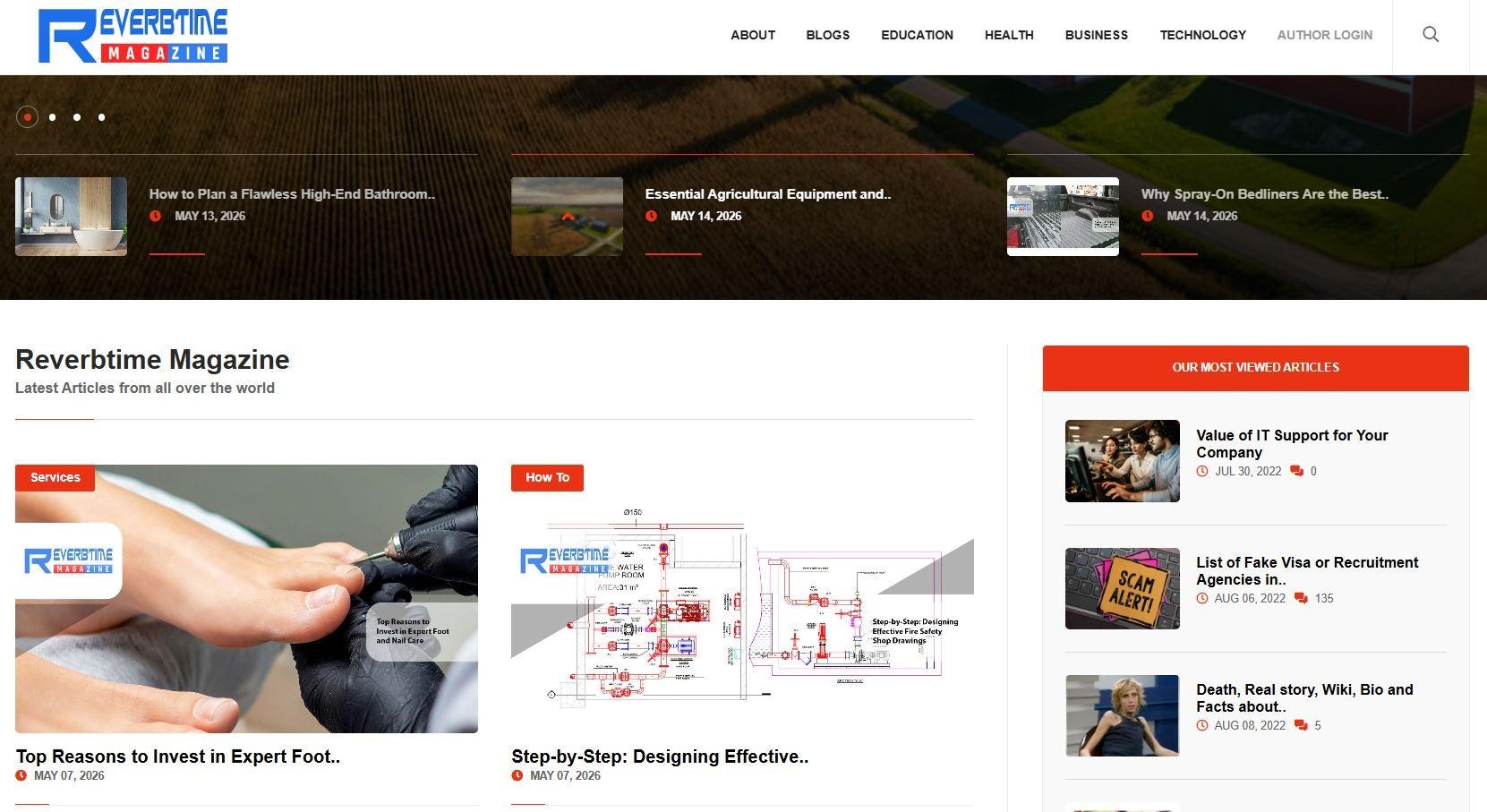
Imagine you have just finished writing a piece you are proud of, and you want it to reach actual readers rather than sit on a personal blog nobody visits. That gap between writing something and finding an audience for it is exactly what Reverbtime Magazine set out to close. The platform has been quietly building one of the more active online publishing communities for writers across many topics, and the way it operates says a lot about why it keeps attracting new contributors.
A Quick Look at Where It Started
The magazine began in January 2016 under a different name, LegitfamilyNG, before being rebranded into what readers know today. Its founder, Anthony Morha, set out to build a single online space where writers, teachers, health workers, bloggers and curious readers could share useful knowledge with one another. The idea was simple. Most people have something worth saying, but very few have the time or money to build a website from scratch and chase traffic on their own.
By 2024, the platform had grown to host more than 500 creative writers from around the globe. That growth did not happen because of heavy advertising. It happened because the magazine kept its rules easy to follow and made the publishing process feel approachable for people who are not full-time writers.
How the Community Actually Works
The heart of the platform is the free Author Account. Once a writer signs up, they get a personal profile that collects every article they publish in one place. That profile acts like a small portfolio, which is useful for anyone trying to build a name in a certain field. You write, you post, and your work lives there for readers to find later.
Articles cover a wide range of subjects, including business, technology, health, home improvement, lifestyle, travel, food, and fashion. The mix is intentional. Readers come for one topic and often stay for another, which gives writers exposure to audiences they would not normally reach. A food blogger might find their recipe being read by someone who showed up for a travel piece. That kind of cross-traffic is hard to build on a personal site.
Engagement happens through comments, messages, and forums where writers and readers talk directly. New contributors often connect with more experienced ones, ask for feedback, and trade ideas about what is working. The community side is part of what people mean when they say the magazine feels different from a standard publishing site.
Why It Keeps Growing
Several practical reasons explain the steady rise in contributors. The first is cost. There are no hidden fees for opening an account or keeping articles published. A writer can sign up, post a piece, and have it stay online without paying for hosting, security, or domain renewals. That alone removes a major barrier for new writers.
The second reason is the editorial style. The magazine accepts submissions from beginners and experienced writers alike, as long as the content is original and useful. Editors guide contributors through the submission process rather than rejecting them with a form letter. For someone publishing their first piece, that kind of support matters.
The third reason is visibility. Articles are written and structured in a way that helps them show up in search results, which means writers actually get readers rather than crickets. Many contributors also get backlinks to their own sites or social profiles, which helps them grow audiences outside the magazine too.
The fourth reason is reach. With contributors and readers spread across many countries, a single article can land in front of people in places the writer has never visited. That global angle keeps the content varied and gives readers genuine reasons to return.
What Readers Get Out of It
For readers, the appeal is straightforward. The magazine works as a place to find practical articles written by people who have hands-on knowledge of a topic. A small business owner writes about taxes. A nurse writes about patient care. A traveler writes about a city they actually lived in for a year. The voices are different from the ones found on big news sites, and that variety is part of the draw.
Because so many writers contribute, new pieces appear often. Readers who follow a specific topic can find fresh perspectives without scrolling through repeats. The comment sections add another layer, since readers can ask questions and sometimes get answers from the writer directly.
What Writers Gain From Joining
For someone thinking about contributing, the magazine offers a few clear advantages. The Author Account works as a public record of your writing, which can be linked from a resume, a LinkedIn profile, or a pitch to a future client. Writers building a personal brand find this useful because it shows real published work rather than drafts saved in a folder.
The platform also handles the technical side completely. There is no need to manage a website, fight with plugins, or worry about a hosting bill arriving each month. Writers focus on the writing. Everything else runs in the background.
There is also the chance to earn from your content over time. Some contributors use the platform to support their work through advertising revenue or reader donations, while others use it mainly as a way to grow their audience and bring traffic back to their own projects. Either approach is welcome.
A Final Thought
What makes Reverbtime Magazine interesting is not any single feature but the way the pieces fit together. A free account, a wide topic range, real editorial support, and a community that talks back create a setting where writers actually want to keep publishing. For readers, the result is a steady stream of articles written by people with something useful to say. That combination is the quiet reason the platform keeps growing, and it is also the reason new writers keep showing up at the door.