
An auto dent can occur in a sudden manner. A well-maintained car can suffer damage from a shopping cart, a parking lot incident, a falling object, or a minor collision. Although many people believe it involves sanding, filling and repainting, there are some types of dent damage that can be fixed without having to change the original paint of a vehicle.
Mobile paintless dent repair is a specialised repair service that can remove suitable dents without compromising the original factory finish. The mobile nature of this service is also another benefit. Instead of going to a regular body shop, a competent technician may be able to come to your home, place of work, or any other convenient location to do the repair.
Knowing how this repair works can guide the vehicle owner to determine if this repair process can be applied to their dent.
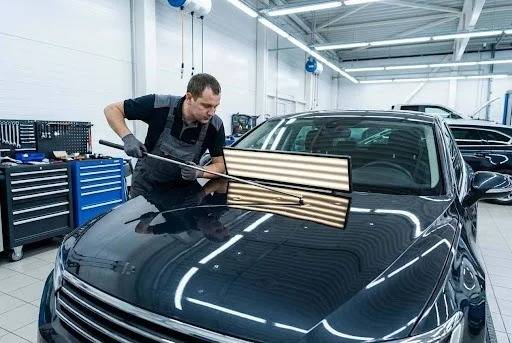
What Is Paintless Dent Repair?
Paintless dent repair, or PDR, is a technique that is used to remove dents from vehicle panels without the use of body filler and re-painting. Using specialized tools, the technician will access the damaged area carefully and gently massage the metal back into its original place.
The goal is to get the panel back to its original shape with the original paint still intact. This is unlike conventional body repair, where an area of damage can be sanded, filled, primed and painted.
The success or failure of PDR relies on a number of factors: the depth of the dent, the condition of the paint, and whether the metal has been over-elongated.
How Does Mobile Dent Repair Work?
Typically, the repair process starts with an inspection. The technician examines the dent from various angles and determines whether it is suitable for paintless repair.
If the repair is suitable, the technician determines the most convenient position from which to access the back of the damaged panel. Controlled pressure can then be applied to certain areas by means of special rods, hooks, etc.
A skilled technician doesn’t push out all the dent at once, but works it slowly. Minor changes are made until the panel comes as near as possible to the original shape.
It is important to apply the right pressure, as too much pressure will result in further marks or uneven surfaces on the board.
What Types of Dents Can PDR Repair?
Paintless dent repair can be suitable for various minor and moderate forms of vehicle damage. Some of the more familiar include small dings in the doors, small dents in the parking lot, minor creases, and even some related to hail.
Not all dents can be fixed with PDR, though. If it’s a very deep dent, the metal is stretched, there’s sharp damage, or a spot where the paint has scraped off significantly, it may need another method of repair.
The placement of the dent is also important. This is because some areas are easier to access than others for a technician.
Therefore, an inspection is key before deciding if a given dent can be fixed using paintless repair.
Why Preserving Factory Paint Matters
One of the biggest advantages of PDR is that it can provide original paint retention when the paint is still on the vehicle.
Common repairs include using a filler and repainting the damaged area. Bodywork by a professional can be very effective, but it will alter the original finish of that panel.
Paintless repair involves the process of reshaping the metal, instead of filling in with other materials.
For vehicle owners who want to maintain the original appearance of their car, this can be an important consideration.
Benefits of Choosing a Mobile Service
Convenience is the greatest benefit of a mobile service. Owners don’t need to make an appointment at a repair shop to qualify for the repairs.
Customers may be able to come to the technician’s location, home, office, or other appropriate place. This can be helpful for those who are time-constrained or lack mobility.
It is also possible for mobile service to minimize the disruption caused by minor repairs. Customers can either leave the vehicle at a facility for an extended period of time or have the work done at the vehicle’s current location.
The exact amount of time required to repair the damage may vary based on the size, location, and complexity of the damage.
When Should You Consider Dent Repair?
In general, it’s best to get car damage estimates early rather than late. Damage might not be obvious, but it can worsen over time.
If the paint has been affected, it may be necessary to treat the affected area to prevent further degradation.
A professional assessment can be done to identify the condition of the panel and propose the best repair solution.
Also, do not attempt to remove the dent yourself, as it may be a sophisticated process that you are not capable of doing. Damage is harder to fix if caused by the use of incorrect tools or excessive pressure.
How to Choose a Mobile Dent Repair Professional
In general, it’s best to get car damage estimates early rather than late. Damage might not be obvious, but it can worsen over time.
If the paint has been affected, it may be necessary to treat the affected area to prevent further degradation.
A professional assessment can be done to identify the condition of the panel and propose the best repair solution.
Also, do not attempt to remove the dent yourself, as it may be a sophisticated process that you are not capable of doing. Damage is harder to fix if caused by the use of incorrect tools or excessive pressure.
Does Every Vehicle Qualify for PDR?
No. Paintless Dent Repair is suitable for any and all damage, not just the make or model of the vehicle.
The panel material, condition of the paint, dent size, dent depth, dent location, and accessibility are the normal factors that technicians consider. Another factor that can influence the body repair process is previous repairs.
For instance, a panel that is already heavily repaired or painted will react differently than a panel without interference from previous repairs or painting.
The safest method to determine if PDR is appropriate is thus a professional inspection.
Mobile PDR vs. Traditional Body Repair
Either of these can be utilized in vehicle repair, yet they function in a distinct way.
Sand, fill, prime, and paint may be used for traditional body repair. It can be acceptable for damage when there is a significant loss of paint or metal.
Paintless Dent Repair is about fixing the dent without disturbing the paint as much as possible.
The right one is not just the fastest or cheapest option; it is the vehicle condition that determines the right choice.
Final Thoughts
Dents don’t necessarily indicate lots of bodywork. Mobile paintless dent repair can be a convenient service for restoring a vehicle’s appearance while maintaining the original factory finish for suitable damage.
The important thing is to have the damage expertly evaluated by a professional. Many conditions affect the repair method, including dent depth, location, paint condition, and panel access.
For cosmetic damage, such as a cosmetic ding in the door, a cosmetic dent in the parking lot, a minor crease, or similar, have an expert assess the damage and decide if paintless dent repair is the right option.
FAQs
What is mobile paintless dent repair?
It’s a way of removing the dent without sanding, filling and repainting to reshape the appropriate vehicle panels with special equipment. The mobile service means that the technician can go to the customer’s premises.
Is it possible to get rid of all kinds of dents with PDR?
No: If the metal is severely dented, stretched, or damaged in some places, the paint is severely damaged, or if the dent is in certain parts of the panel, it may need traditional body repair work.
Is Paintless Dent Repair factory paint preservation?
Fabricated to maintain the factory paint job, PDR will not repaint the area that has been repaired if the dent is appropriate and the paint is still in place.
Is it possible to have mobile dent repair at home?
Many repairs will work well in the customer’s home or office, if a safe and proper workspace is provided for the repair technician.
What are the signs that my dent is right for PDR?
Before making a PDR recommendation, a professional technician should look at the dent, its size and depth, its location, the condition of the paint, and how easy it is to reach the dent.