
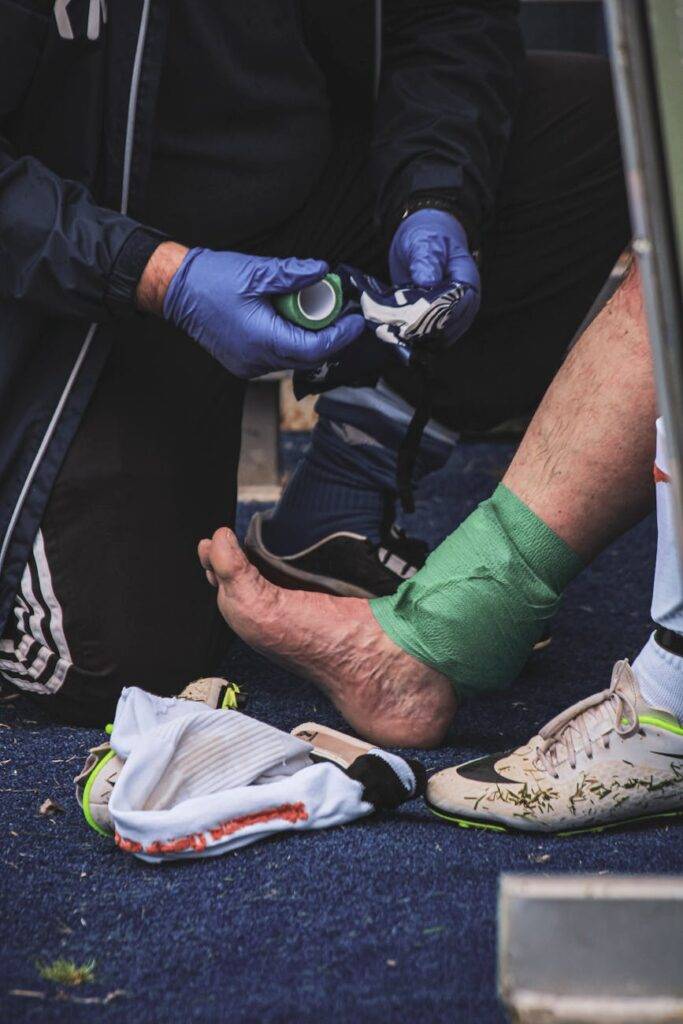
Spend five minutes talking to anyone who tore a ligament in the late 1990s and then had a similar injury recently, and you will hear the same thing. It is surely not the same experience. The diagnosis is faster, the treatment is precise, and the recovery looks nothing like what they went through the first time. Sports medicine has reformed more in the last twenty years than in the fifty before it.
Seeing the Injury Properly Changed Everything
For a long time, soft tissue injuries were diagnosed by feel and description. The doctor pressed on something, the patient said where it hurt, and a decision was made without anyone actually seeing the damaged tissue. X-rays showed bones. Everything else was guesswork dressed up as clinical judgment.
MRI changed that. Suddenly, tendons, ligaments, cartilage, and muscle could be seen clearly before any treatment decision was made. Injuries that looked minor turned out to be significant. Things that seemed to warrant surgery turned out to heal well without it. An orthopedic doctor Dubai working with a good MRI report and an accurate diagnosis is working from a different level of information than was available to the same doctor fifteen years ago.
Ultrasound added something else entirely. Real-time imaging. Watching a tendon behave under load. Seeing what a joint does during the specific movement that is causing the problem. Guiding a needle to exactly the right spot rather than estimating. It is a different level of precision, and it shows in outcomes.
The Body Can Repair More Than We Thought
Surgery was the default for serious sports injuries for a long time. Structurally damaged, structurally repaired. That logic made sense with the tools and the evidence available at the time.
What changed is the evidence base. Decades of outcomes data showed that some injuries managed without surgery did just as well or better than the same injuries that went to the theater. The body, given the right rehabilitation conditions, can repair things that were previously assumed to need surgical intervention. That knowledge has reshuffled how treatment decisions get made.
Platelet-rich plasma, shockwave therapy, and targeted injection techniques guided by ultrasound. These are not experimental anymore. They are in regular use at any well-run sports medicine clinic, and they have genuinely changed what is achievable without an operating table. Not for every injury. But for enough of them that the default assumption going in is no longer automatically surgical.
Physiotherapy Now Looks at Why, Not Just What
The older model of physiotherapy was mostly about treating the injured part. Heat it, mobilize it, strengthen it, and send the patient home with exercises. It worked to a degree, but it missed a lot. The hamstring that tears repeatedly. The knee that keeps flaring up. The shoulder that responds to treatment and then breaks down again six months later.
A good physiotherapy center in Dubai today approaches recurring injuries differently. The question is not just what got hurt but why it keeps getting hurt. Watching how someone moves, identifying the loading pattern that is exposing the tissue to repeated stress, and changing that pattern rather than just treating the tissue again.
Hip control affects the knee. Thoracic stiffness driving shoulder problems. Foot mechanics load the Achilles tendon in a way that it cannot sustain over time. These connections have always existed. The difference now is that physiotherapy practice has the tools and the framework to identify and address them rather than working only at the site of pain.
Load monitoring during rehabilitation is another shift. Getting back to sport is not just about being pain-free. Tissue that has healed structurally needs to be progressively loaded to regain the capacity to handle sport-specific demands. Too fast and it breaks down again. Too slow and the athlete never gets back to full function. Tracking that progression carefully rather than guessing at it has changed rehabilitation outcomes.
What This Looks Like in Dubai
Dubai has an unusually active population for a city of its size. Endurance sports, team sports, gym training, padel, and cycling. The demand for sports medicine expertise has grown with it, and the supply has followed. Sports medicine in Dubai now includes orthopedic doctors with genuine sports specialization, physiotherapy centers running current evidence-based protocols, and the full range of diagnostic and treatment technology.
Ten years ago, getting access to that level of care locally was harder. The option was often to fly somewhere. That is not the situation now. The expertise is here, the equipment is here, and the outcomes reflect it.
The most consistent mistake people still make is waiting too long. An injury that is not resolving after two or three weeks of rest is not going to resolve with more rest. Early assessment by someone who knows sports injuries well almost always leads to a faster and more complete recovery than waiting until the problem is serious enough that it cannot be ignored any longer.