
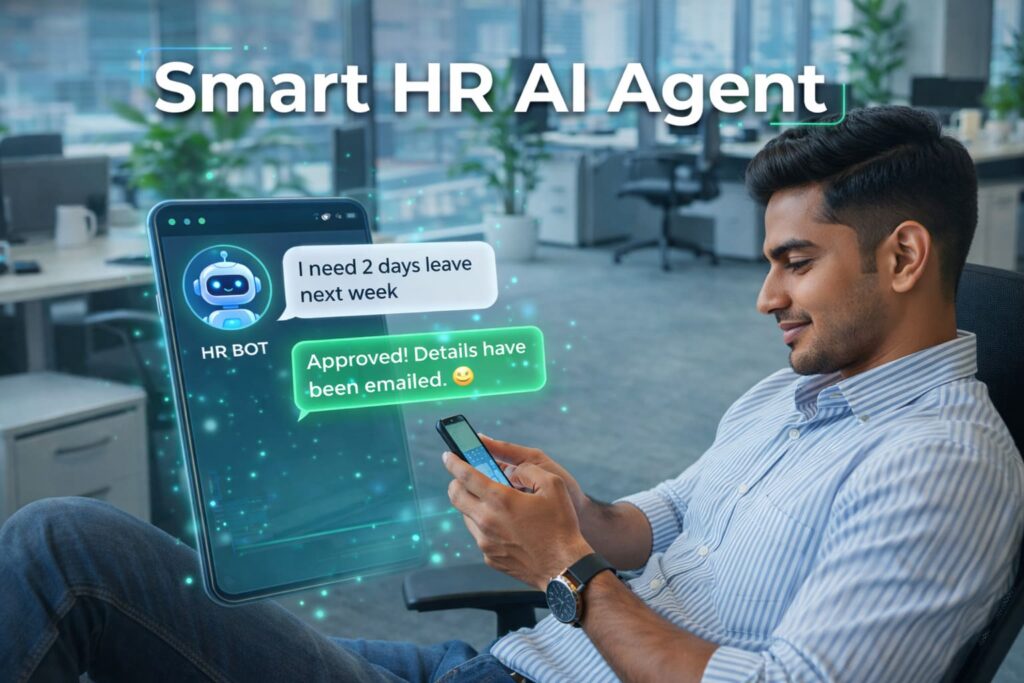
AI: We are on the threshold of an unprecedented revolution in the workplace. The talent shortage, the rise of hybrid workplaces, and shifting employee expectations are all combining to test the capabilities of human resources functions in a way that is unprecedented in its character. This is where the generative HR AI agent is poised to play a critical role in revolutionizing how human resources departments function and how they can become more strategic players.
At the heart of this revolution is the emergence of a new entity known as an hr ai agent that refers to a highly intelligent entity that can perform a range of complex functions while also providing an opportunity to enhance decision-making processes.
Workforce Transformation through Intelligent Automation
Traditionally, human resource activities have been time-consuming due to activities like application screening, answering employee queries, document creation, and compliance management. However, with the emergence of generative AI technology, it has become possible to perform these activities with unprecedented levels of efficiency.
It has the capability to serve multiple HR activities at one time, allowing HR departments to be more agile in operation. Common applications include:
• Candidate screening and talent matching by analyzing context from resumes and job descriptions.
• Automated employee assistance, including internal policies and HR questions.
• Performance insights, analyzing employee data to identify growth opportunities.
• Learning recommendations, linking employee skill development with organizational requirements.
• Policy development and documentation, helping HR teams communicate effectively.
The tools remove the barriers that the HR teams face, enabling them to work on other strategies, such as the development of the organizational culture, leadership development, and workforce planning strategies.
Business Benefits
Organizations that have implemented generative AI in their HR processes are already reaping the business benefits. These business benefits extend beyond business efficiencies and are already impacting business results significantly.
Decision-Making
HR managers can understand and interpret vast amounts of data available on hiring practices, employee engagement strategies, and employee retention strategies.
Rapid Recruitment
Organizations can fill existing vacant positions rapidly using generative AI in candidate analysis. This is particularly important in rapidly responding to business needs for a workforce.
Consistent Employee Experience
Generative AI-based HR processes ensure that employee data and processes are standardized across different functions and geographies.
Scalability
As businesses grow, generative AI-based HR processes can also scale up without a corresponding increase in business costs.
Strategic Focus for HR
Generative AI-based processes can free up HR managers to focus on implementing strategies and programs for the business.
Key Highlights of the Emerging HR AI Ecosystem
There are several trends that are influencing the integration of generative AI into the HR ecosystem.
Conversational Employee Support
AI-driven conversational assistants are emerging as the new “knowledge centers” for employees to seek information on policies, benefits, and work processes.
Skills-Based Workforce Planning
AI-based applications analyze both internal and external labor market data to assist organizations in understanding emerging skill gaps in the organization.
Continuous Feedback Systems
Rather than depending on traditional annual performance reviews, AI-based analytics can provide performance feedback to managers, thus helping them in their performance.
Data-Driven Culture Insights
Organizations can gain insights into the culture of their organization by using AI-based analytics, which can provide insights into the sentiment of their employees, which could lead to various inferences.
Adaptive Learning Paths
Generative AI can be of help in providing adaptive learning paths to the employees, which can be tailored to the employees.
All these trends indicate the emerging trend of intelligent HR systems, where AI can be of help in providing insights to manage the workforce in a better way.
Challenges and Governance Considerations
The inclusion of technology in the field of HR in the form of technology of generative AI is in the right direction. However, there are certain responsibilities to be fulfilled in the process of implementing the AI technology.
Bias Mitigation
The quality of AI technology is defined based on the data that has been used for training the AI technology.
Data Privacy
It can be argued that data related to the HR function is one of the most sensitive data for any organization.
Human Oversight
It has been emphasized that the technology of AI is only for helping in the process of decision-making, but it must be understood that the technology of AI has nothing to do with replacing the process of decision-making.
Transparency
Employees should be made aware of the inclusion of AI technology in the process of decision-making in any organization.
Regulatory Readiness
Organizations should be ready for emerging AI governance standards globally. The success of AI in enhancing or creating problems for HR is a question of how responsibly it is implemented.
The Future of Human-Centered AI in HR
The most forward-thinking companies in the world recognize that generative AI is not just a tool to boost productivity; it’s a business advantage that has the potential to revolutionize the way companies attract, develop, and retain the best talent in the world.
As we look to the future of innovation, it’s easy to see that the future of HR is one where the field has become a data-driven strategic partner, supported by AI that can understand the complexities of the workplace. But it’s also easy to see that the companies that will succeed in that future will be the ones that remember the most basic truth of AI: that it’s designed to enhance human intelligence, not replace it. The future of HR will be one where there’s a delicate balance of intelligence and empathy, where AI provides velocity and simplicity, but human leadership provides the intelligence, ethics, and vision to guide the organization forward.
As we look to the future of innovation and change in the world of work in the next decade, one thing is certain: what’s the level of technological intelligence that can be matched by human leadership?