
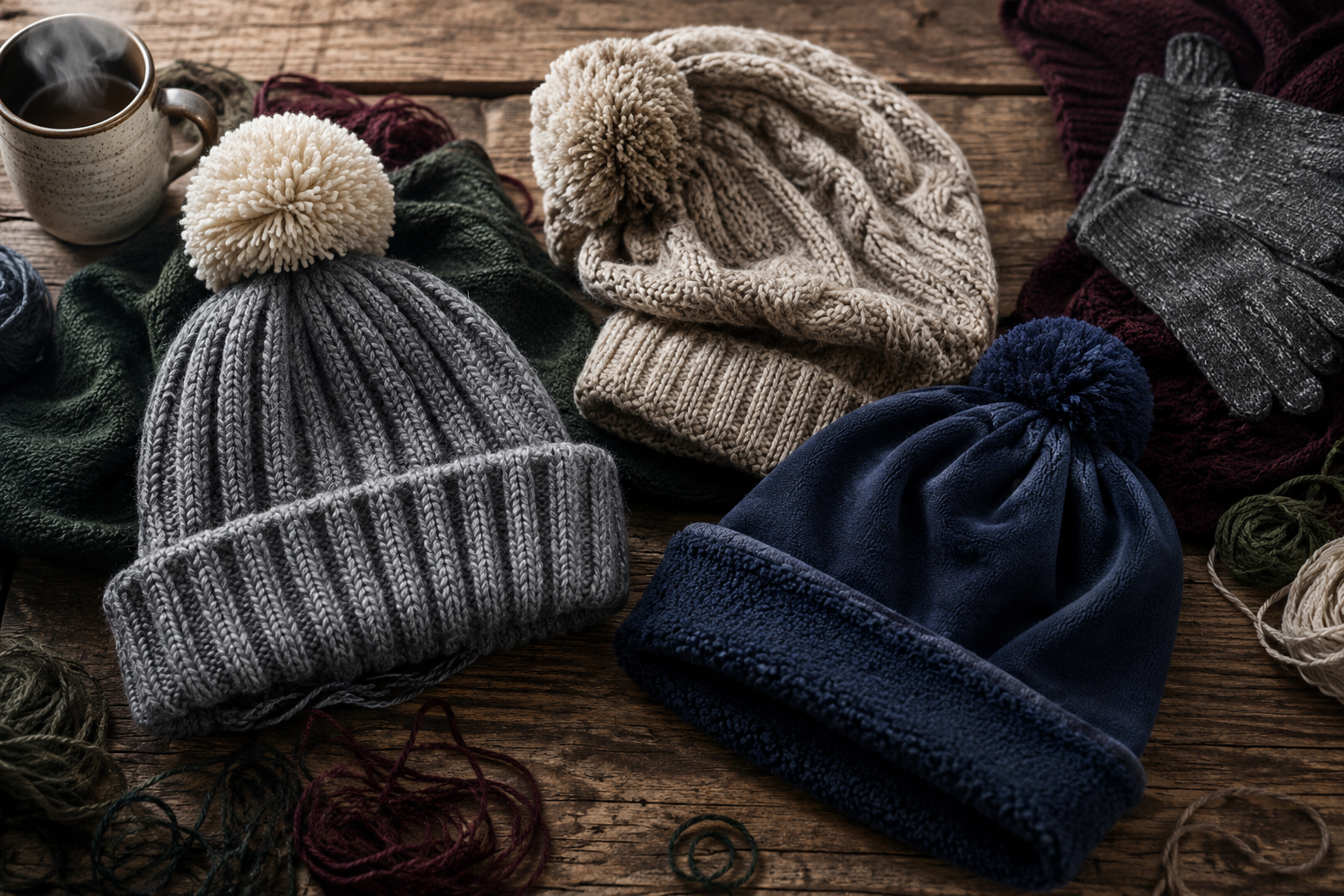
A bobble hat looks straightforward at first glance – knit fabric, a folded cuff, a pom-pom on top. But try on a few different ones and the differences become obvious fast. Some sit snug and cover the ears properly. Others sit looser at the back and let in more cold air than expected. That gap usually shows up outdoors in real wind, not while trying one on inside a shop.
The actual issue is less about style and more about fit and material. Get either wrong, and the hat either looks right but doesn’t perform, or keeps you warm but never sits properly on your head. Understanding what separates one type from another makes that decision much easier.
The Main Types of Bobble Hats
Most bobble hats fall into a handful of clear categories, and each one trades off warmth, fit, or look in a different way.
Classic cuffed bobble hat
The everyday option. The folded cuff adds a second layer over the ears, so it stays warm without being bulky.
Slouchy bobble hat
Sits loose at the back with extra fabric at the crown. Good for a relaxed look, though it can swamp a smaller head.
Fisherman or skull bobble hat
A shallow, folded-brim style that sits higher up. It looks sharper but leaves the ears less covered.
Chunky knit bobble hat
Made with thicker yarn for a heavier, more rugged feel. Warmer, but bulkier under a hood.
Fleece-lined bobble hat
Built for sport or rough weather, with an inner lining that blocks wind. Practical over stylish.
Not every one of these shows up in a regular shop, especially in specific colours or sizes, which is usually when people start looking at custom bobble hats instead of settling for what’s on the shelf.
Matching a Bobble Hat to Your Face Shape
Shape matters more than most people think when picking a bobble hat, since the wrong cut can throw off proportions instead of balancing them.
Round Faces
Height helps here. Look for:
- A chunkier knit that adds volume up top
- A slouchy style that sits slightly higher on the head
Both add vertical length, which keeps the face from looking wider than it is.
Square or Heart-Shaped Faces
Softer works better. A rounded, less structured knit takes the edge off a strong jawline or a broader forehead instead of emphasizing it.
Oval Faces
This one’s easy; most styles sit well, from fitted to slouchy, so it comes down to personal preference rather than correcting for shape.
None of this is a strict rule, but it’s a useful starting point before deciding on cut or size.
Why Material Matters More Than Colour
Most people pick a bobble hat based on how it looks, then find out later that the fabric is what actually decides whether it’s comfortable to wear all day. Natural fibres hold in more heat but need more care, while synthetic ones are lower maintenance and dry faster after a wet commute.
| Material | Warmth | Best For | Trade-off |
| Wool | High | Cold, dry winters | Can feel itchy without a soft lining |
| Cashmere | High | Everyday wear in freezing temperatures | Higher price, needs gentle washing |
| Acrylic/Synthetic | Moderate | Budget buyers, frequent wear | Less insulating in extreme cold |
| Fleece-lined | High | Wind and rain-heavy days | Bulkier fit under hoods |
None of these is objectively “better.” It depends on the climate and how often the hat gets worn. Someone in a mild city winter has different needs than someone dealing with regular sub-zero mornings.
When a Custom Bobble Hat Makes More Sense
A ready-made hat works fine for everyday personal wear. You try a few on, pick what fits, and that’s it. But the moment more than one person needs the same hat, off-the-shelf options start falling short.
Group and Team Use
Sports teams, schools, and small businesses often need something specific: matching colours across the whole group, a stitched logo, or a particular yarn weight that isn’t sitting in stock anywhere. Standard retail options rarely check every one of those boxes at once. This is usually where custom bobble hats come in: ordered in batches, made to a set spec, so everyone ends up with the same hat instead of close variations. It’s a common route for event merchandise, client gifts, or anything meant to look consistent across a group rather than a one-off.
Full Control Over the Details
There’s also a simpler reason people go custom: they know exactly what they want and can’t find it pre-made. A specific yarn colour, a certain pom-pom size, or a knit pattern that doesn’t exist in current stock all fall into this category. In that case, being able to design your own cap from the ground up is usually more practical than buying something close and trying to adjust it after. Swapping a pom-pom or re-dyeing yarn only gets you so far, and it rarely matches what a proper custom order would deliver from the start.
Common Bobble Hat Buying Mistakes
- Choosing a trend over the fit. A style that looks good online doesn’t always sit right in person, so it’s always worth trying it on rather than buying on looks alone.
- Skipping the care label. Wool and cashmere both need proper washing, and skipping that instruction is usually what shrinks or stretches a hat out of shape within a season.
- Guessing the size. Bobble hats aren’t very adjustable once knitted, so a size that’s slightly off stays that way. There’s no fixing it after purchase.
- Picking colour before warmth. A hat can look great and still be the wrong pick for the weather it’s actually needed for, so warmth should come first, colour second.
A Few Things People Ask
1. How do I choose the right bobble hat style for my face shape?
Round faces suit chunkier or slouchy styles for added height, square and heart-shaped faces do better with soft, rounded knits, and oval faces can wear almost any style comfortably.
2. Are bobble hats still fashionable?
Yes. They’ve stayed part of winter wardrobes for years because they work for both casual and smart-casual outfits, not just one style of dressing.
3. What face shape suits a beanie or bobble hat best?
Oval faces have the most flexibility, but every face shape has at least one or two styles that work well once the fit and knit type are matched correctly.
4. How do I wear a bobble hat without it looking off?
Keep the fit snug enough to sit properly on the head, and match the hat’s style, either slouchy, fitted, or chunky, to the rest of the outfit rather than picking it separately.
5. What’s the best material for a warm bobble hat?
Wool and cashmere insulate the most for genuinely cold weather, while fleece-lined or synthetic options work better for wind, rain, or everyday low-maintenance wear.
Getting It Right
Picking a bobble hat really comes down to three things: the type that suits how you’ll wear it, the material that matches your climate, and a fit that actually works for your face shape. None of that shows up clearly on a shelf. It only becomes obvious once you’re wearing it outside on a cold day. Getting those three right matters more than getting the colour or trend right. Everything else is just preference.