
Are you tired of spending your weekends manually scrubbing your pool instead of enjoying it? Have you been wondering where to find quality pool cleaners that won’t break the bank? Perhaps you’re unsure whether to shop locally or take your chances online? If any of these questions sound familiar, you’re in the right place.
Finding the perfect pool cleaner can feel overwhelming with so many options available. From robotic models that do all the work for you to budget-friendly manual options, the choices seem endless. What’s more, knowing where to buy can be just as confusing as deciding what to buy. Should you visit your local pool shop, head to a big hardware store, or scroll through online retailers?
This guide will walk you through everything you need to know about finding pool cleaners for sale near you. We’ll explore the different types available, what features matter most, and where Australian pool owners can snag the best deals. By the end, you’ll feel confident making a choice that suits your pool, your lifestyle, and your budget.
Understanding the Different Types of Pool Cleaners
Before you start shopping, it helps to understand what’s actually out there. Pool cleaners come in four main categories, each with their own pros and cons.
Robotic Pool Cleaners
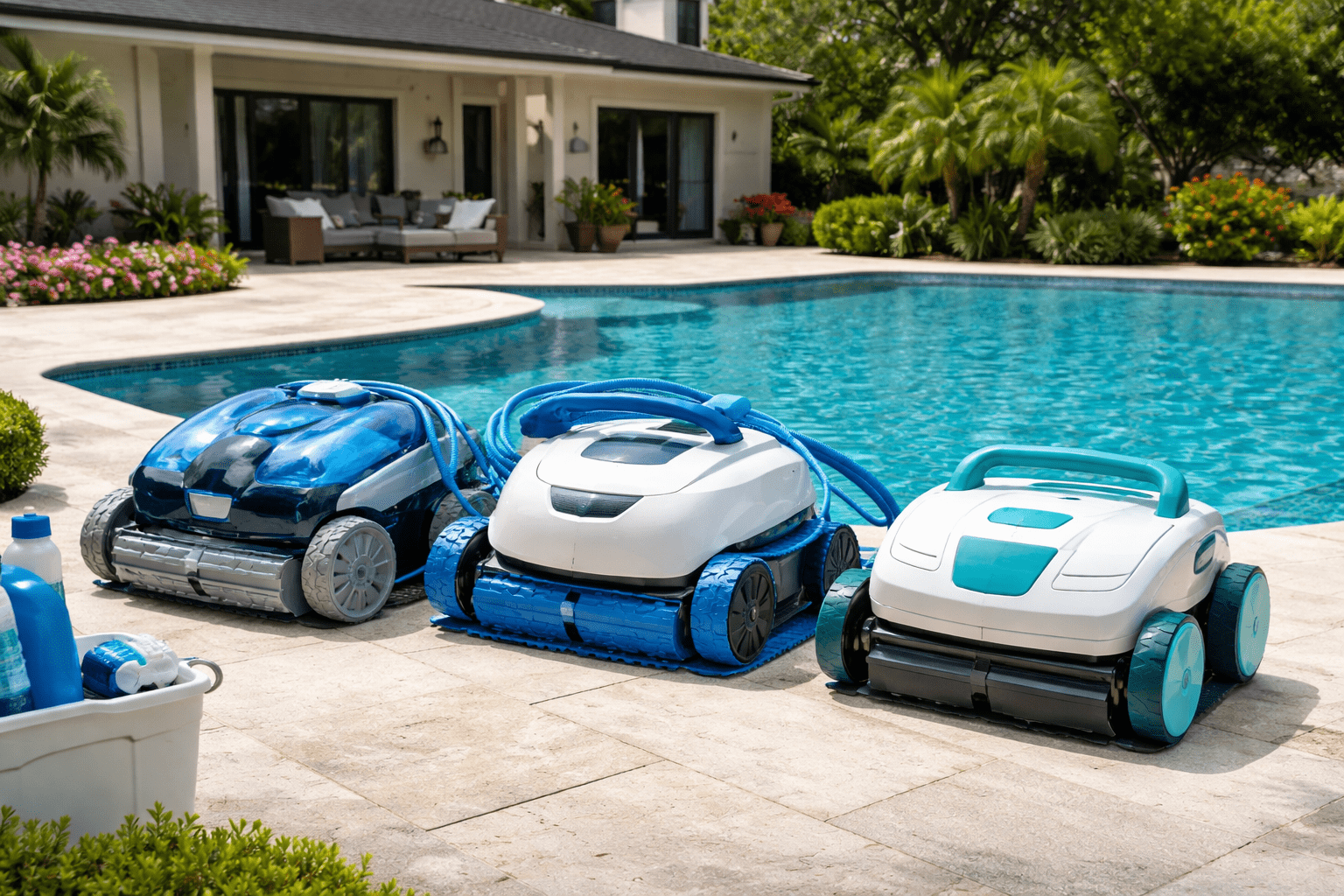
Robotic pool cleaners are the premium choice for pool owners who want a hands-off experience. These clever machines operate independently from your pool’s filtration system. Simply plug them in, drop them in the water, and let them get to work.
- How Do Robotic Pool Cleaners Work: They use built-in motors and filtration systems to navigate your pool, scrubbing surfaces and collecting debris in an onboard bag or canister. Many models feature smart navigation technology that maps your pool for thorough coverage.
- Are Robotic Pool Cleaners Worth the Money? Absolutely, for many pool owners. While they’re pricier upfront, they’re energy-efficient and reduce strain on your main pump. Plus, they save you hours of manual labour each week.
Suction Pool Cleaners
Suction cleaners connect to your pool’s skimmer or a dedicated suction line. They use the suction power from your existing pump to move around and collect debris.
- What Is a Suction Pool Cleaner and How Does It Work: Think of it as a vacuum attachment for your pool. The cleaner moves randomly across surfaces, sucking up dirt and sending it to your filter. They’re affordable and reliable, making them popular among Australian pool owners.
Pressure Pool Cleaners
Pressure cleaners connect to your pool’s return line and use water pressure to propel themselves around. They feature their own debris bag, which means less strain on your main filter.
- When Should You Choose a Pressure Cleaner: These work brilliantly for pools with lots of large debris, like leaves and twigs. If you’ve got trees surrounding your pool, a pressure cleaner might be your best mate.
Manual Pool Cleaners
Don’t overlook the humble manual pool cleaner. These include vacuum heads, brushes, and nets that you operate by hand.
- Are Manual Pool Cleaners Still a Good Option? They certainly are, especially as a backup or for quick spot-cleaning. They’re inexpensive, have no mechanical parts to fail, and give you complete control over the cleaning process.
What to Look for When Buying a Pool Cleaner
Not every pool cleaner suits every pool. Here’s what to consider before making your purchase.
Pool Size and Shape Compatibility
A cleaner designed for small pools might struggle with a large backyard oasis. Similarly, some models handle freeform shapes better than others. Check the manufacturer’s recommendations for pool size limits.
Surface Type Considerations
Fibreglass, concrete, and vinyl pools all have different needs. Concrete pools can handle aggressive scrubbing, while vinyl requires gentler brushes. Make sure your chosen cleaner is compatible with your pool’s surface.
Energy Efficiency and Running Costs
Robotic cleaners typically cost less to run than suction models because they don’t rely on your pool pump. Consider the long-term running costs alongside the purchase price.
Ease of Maintenance and Spare Parts Availability
- How Long Do Pool Cleaners Typically Last: With proper care, quality models last five to eight years. Choose a brand with readily available spare parts and good local support to extend that lifespan.
Where to Buy Pool Cleaners Near You
Now for the big question—where should you actually buy your pool cleaner?
Local Pool Supply Shops and Specialist Retailers
Your local pool shop is often the best starting point. Staff members typically know their products inside out and can recommend the right cleaner for your specific pool.
- Benefits Of Buying from A Local Pool Shop: Include personalised advice, the ability to see products before buying, and often better after-sales support. Many offer installation help and ongoing maintenance services, too.
Major Hardware and Home Improvement Stores
Big chains like Bunnings and Mitre 10 stock a range of pool cleaners at competitive prices. You won’t get specialist advice, but you’ll find decent mid-range options.
Buying Pool Cleaners Online with Local Delivery
Online retailers often offer the widest selection and most competitive pricing. Many Australian websites provide fast delivery right to your door.
- Is It Safe to Buy Pool Cleaners Online? Generally, yes. Stick to reputable retailers, check return policies, and read customer reviews. Many online stores now offer the same warranties as physical shops.
Second-Hand and Refurbished Options
- Where Can I Find Cheap Pool Cleaners for Sale: Check out Facebook Marketplace, Gumtree, or local buy-swap-sell groups. Refurbished models from authorised dealers can also offer excellent value.
Top Pool Cleaner Brands Available in Australia
Premium Brands Worth the Investment
Brands like Dolphin, Polaris, and Zodiac consistently deliver excellent performance. These manufacturers offer extensive warranty coverage and readily available parts across Australia.
Budget-Friendly Options That Still Deliver
Hayward, Kreepy Krauly, and various house brands offer solid performance without premium pricing. These are perfect for pool owners who want reliability without splashing out.
Pool Cleaner Price Guide
What Should You Expect to Pay?
Manual cleaners start from around $50. Suction and pressure cleaners typically range from $300 to $800. Robotic models can cost anywhere from $600 to $2,500 or more for top-tier options.
Are Expensive Pool Cleaners Better Than Budget Models?
Not always. Premium models often feature better navigation, longer warranties, and more durable construction. However, a mid-range cleaner might perfectly suit a small, simple pool.
Finding the Best Deals and Seasonal Sales
End-of-season sales (late autumn) often bring significant discounts. Black Friday and Boxing Day sales are also worth watching for pool equipment bargains.
Installation and After-Sales Support
Do Pool Cleaners Need Professional Installation?
Most don’t. Robotic cleaners are plug-and-play, while suction cleaners simply connect to your skimmer. However, pressure cleaners with booster pumps may require professional setup.
Warranty and Customer Service Considerations
Always register your product for warranty coverage. Choose brands with Australian service centres for faster repairs and easier warranty claims.
Frequently Asked Questions
- Which Type of Pool Cleaner Is Best for Above-Ground Pools: Lightweight robotic or suction cleaners designed specifically for above-ground pools work best. Check product specifications carefully.
- How Often Should You Run Your Pool Cleaner: Most pools benefit from cleaning two to three times weekly during summer, reducing to weekly during cooler months.
- Can One Pool Cleaner Work for All Pool Types? Not really. Always match your cleaner to your pool’s size, shape, and surface material for optimal results.
Making the Right Choice for Your Pool
Choosing the right pool cleaner doesn’t need to be complicated. Start by understanding your pool’s specific needs—its size, shape, surface type, and typical debris load. Then decide how much manual effort you’re willing to put in versus how much you’d like to automate.
Your best bet for purchasing is often a combination approach. Visit local pool shops to see products firsthand and get expert advice. Then compare prices online before making your final decision. Don’t overlook second-hand options if you’re on a tight budget—just ensure you can still access spare parts and support.
Remember, the cheapest option isn’t always the best value. A quality pool cleaner that lasts eight years and runs efficiently will cost less over time than a budget model that breaks down after two. Whatever you choose, your future self will thank you every time you jump into a sparkling clean pool without having spent hours cleaning it yourself. Happy swimming!