
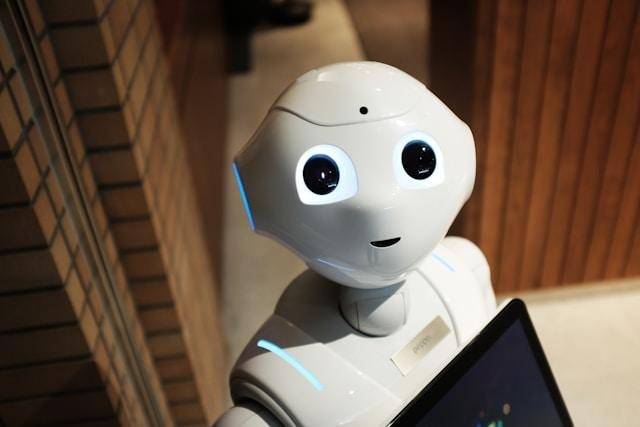
Photo by Alex Knight on Unsplash
Introduction
Robotics has evolved far beyond simple mechanical arms performing repetitive tasks. Today, advanced motion control systems are the driving force behind precision, adaptability, and productivity in robotic applications. By integrating sophisticated algorithms, sensors, and mechanical components, engineers enable robots to perform complex operations with remarkable accuracy. From manufacturing to healthcare, motion control is the invisible backbone that ensures robots move, interact and deliver consistent results. In this article, we’ll explore eight key applications of advanced motion control in robotics, highlighting how these breakthroughs are shaping industries and redefining what’s possible.
Precision Assembly in Manufacturing
Modern manufacturing needs accuracy at the microscopic level in industries like electronics and automotive. Advanced motion control lets robotic arms position components with sub-millimetre precision to ensure flawless assembly.
In semiconductor fabrication, robots equipped with high-resolution encoders and servo drives place delicate chips onto circuit boards without damaging them. In automotive plants, motion-controlled robots weld, fasten, and assemble parts with consistent quality. This reduces human error and production delays.
This precision improves product reliability. It also boosts effectiveness by cutting down waste and rework. This makes motion control essential in high-volume manufacturing environments.
Surgical Robotics in Healthcare
Healthcare has adopted robotics to perform invasive surgeries with unparalleled accuracy. Motion control systems guide surgical instruments through tiny incisions and reduce patient trauma and recovery time.
Robotic-assisted surgeries, such as those performed with the da Vinci Surgical System, rely on advanced motion algorithms to translate a surgeon’s hand movements into precise micro-actions inside the body. Motion control ensures smooth and tremor-free movements and allows surgeons to operate with confidence.
Beyond surgery, rehabilitation robots use controlled motion to assist patients in recovering mobility and offer personalized therapy that adapts to individual progress. These applications show how motion control is not just about mechanics—it’s about making lives better.
Autonomous Logistics and Material Handling
Warehouses and distribution centers now rely more on robotics to manage inventory and streamline logistics. Motion control allows autonomous mobile robots (AMRs) and automated guided vehicles (AGVs) to navigate complex environments in a safe and effective manner.
Through the integration of sensors, path-planning algorithms, and real-time motion adjustments, these robots transport goods, avoid obstacles, and find the best routes. Motion control ensures smooth acceleration, exact stopping, and stable load handling even in changing settings.
This application cuts labor costs, speeds up order fulfillment, and improves workplace safety, which makes motion-controlled logistics a foundation of modern supply chains.
Agricultural Robotics for Precision Farming
Agriculture is undergoing a technological revolution, with robotics playing a central role in precision farming. Motion control systems guide robots that plant seeds, monitor crops, and harvest produce with remarkable accuracy.
For instance, robotic harvesters use advanced motion control to pick fruits without bruising them. Drones equipped with motion-stabilized systems for surveying fields, applying fertilizers and pesticides where needed.
These new ideas reduce resource consumption, improve crop yields, and minimize environmental impact. Motion control ensures that agricultural robots can adapt to varying terrains and delicate biological materials, making farming more sustainable and productive.
High-Speed Packaging and Sorting
In industries such as food processing and pharmaceuticals, speed and accuracy are crucial. Motion-controlled robots excel in packaging and sorting tasks where they handle thousands of items per hour without loss of precision.
Advanced motion systems synchronize robotic arms with conveyor belts to ensure seamless coordination. Vision-guided motion control allows robots to identify, sort and package products based on size, shape, or quality.
The integration of high-performance linear guides and rails strengthens stability and smoothness, enabling robots to maintain accuracy even at high speeds. This combination of mechanical precision and motion intelligence delivers productivity in industries where timing is everything.
Aerospace and Defense Applications
Aerospace and defense industries demand the highest standards of precision and reliability. Motion control plays an essential role in robotic systems used for aircraft assembly, satellite deployment, and defense operations.
In aerospace manufacturing, robots equipped with advanced motion systems drill, fasten, and inspect components with exacting accuracy. In defense, unmanned vehicles rely on motion control to navigate, maintain stability, and execute tactical maneuvers.
These applications highlight how motion control ensures safety, reliability, and performance in industries where even the smallest error can have significant consequences.
Entertainment and Creative Robotics
Motion control extends beyond industrial or medical applications—it also fuels creativity. In entertainment, robots with advanced motion systems execute synchronized dances, run animatronics, and build immersive experiences in theme parks.
Cinematography relies on motion-controlled camera rigs to capture smooth, energetic shots that would be impossible with handheld equipment. Stage productions use robotic systems to move props and produce stunning visual effects.
Through the combination of artistry with engineering, motion control allows robots to bring imagination to life, showing that technology can inspire as much as it can produce.
Research and Education Platforms
Robotics research and education depend on motion control to explore new possibilities and train future engineers. Universities and labs use motion-controlled robotic platforms to study human-robot interaction with artificial intelligence and advanced mechanics.
Educational robots equipped with motion systems allow students to experiment with programming, kinematics, and automation principles. Research platforms test new algorithms to optimize motion, paving the way for innovations in industrial and consumer robotics.
Motion control provides a foundation to experiment and learn, ensuring that the next generation of engineers can push the boundaries of what robots can achieve.
Conclusion
Advanced motion control is the silent force behind the remarkable capabilities of modern robotics. From precision manufacturing and surgical interventions to logistics, agriculture and even entertainment, motion systems ensure that robots move with accuracy, reliability, and adaptability. Each application shows how motion control transforms mechanical systems into intelligent, responsive tools that boost productivity and expand possibilities.
As industries continue to evolve, the role of motion control will grow, driving new ideas that make robotics more versatile, accessible and impactful. The future of robotics is not just about machines—it’s about motion, precision and the endless potential unlocked by advanced control systems.