
Introduction
Large vehicle accidents are often far more complex than standard passenger car collisions. Commercial trucks, buses, construction vehicles and other heavy-duty vehicles operate under unique regulations, involve multiple parties, and generate extensive evidence that must be analyzed. When a serious accident occurs, investigators must reconstruct events, determine contributing factors, and identify liability while navigating numerous challenges.
Because of the size and weight of these vehicles, accidents can result in severe injuries, significant property damage, and conflicting accounts of what happened. Understanding the factors that complicate these investigations can help highlight why thorough evidence collection and expert analysis are necessary to reach accurate conclusions.
Multiple Parties May Share Responsibility
One of the biggest challenges in a large vehicle accident investigation is determining who is responsible. Unlike a typical automobile collision involving two drivers, a commercial vehicle accident may involve several liable parties.
Responsibility could extend to the driver, trucking company, vehicle owner, cargo loading company, maintenance provider, or even a manufacturer. Each party may have played a role in the circumstances leading to the crash.
Investigators must review contracts, employment records, maintenance logs, and operational procedures to determine whether negligence occurred and how it contributed to the accident.
Extensive Evidence Must Be Collected
Large vehicle accidents often produce a substantial amount of evidence. Investigators may need to gather police reports, witness statements, surveillance footage, dashcam recordings, maintenance records, driver logs, and physical evidence from the scene.
The sheer volume of information can make the investigation more time-consuming and complicated. Missing or damaged evidence may also create gaps in the reconstruction process.
A thorough investigation depends on preserving and organizing evidence quickly before critical information becomes unavailable.
Electronic Data Can Be Difficult to Analyze
Modern commercial vehicles are equipped with electronic logging devices, onboard computers, GPS tracking systems, and event data recorders. These systems often provide valuable insights into vehicle speed, braking activity, driving hours, and route history.
While this information can be quite valuable, pulling out and making sense of the data often needs specialized knowledge. Different systems may store information in unique formats, and technical problems can make retrieval tough.
Investigators must work with qualified experts to ensure that electronic records are analyzed and interpreted.
Complex Federal and State Regulations
Large commercial vehicles operate under strict federal and state regulations that govern driver qualifications, hours of service, vehicle inspections, maintenance requirements, and cargo handling.
An investigation may need to determine whether any of these regulations were violated before the accident took place. Even a minor compliance issue can become relevant when evaluating liability.
Because regulatory standards are extensive and updated, investigators must possess a deep understanding of transportation laws to identify potential violations.
Severe Accident Scene Damage
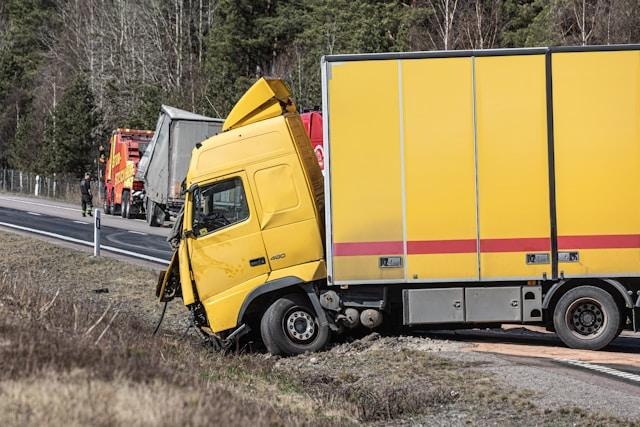
The force in large vehicle collisions often creates extensive damage at the accident scene. Vehicles may be crushed, debris can scatter over a wide area, and road conditions may be altered right after impact.
This level of destruction can make it hard to identify the precise sequence of events. Critical physical evidence may be damaged, displaced, or removed during emergency response operations.
Accident reconstruction specialists often rely on advanced techniques, measurements, and forensic analysis to piece together what happened despite these challenges.
Driver Fatigue and Human Factors
Human behavior remains a major factor in many commercial vehicle accidents. Investigators often need to evaluate whether fatigue, distraction, impairment, stress, or poor training contributed to the incident.
In cases involving trucking accidents, reviewing driver schedules, rest periods, communication records, and employment history may reveal important details about decision-making before the crash.
Figuring out the role of human factors can be complicated because investigators often need to combine physical evidence with records and witness testimony to build a complete picture.
Cargo-Related Issues
Loaded or unsecured cargo can affect a large vehicle’s handling and stability. Cargo shifts may increase stopping distances, reduce maneuverability, or contribute to rollovers and loss of control events.
Looking into cargo-related factors requires examining loading procedures, weight distributions, securement methods, and shipping documentation. Multiple companies may be involved in the loading process, which makes responsibility difficult to determine.
Even when cargo looks intact after an accident, investigators must confirm that it was loaded according to industry safety standards before the collision.
Conflicting Witness Statements
Witness testimony often plays a valuable role in accident investigations, but accounts can vary. Drivers, passengers, bystanders, and other road users may perceive the same event based on their location, visibility, and reaction time.
Stress and trauma can also affect memory and lead to inconsistencies in statements provided after the accident. Because of this, investigators cannot rely on witness observations when they determine fault.
Instead, witness reports are compared against physical evidence of electronic data, photographs, and expert findings to establish the most accurate reconstruction possible.
Conclusion
Investigating a large vehicle accident is not simple. The presence of multiple parties’ extensive evidence of electronic records, regulatory requirements, and severe accident scene damage can all create significant challenges. Extra factors such as driver behavior, cargo conditions, and conflicting witness accounts further add to the difficulty of the process.
A thorough investigation requires careful attention to detail, specialized expertise, and a systematic approach to evidence analysis. By examining every contributing factor in depth, investigators can better determine what occurred, establish accountability, and help support fair outcomes for everyone involved.