
Building a new boat dock involves many decisions, including whether to use a modular system or have one custom-designed for the property. Both options can provide reliable waterfront access, but they differ in layout flexibility, installation requirements, and overall cost. The better choice depends on shoreline conditions, available space, and how the owner plans to use the dock.
How Modular and Custom Aluminum Docks Differ
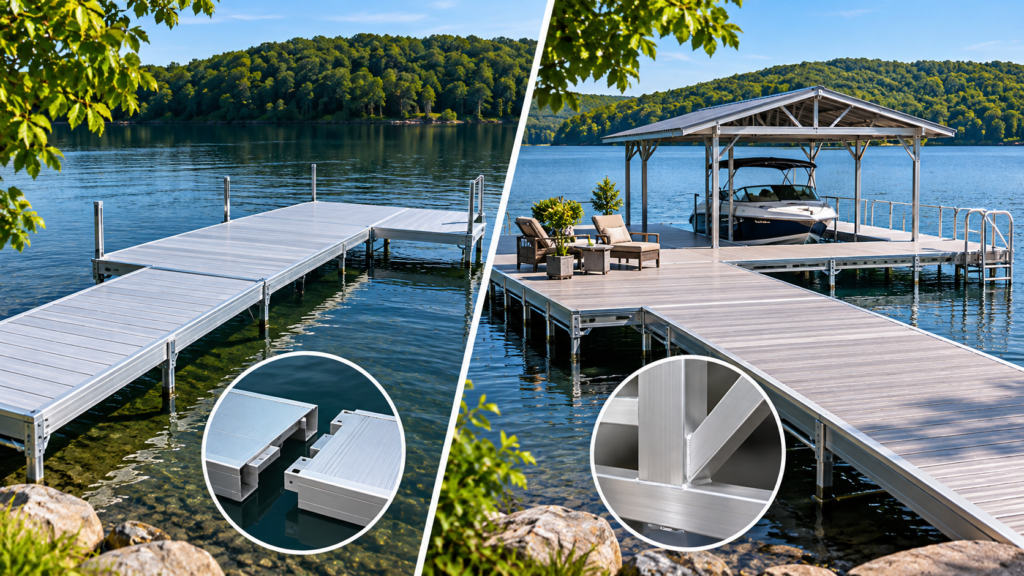
Modular docks use prefabricated sections that connect to form different platform shapes and sizes. Manufacturers typically offer standard dimensions, allowing buyers to combine sections into straight, L-shaped, or other supported configurations. Fully custom docks take a different approach, with framing, slip dimensions, and structural arrangements designed around specific property requirements. Modular aluminum boat docks can work well for straightforward waterfront installations, while custom construction may better accommodate unusual shorelines, larger vessels, or specialized recreational areas. However, modular does not necessarily mean one-size-fits-all. Certain systems allow considerable flexibility through interchangeable sections and accessories, making it important to compare the actual design options available from each manufacturer.
Comparing the Cost of Each Dock System
Modular construction can reduce initial expenses because manufacturers produce components using established designs and dimensions. Standardized sections may also simplify transportation and assembly, particularly when the property has convenient shoreline access. Buyers comparing aluminum docks for sale should still account for anchoring equipment, gangways, flotation units, and installation costs, which may not appear in the advertised price.
Custom docks generally involve additional design and fabrication work, especially when unusual dimensions or structural features are necessary. However, a standard modular layout may require expensive modifications if it does not suit the site. A custom design that avoids extensive shoreline changes could offer better overall value. Comparing complete project estimates helps owners determine whether the additional cost of customization solves a practical problem.
Which Dock Design Works Best for Limited Shoreline Space?
Narrow waterfront lots can make standard dock dimensions difficult to accommodate, especially where neighboring structures or property boundaries restrict placement. Modular sections may work if their available sizes fit comfortably within the permitted area. However, awkward gaps or oversized platforms can waste valuable space. Custom aluminum docks allow more control over walkway widths, slip placement, and platform shapes, potentially making better use of irregular shorelines. Experienced floating dock builders also consider how boats approach the dock and whether sufficient clearance remains during low-water conditions. A smaller custom layout may provide better access than a larger modular arrangement that occupies unnecessary waterfront space.
Flexibility in Dock Size and Layout
Modular systems offer an advantage when owners expect their needs to change. Depending on the manufacturer’s design, additional sections may allow the dock to accommodate more seating, recreational space, or another boat slip. However, extensions must remain within the original structure’s load limits, anchoring capacity, and local permitting requirements.
Fully custom construction provides greater freedom during the initial design stage. Owners can specify unusual slip widths, covered areas, walkway connections, and equipment locations without relying entirely on standard module sizes. This can be useful for properties accommodating several boats with different dimensions.
An aluminum floating dock also needs a suitable flotation arrangement regardless of its configuration. Adding sections or heavy accessories changes the platform’s weight distribution and may require additional support. Buyers researching aluminum boat docks for sale should ask how easily each system can accommodate future changes and whether replacement components will remain available.
Installation Time and Site Preparation
Modular docks can sometimes be installed faster because their prefabricated components require less on-site fabrication. However, installation still depends on shoreline access, underwater conditions, anchoring requirements, and weather. Custom systems may require longer production schedules, particularly when specialized components or engineering work are involved. Neither option eliminates the need for proper site preparation and permits.
Flotation Systems offers custom aluminum dock systems designed to accommodate different shoreline conditions, boat sizes, and waterfront activities. Its floating dock options give property owners flexibility in choosing platform layouts, anchoring systems, and other features that suit their needs. Whether a property calls for a simple dock arrangement or a more specialized design, the company can help determine which features make sense for the site without adding unnecessary costs.