
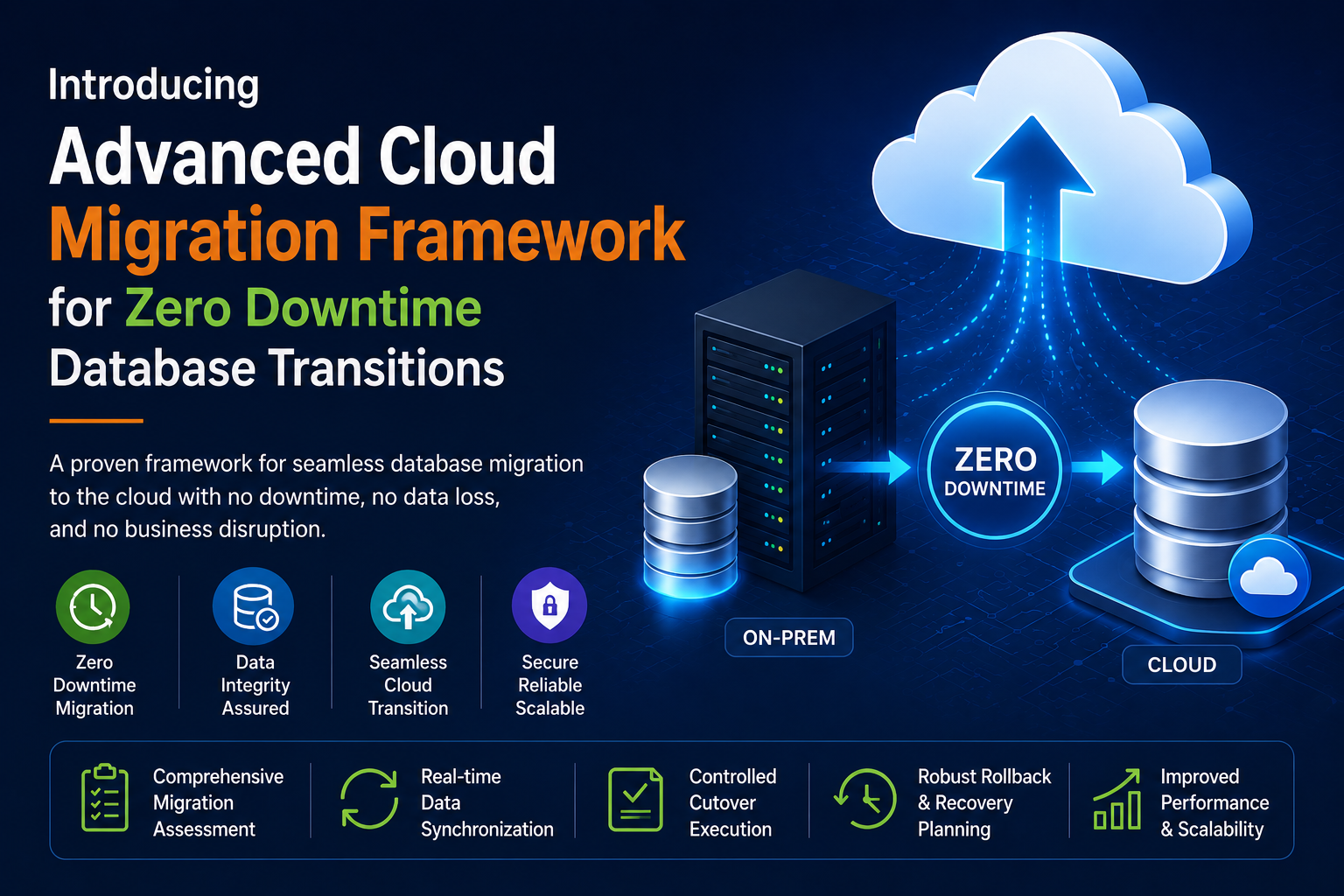
Zero Downtime Database Migration is a part of the Modern Business
Organizations face constant pressure to upgrade their infrastructure, make changes for scalability, and reduce costs of operations, with today’s move of workload to the cloud an integral piece of digital transformation strategy. The problem is that many companies still have security concerns about downtime, data loss, and application disruption that make database migration difficult for IT.
Mydbops has implemented a new Advanced Cloud Migration Framework to address these concerns relating to Zero Downtime Database Migration. This framework assists the organisation in migrating their databases from their on premise environment to a Cloud platform while ensuring consistency and continuity of information, ongoing operation of business functions and availability of applications.
Why Developing a Cloud Database Migration Strategy is Important
Many businesses are running old database systems that restrict their ability to grow and increase the costs of running those legacy systems. The benefits of moving to the Cloud are obvious, but it is not as simple as just moving your data to the Cloud. Alongside its migration methodology, Mydbops provides comprehensive database consulting services that help organizations optimize performance, strengthen security, improve scalability, and ensure that cloud migration projects align with long-term business objectives.
To create an effective Cloud Migration strategy, there are some areas that need to be considered:
- Application Compatibility
- Data Integrity
- Performance Optimisation
- Security and Compliance
- Disaster Recovery
- Business Continuity
If you do not have a defined process to migrate to the Cloud, your organisation may experience unexpected downtime, poor application performance or invalid data which could hurt your customers and disrupt your business process.
Five Key Components in the Migration Framework
1. Assessing Migration Readiness
Before moving to the cloud, it’s essential for an organisation to conduct a thorough evaluation of the current database as a whole.
The assessment includes the following aspects:
- Evaluating your current infrastructure
- Evaluating your workloads
- Inventorying your current dependencies
- Determining your available capacity
- Identifying any exposure to risk
Doing this comprehensive assessment will allow organisations to identify roadblocks they may face and ultimately create a tailored migration plan that best suits their individual needs.
2. Data Integrity
The most critical aspect of any database migration project is ensuring the integrity of the data migrated.
There are many points of validation during a migration to ensure the following:
- All data is exactly the same (100%) as what was in your source database.
- The database Schema in the target environment will be exactly what was in the source database.
- All transactional records will be included in your new database.
By going through a series of steps to validate all data before and after the migration, this will help to eliminate or reduce data integrity issues during and after the migration process.
3. Data Synchronisation in Real Time
The last several years have provided businesses with numerous challenges in their efforts to synchronise their source and target databases during this entire database migration process. The Mydbops Framework utilises cutting edge methods for the replication and synchronisation of databases to ensure that all of their databases stay in sync, allowing organisations to continue to provide services to their customers during the migration of data.
4. Controlled Cutover Execution
Properly controlling the execution of the cutover process is critical to ensuring that users are not disrupted during the transition of their workloads from the old system to the newly built system.
Every organization should have a plan in place for how they will respond in the event of a disaster, no matter how well prepared they think they are. The framework includes rollback procedures as a way for teams to easily revert back to their previous operating condition and reduce downtime during the recovery process. Rollback procedures provide organizations with an added level of security against the anxiety associated with moving to another platform or technology and give organizations certainty about their business.
Benefits of the Mydbops Cloud Migration Framework
The Mydbops Cloud Migration Framework will benefit organizations that use it. Specifically, organizations will benefit from:
- Reduced risk associated with migrating databases
- Increased availability of their databases
- Improved scalability
- Improvements to the overall performance of their systems
- Greater protection of their data
- Reduced time to cloud
- Improved operational efficiency
With all of these benefits, an organization will be able to focus its energy and resources on applying innovative new ideas while still providing its most critical database customers with safe and reliable services.
Supporting Future Database Modernization
Cloud adoption is continuing at an impressive pace, and enterprises are looking for cloud migration strategies that put their emphasis on key factors such as reliability, performance, and business continuity. The Mydbops Cloud Migration Framework has been developed to show how committed Mydbops is to helping enterprises to modernize their database infrastructure and still reliably deliver services to customers.
Given Mydbops’ significant database capabilities combined with a well-defined formalized process for migrating to the cloud, customers will have a very good opportunity to successfully transform into cloud-based services while ensuring that there is no disruption to business operations.
Looking to simplify your next Cloud Migration project and achieve Zero Downtime Database Transitions? Visit Mydbops and learn more about Mydbops’ Database Migration services, and we can discuss the details of your migration needs together today!