
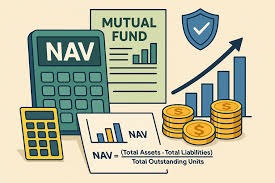
When people explore mutual funds, one of the first numbers they notice is the NAV. It looks simple. A single value that shows the price of the fund.
Because of this, many assume that a lower NAV means a cheaper fund, and a higher NAV means a more expensive one. But this is not how it works.
To make better decisions, it helps to understand what NAV actually represents and how it connects with concepts like NFO.
What is NAV in simple terms?
NAV, or Net Asset Value, is the per-unit value of a mutual fund.
It is calculated by taking the total value of all the fund’s investments, subtracting expenses, and dividing it by the number of units.
In simple words, NAV tells you the price at which you buy or sell units of a mutual fund.
This value changes daily based on market movements.
Why does NAV change every day
Mutual funds invest in assets like shares or bonds.
The value of these assets changes every day. As a result:
- The total value of the fund changes
- The NAV moves up or down
If the underlying investments perform well, NAV increases. If they fall, NAV decreases.
This is why NAV is updated regularly.
Common misunderstanding about NAV
One of the most common assumptions is this:
A fund with a lower NAV is cheaper and better to invest in.
This is not correct.
NAV does not tell you whether a fund is good or bad. It only reflects the current value of its assets.
For example:
- A fund with an NAV of ten and another with an NAV of one hundred can both perform similarly
- What matters is percentage growth, not the absolute NAV number
So, comparing funds based only on NAV can be misleading.
NAV and NFO connection
The idea of NAV often comes up when people look at an NFO.
An NFO, or New Fund Offer, is when a mutual fund is launched for the first time. During this period, the NAV is usually set at a base value, often ten.
This can create the impression that the fund is available at a lower price.
But this does not mean it is better.
An NFO has no past performance. An existing fund with a higher NAV may have a track record.
So choosing between an NFO and an existing fund should not be based on NAV alone.
What NAV actually helps you understand
NAV is useful, but in a limited way.
It helps you:
- know the current value of your investment
- understand how the fund has moved over time
- calculate how many units you hold
It does not:
- predict future performance
- indicate whether a fund is better than another
- show risk levels
So it should be seen as a reference point, not a decision-making tool on its own.
How to read NAV the right way
Instead of focusing on the number itself, look at how NAV has changed over time.
Ask simple questions:
- has the NAV grown steadily over years?
- how did it behave during market declines?
- does it show sharp fluctuations?
This gives a better idea of how the fund performs across different conditions.
NAV and returns
Returns are calculated based on how NAV changes over time.
For example:
- if you invest at a certain NAV and it increases later, the difference becomes your gain
So NAV movement reflects the return, but the number itself does not tell you the return directly.
Looking at return percentages is more useful than looking at NAV levels.
The role of market conditions
NAV is directly linked to market conditions.
In rising markets:
- NAV tends to increase
In falling markets:
- NAV may decrease
So short-term changes in NAV often reflect market movement rather than the fund’s long-term quality.
Understanding this helps avoid reacting to small daily changes.
Behavioural mistakes to avoid
Some common mistakes include:
- choosing funds with lower NAV, thinking they are cheaper
- avoiding funds with higher NAV, assuming they are expensive
- focusing too much on daily NAV changes
These approaches do not reflect how mutual funds actually work.
A simple way to think about NAV
You can think of NAV as the value of one unit of your investment.
It tells you what your investment is worth today, but not how good the fund is.
That judgement comes from looking at performance, consistency, and how the fund fits your goals.
Conclusion
NAV is one of the most visible numbers in mutual funds, but it is often misunderstood.
It represents the current value of the fund, not its quality or potential.
Whether you are looking at an existing fund or an NFO, the NAV alone should not drive your decision.
Looking beyond NAV and focusing on overall performance, consistency, and suitability will give a clearer picture when choosing a mutual fund.