
Entrepreneurs face critical decisions every day with incomplete data and tight deadlines. This article compiles 25 practical lessons from business leaders who have navigated uncertainty in hiring, pricing, growth timing, and resource allocation. Drawing on insights from experts across industries, these strategies offer actionable guidance for making smarter choices when the path forward isn’t clear.
- Iterate Quickly Amid Regulatory Change
- Limit Rebrand Risk Through Reversibility
- Remove Barriers So Players Can Play
- Mine Dormant Operational Data
- Refine Pricing Through Early Engagements
- Seal Roof and Protect Assets
- Stage Commitments to Resolve Unknowns
- Validate Transferable Skills With Pilot Clients
- Trust Intuition to Shape Custom Design
- Reduce Scope for Affordable Failure
- Prioritize Shared Values Over Lower Costs
- Choose Reversible Staffing Options
- Let Values Safeguard Your Reputation
- Automate Only Proven Customer Pain
- Require Sustained Sales Before Reorders
- Let Current Cash Flow Guide Growth
- Test AI Within Clear Human Guardrails
- Build for Your Worst Week
- Route Infrastructure to Ship Faster
- Buffer Calculated Risks With Capital
- Show Restraint Through Honest Action
- Delay Expansion Until Standards Hold
- Consult Your Team’s Diverse Expertise
- Set Catalog-Wide Price Floors
- Own Decisions and Weigh Consequences
Iterate Quickly Amid Regulatory Change
One decision that stands out was launching Facturero.com in 2016, right as Costa Rica’s electronic invoicing mandate was rolling out. The regulations were still being finalized by the tax authority, so I had to build compliance software against rules that could still change. My process was simple: build the core engine flexible enough to adapt to regulatory shifts, launch early with a small group of pilot clients, and treat every government update as a sprint rather than a crisis.
What I learned is that in situations with incomplete information, speed of iteration matters more than perfect planning. Waiting for full certainty would have meant missing the market entirely, since competitors who moved fast captured the early adopters. That product now serves thousands of businesses in Costa Rica.
The same principle applied later when I helped build a health tech platform that we eventually sold to Huli Health in 2018. We made calls on positioning and market fit before we had complete validation, and adjusted fast when we were wrong.
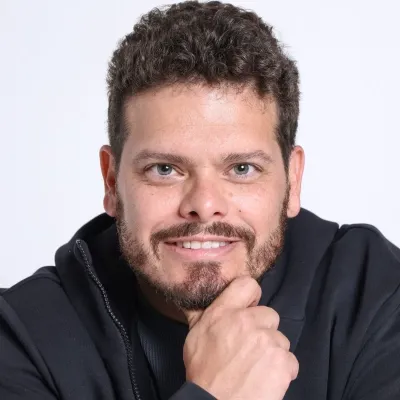
Joe Phillips, Founder, Spearhead Technologies
Limit Rebrand Risk Through Reversibility
Retiring our original domain was the hardest one. It carried well over a decade of history and a large accumulated backlink profile, and I chose to redirect the whole thing into a new brand.
Nobody could tell me what would happen. Redirects either carry authority across or they do not, and the answer from every consultant I asked was some version of “usually it mostly works.” When organic search is your entire acquisition channel, mostly is a word with your business sitting on the other side of it.
My process was to stop trying to predict the outcome and start bounding the downside instead. I asked three things: How quickly would I know if this had gone wrong? How long could we survive at reduced traffic? And could I reverse it? The first two had answers I could live with, and the third was yes, because a redirect can be undone. That turned an unknowable bet into a survivable one, and I stopped waiting for a certainty that was never going to arrive.
It worked. Search visibility ended up comfortably ahead of where the old domain had been.
What I took from it is that the useful question under uncertainty is not what will happen. It is how fast will I find out, and what does being wrong cost me. I have made worse decisions faster and better decisions slower since then, and the ones I regret are almost always the ones where I sat waiting for information that did not exist.

Daniel Battaglia, Founder & CEO, Parksy.com
Remove Barriers So Players Can Play
The hard calls aren’t the ones where you’re missing data. They’re the ones where the data you have all points the safe direction and your gut points the other way.
When we built Pitch.ac, every comparable game did the obvious thing: make people create an account before they play. And the logic is airtight on paper. An email is a lead, a lead is a marketing list, a list is how you bring people back. Give that up and you’re throwing away the one asset everyone tells you to protect. I had no numbers saying the opposite would work. Nobody does before they ship it.
I made the call anyway. Name, a seat at the table, start playing — nothing to install, no form, no email wall. The process wasn’t a spreadsheet. It was one question I couldn’t shake: what does the person actually want in the ten seconds after they hear about this game? They want to play. Not to be onboarded, not to be captured — to play. And every signup field I added was me getting in the way of the one thing they came for, in exchange for an email I’d probably never earn the right to use anyway.
So I sized the downside instead of the upside. Worst case, I’ve lost a list I never had yet. That’s a loss I could survive. The other worst case — a signup wall quietly turning away the exact people curious enough to try — was the one I couldn’t measure and couldn’t undo. When you can’t get the data, you can at least ask which mistake is reversible. Losing emails is. Losing the people who bounced off your front door isn’t; they don’t come back to tell you they left.
What I learned is that “not enough information” is usually a disguise. Most of the time you have enough — you just don’t like that it’s pointing somewhere uncomfortable, so you call it uncertainty and wait. The decision got easier the moment I stopped trying to predict the outcome and started asking which version of being wrong I could live with.

Eric Lafleche, Founder, Pitch
Mine Dormant Operational Data
The hardest call I made was betting that the problem was missing data, not missing effort, when I could not prove it yet.
We were watching EOBs come in at roughly half the expected rate. The billing company blamed the payer. That is the easy story, and it is basically unfalsifiable, so everyone accepts it and moves on. Something about it did not sit right.
I had no clean way to test the theory. What I did have was years of our own adjudicated claims sitting in spreadsheets nobody had ever mined. So I made a bet with incomplete proof: the answer was better information about payer behavior before care was delivered, not another biller and not a faster clearinghouse.
My process was narrow. Find the one assumption everyone treated as fixed, and check whether it was actually true. “The payer just pays low” was that assumption. It was not fixed at all. The same payer paid very different amounts depending on the plan and the reimbursement method.
What I learned: when information is limited, stop collecting more opinions. Go find the data your own operation already generated and never looked at. The expensive decisions usually hinge on a fact you were already sitting on, in a file nobody opened.

Kyle McHenry, Founder, Revenue Logic & creator of PayerLenz, PayerLenz
Refine Pricing Through Early Engagements
When I launched done-for-you consulting, I set pricing without much to go on. I didn’t have real comparables yet, and I hadn’t defined what was actually included in a DFY engagement, so I priced based on what felt fair rather than what the work would actually take.
That gap showed up fast on one project. The scope on paper looked small, but the actual work kept expanding into hours I hadn’t accounted for at all. I’m still working through that project now, and I already know I’ll come out underwater on it. There’s no going back and recharging for a quote I already committed to. I’m treating it as the cost of the data I needed, and finishing it well regardless. But I wasn’t willing to repeat that same math on the next client, so I used what that project taught me to fix the pricing model going forward.
I raised the DFY rate and, more importantly, tightened what’s actually included in that price, so scope is defined upfront instead of left open-ended. That meant having a harder conversation about what changes and what doesn’t once a project starts, which isn’t comfortable to introduce mid-relationship with existing clients, but it was the right trade-off.
What I took from it: with a new service line, the first few clients aren’t just clients; they’re your pricing research. I don’t treat an early quote as fixed anymore. I build in a review point after the first two or three engagements and adjust based on actual hours, not assumptions. It’s a small process change, but it’s the difference between pricing reflecting guesswork versus pricing reflecting reality.

Stacy Derrick, Small Business Coach and Consultant, Stacy Derrick Creative, LLC
Seal Roof and Protect Assets
We had about 2,000 square feet of a commercial roof opened up when I could see a storm building way earlier than expected. The problem was, the radar apps were all giving us different answers on when it was actually going to hit. And we had some equipment inside the building, so I really didn’t have much room to gamble.
At that point, I had to look at the worst-case scenario. Yeah, stopping the job was going to cost us labor and set us back, but leaving that roof open could have caused a huge amount of water damage. And I’m not keeping a crew up there on an exposed roof once the wind starts picking up.
So I stopped the installation and got everybody off the roof, then spent the time we had getting that building sealed up. The temporary seal held and everything inside stayed dry.
What I learned from that is, when you don’t have all the information, you have to look at what you can control and what you’re not willing to risk. A few extra hours of labor is a whole lot easier to deal with than damaged equipment, a ruined reputation, or somebody getting hurt.
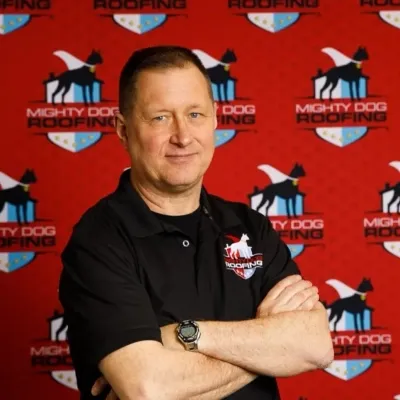
David Bauer, Business Owner, Mightydog Roofing
Stage Commitments to Resolve Unknowns
A prospective client once asked me to commit to a fixed budget and launch timeline for a new formulation before key details were known, including ingredient compatibility, manufacturing requirements and stability targets. Accepting the full project immediately would have secured more revenue, but the estimate would have been based largely on assumptions, so it was a high-risk situation with high uncertainty.
I separated what we knew from what we were assuming, identified the unknowns most likely to change the cost or schedule, and asked what the least expensive work would be to resolve them. I decided to propose a small paid feasibility phase before committing either of us to the full development program.
That meant risking the larger engagement, but it gave the client a realistic technical path and prevented both sides from building plans around an unreliable estimate. I learned that limited information does not require a larger guess. It requires a smaller first decision. When uncertainty is high, I commit in stages and make each stage answer the questions needed for the next one.
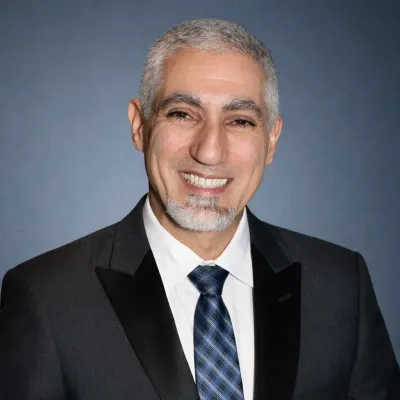
Vardan Ter-Antonyan, Founder and Managing Principal, Ter-Antonyan Consulting LLC
Validate Transferable Skills With Pilot Clients
After selling the consumer-food business I had worked in since 2009, I faced an enforceable noncompete that kept me from returning to the industry where nearly all of my operating experience lived. The difficult decision was whether to wait for a familiar role or build EVKII in a field I cared about, marketing, while serving industries I had never worked in.
I chose to start the agency. My decision process was to separate the skill from the industry. I knew how to formulate and launch products, build demand, measure conversion, and use analytics to decide what to scale. I did not yet know whether clients outside food would value that process. My first two clients, a cybersecurity company and an online auto dealership, answered the question. Their markets were different, but lead tracking, conversion measurement, and ROI discipline transferred.
The lesson was that limited information does not require a blind leap. Find the smallest real customer test that can disprove your assumption, then let evidence replace the confidence you do not yet have.

Heath Squier, CMO | Founder, EVKII
Trust Intuition to Shape Custom Design
The hardest decision I made at looch was creating our own custom, cross-platform design system.
Both iOS and Android have tried and true design systems that users are already familiar with. Walking away from them meant designing hundreds of custom components that look nothing like the ones in the Apple and Google libraries. But a financial OS needs to come across as a brand, not just a tool, and that meant a design system that was novel, intuitive, and neumorphic.
Applying psychology was more difficult than designing. A system nobody has seen before has no adoption data, so I always wondered: “Is the user going to get it?” My process was to hold every component to two assumptions I refuse to break: The user doesn’t know accounting, and the user doesn’t want to learn accounting. Every component had to clear those two, however good it looked.
The decision was both difficult and inevitable. Classic design systems were designed for tools and tightly scoped apps. An end-to-end app like looch guides people through intimidating territory, and that calls for something minimal and reassuring.
What I learned from our user feedback is to trust your gut instinct. If you like something to the point it makes you want to use it, and you’re ready to apply it consistently, your users will catch on, learn, and appreciate the thought you’ve put into it.

Michel Myara, Co-founder & Product designer, looch
Reduce Scope for Affordable Failure
The hardest one was deciding to stop building MCOOK as a single product and start something broader, without any certainty the broader thing would work. I didn’t have market research proving Tibicle’s model would succeed. What I had was a pattern: MCOOK solved one restaurant’s problem well, but every prospective client asked if we could build other things too. That question kept repeating before I had a plan to answer it.
I stopped waiting for certainty and started with the smallest testable version, taking on a few non-POS projects to see if the team could actually deliver outside the one niche we knew. The lesson: limited information isn’t solved by waiting for more of it; it’s solved by shrinking the decision until you can afford to be wrong.

Raj Jagani, CEO, Tibicle LLP
Prioritize Shared Values Over Lower Costs
Early in building the business, a key supplier for reclaimed wood suddenly shut down operations with almost no warning, right in the middle of fulfilling a large order. There was no time to research alternatives thoroughly or wait for perfect information; a decision had to be made within days. I gathered the small amount of information available, spoke directly to two smaller local workshops I had briefly worked with before, and chose the one whose values around sustainable sourcing matched ours most closely, even though their pricing was slightly higher. That decision meant absorbing a 9% increase in production cost for that batch, but it also meant the order was delivered on time and quality remained consistent. Customer satisfaction for that batch stayed at 91%, with no complaints about delay. The lesson I learned was simple: when information is limited, choosing partners who share your values matters more than chasing the lowest price or perfect certainty.

Brinda Ayer, Environment and Development Consultant, Founder and Principal Consultant, Urban Creative
Choose Reversible Staffing Options
A recurring hard call for me at Prose has been deciding whether to add fixed headcount when demand looks promising but future revenue isn’t locked in yet. My process is pretty simple: separate what I know from what I’m hoping, model the downside if I’m wrong, and ask whether there’s a reversible move first. Often that means using freelance or fractional talent to add capacity without betting the farm on payroll. I’ve learned that entrepreneurs get into trouble when optimism quietly sneaks into the spreadsheet dressed up as a forecast. You rarely get perfect information, so the goal isn’t certainty; it’s making a decision where being wrong won’t kill you. I’ll take a smart, reversible 80% call over a beautifully researched decision made three months too late.

Justin Belmont, Founder & CEO, Prose
Let Values Safeguard Your Reputation
Early on, I had a full production run of one of my first professional formulas ready to ship, and a batch test came back with a stability result I didn’t love. Nothing dangerous, but not the shelf life I’d promised my estheticians. I had orders waiting, money tied up, and no perfect data to tell me which way to go.
I scrapped the batch. It cost me weeks and a chunk of cash I didn’t really have yet. But I built Luminous Skin Lab for pros who put their name on every treatment, and I couldn’t hand them something I wasn’t proud of.
What I learned: when the numbers are fuzzy, your values are the data. Reputation is built in the decisions nobody sees, and lost in the ones everybody does.
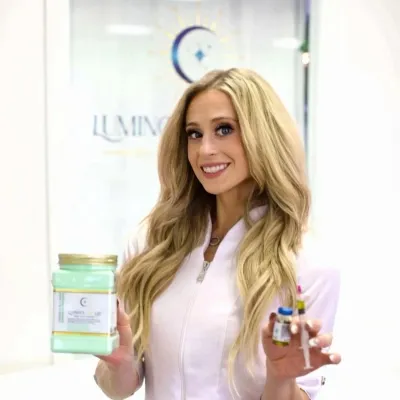
Katelyn Fitzgerald, Founder & CEO, Luminous Skin Lab
Automate Only Proven Customer Pain
Deciding What Not to Automate
One counterintuitive decision at Plainly Flows was where to stop automating. When your product helps creative teams automate repetitive video versioning, it’s natural to want to automate every step that can technically be automated.
The problem was that technical possibility didn’t equal value for the customer. We didn’t know if users wanted more automation, or if they just didn’t want to think about the repetitive production work but still wanted creative control.
Rather than trying to build the broadest solution, we focused on the workflow with the clearest pain: repetitive versioning. My decision process was to look for frequency times frustration. If teams did a task all the time and hated doing it and didn’t think it was creatively valuable, that was a good candidate for automation.
That was a big product lesson for me. Founders often make hard uncertain decisions harder when they ask, “What else could we build?” A better question is, “What problem are customers already proving is worth solving?”
Entrepreneurship is always about limited information. The answer is not to eliminate doubt before taking action. It is to narrow the decision until the evidence you have is useful enough to move forward.

Nebojsa Savicic, Co Founder, Plainly Flows
Require Sustained Sales Before Reorders
Last August I ordered 200 units of a piece that had been selling well for a few weeks, betting the trend would hold. It didn’t — the units sat as dead stock and tied up cash I needed elsewhere. I had a demand signal, not demand data, and I treated it like the second one. Now I only reorder against a run that’s held for months across both shops, not a spike. The lesson wasn’t about forecasting better; it was about admitting three weeks of good sales tells you nothing on its own.

Aviad Faruz, Owner, FARUZO Jewelry
Let Current Cash Flow Guide Growth
The hardest decision I made with limited information was during my time at JetSmarter.
We scaled from three people to over 300 in a short window. Revenue was moving so fast that the numbers I had access to were already outdated by the time I saw them.
I had to decide how aggressively to spend on growth with no reliable forecast to lean on.
My process was simple: hyperfocus on cash flow. Spend according to your current cash flow, not what you hope next quarter looks like.
That meant turning down opportunities that looked good on paper because the cash to fund them wasn’t actually there yet.
What I learned: when you don’t have enough information to trust a projection, trust the cash you can see today. It’s the one number that doesn’t lie to you.
I carry that into Evestar. Every decision we make for a client starts with the real numbers in front of us, not a model of where we hope they’ll be.

Donnie Strompf, Founder & Marketing Strategist, Good At Marketing
Test AI Within Clear Human Guardrails
One difficult decision we faced was determining how quickly to redesign parts of our workflow around AI when there was still limited information about what it could reliably handle. We could see the potential, but we also knew that moving too quickly could create mistakes in areas involving client experience, privacy, and compliance.
My decision-making process was to separate the work into two categories. If a task was repetitive, the desired outcome was clear, and no sensitive client information was required, we could test whether AI improved the process. If the work required judgment, empathy, compliance review, or an understanding of how a client would experience the result, we kept human oversight and responsibility in place.
We started with limited tests, reviewed the actual results, identified errors, and expanded only when the outcome was consistently better. What I learned is that an entrepreneur rarely has perfect information. The goal is to make a reversible decision, measure the result, and improve based on what the evidence shows.

Eric Pemper, Founder & Managing Member, CuraDebt
Build for Your Worst Week
My rule for deciding with incomplete information is to pick the option I can still run every single day if the missing information never arrives. VolRadar, the bootstrapped options and volatility analytics platform I run, ships end-of-day data rather than live feeds, and its data sources page spells out exactly what that covers. Live data is what a survey tells you people want; end-of-day is what one person can maintain, verify and stand behind daily without an ops team. So the question I ask isn’t which version is best, but which version survives my worst week. Incomplete information punishes ambition far harder than it punishes maintainability.

Aigars Pilmanis, Founder, VolRadar
Route Infrastructure to Ship Faster
The two biggest architectural decisions we made early at Nika Finance were both made with almost no market validation: choosing angel capital over venture funding, and committing to a routing model instead of building infrastructure from scratch.
The funding decision came first. Most crypto teams raise as much capital as they can, then burn it on the path to a token launch. That model is optimized for exit timing, not product timing. We chose angels instead: long-term aligned, builder-friendly capital. No pressure to manufacture a token event before the product was ready. That decision meant we had to stay lean, but staying lean forced us to think harder about what to build and what to route.
The routing decision was harder because there was less precedent. We committed to routing perpetuals through Hyperliquid via builder codes and prediction markets through Polymarket before either integration had shipped. Most teams in DeFi still want to build the full stack. It signals technical depth. It gives founders control. But it also means years of development before you have a product users can touch.
We made the opposite bet: build the interface, the wallet, the cross-chain plumbing, and the AI layer. Route everything else to teams that already ship best-in-class infrastructure. That meant we could go live with perpetuals that matched the quality of the best standalone perps platform without spending two years building a matching engine.
The decision-making process was straightforward: identify the constraint, map the trade-offs, choose the path that let us ship faster without compromising quality. The constraint was time and team size. Three people cannot build what a 30-person team builds. We had to route or wait.
What I learned is that most decisions feel bigger before you make them than after. Once we committed to the routing model, the product surface became clear. We could ship five product lines—spot, perps, staking, yield, and prediction markets—in a single mobile interface because we were not building all five from the ground up. The orchestrator model compounds faster than the monolith model.
The other lesson: operating constraints force better decisions. If we had raised $20M instead of $2M, we probably would have hired faster, built more infrastructure ourselves, and shipped slower. Capital gives you options. Options slow you down.
Daniel Brinzan, Founder, Nika Finance
Buffer Calculated Risks With Capital
When I first started in real estate, I bought a distressed property within a week of purchase. The seller was looking for a quick answer, and I wasn’t able to do a full inspection of the foundation. Using recent comparable sales, I estimated the risk, added a buffer for any structural repairs, and wrote a low offer. In the end, the property closed, and the minor repair to the foundation was exactly what was required. Taking calculated risks and having sufficient financial “padding” allowed for a confident decision in a data-deficient situation.

Justin Turner, CEO, Turner Home Team
Show Restraint Through Honest Action
We once faced a demanding situation at Thelemata, working with a client association whose community was still shaken by a tragedy in their industry, even though the client itself had no direct connection to it. Our job was to guide the client through communicating during that sensitive time, with limited information and no real precedent to work from.
The challenge was exercising patience and precision. We resisted the pressure to speak quickly just to quiet the concern. Instead, we focused on what the client genuinely knew and could control: their own community’s safety practices. It mattered that we didn’t speak on a tragedy that wasn’t theirs to address. We advised them to let action carry the message, strengthening their own protocols rather than rushing out reassuring words.
What I learned is that restraint and honesty matter more than speed. In high-stakes situations with incomplete facts, credibility isn’t built through the fastest response. It comes from consistently following through. That commitment to honesty and action is what actually earned trust, not anything we said in the first hours.

Zac Hunter, CEO, Thelemata
Delay Expansion Until Standards Hold
During a period of rapid growth, I had to decide whether to open more offices before we fully understood how local tax issues, hiring quality, and oversight would work across new markets. On paper, the expansion looked promising and seemed like a natural step forward. In practice, tax controversy work depends on consistent judgment and clear client communication. Those standards can weaken quietly when growth moves faster than leadership attention.
I approached the decision by creating a clear threshold instead of relying on a forecast. A new market had to meet the same legal standards, response times, and transparency expectations as our existing locations. When it could not meet those expectations, we delayed the opening and refined our operating model first. The lesson was simple: growth should prove that the business is ready rather than simply test its ambition.
Jonathan Sooriash, Founder & CEO, J. David Tax law
Consult Your Team’s Diverse Expertise
Honestly, I would say that there were many times in the early days of my business where I found myself having to make decisions with limited information. In the beginning, we had a much smaller team, plus we were developing software and a type of service that was pretty new, so we didn’t exactly have a lot of direct competitors to look toward to gather information. What I always ended up doing in situations where I had to make a decision about something with limited information was bring it to my team. Though we were small, multiple brains are better than one, especially when all of those brains come with unique perspectives and backgrounds. By working together in these instances, it was the best way to gather as much information as possible simply through everyone’s expertise, and that really helped.

Soumya Mahapatra, CEO, Essenvia
Set Catalog-Wide Price Floors
I’m a solopreneur selling men’s jewelry. For my rings, I made the difficult decision not to set ring-specific prices, but rather a price floor across my catalogue. I use gold and labor to set the price floor on each of my rings. I sell numerous custom orders and therefore do not have a separate custom fee, but I do have a minimum order value. I provide custom orders with engraving and resizing free of charge after the minimum order value is reached. This way, customers see only one number on the product page, not a conspicuous custom fee. This, I believe, greatly simplifies the purchasing process.

Stephen Chen, Founder, FoundryCut
Own Decisions and Weigh Consequences
Dealing with unknowns is one of the more difficult parts of entrepreneurship. As a business owner, the number of paths forward is basically unlimited, but there is no perfect answer or precedent to learn from. The situation is always unique, and while an entrepreneur can seek advice or guidance, the responsibility and the consequences fall upon the entrepreneur. Here are my rules:
1. Never delegate decisions — the buck stops with you.
2. Take a simple approach: write down the pros and cons, going into as much detail as possible and using your best estimate of the probability and impact of each decision.
3. While the responsibility is always yours, make sure you speak to your stakeholders, especially those who will be impacted by your decision.
4. Commit and move ahead — there’s no use looking back with regrets. Deal with the consequences as best you can, and learn from your mistakes, if any; they are always the best teachers.

Kam Weng Leong, Co-founder, Grof