
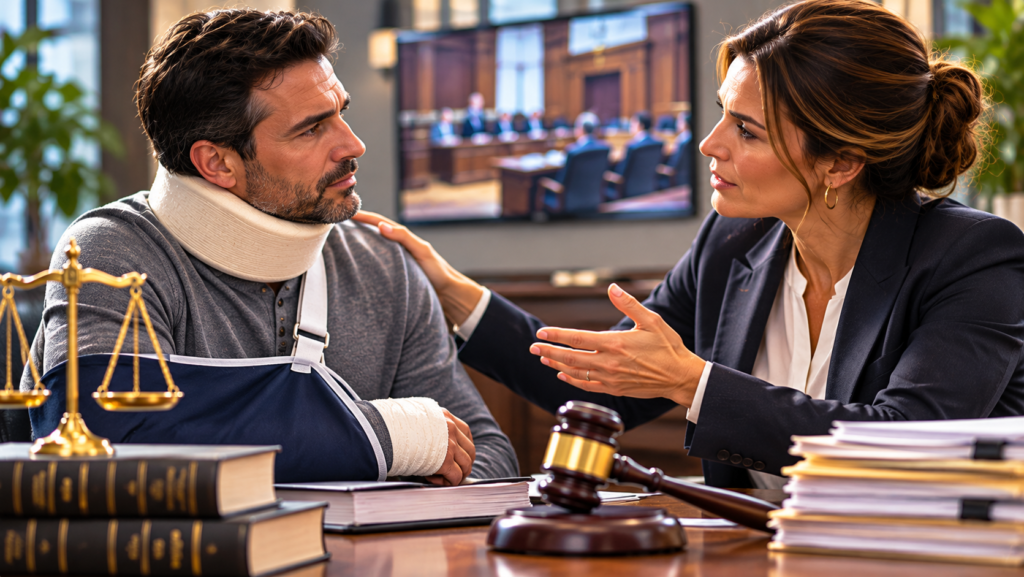
Accident victims deal with medical bills, lost income, insurance calls, and disputed facts within hours of a crash. Early legal advice helps preserve evidence before vehicles are repaired, witnesses forget details, or insurers shape the record around an incomplete account. A lawyer also identifies deadlines and protects communications with adjusters. Prompt action gives an injury claim a clearer foundation, especially when injuries worsen after the collision. The next steps should focus on preserving proof and avoiding preventable mistakes.
Legal Guidance Prevents Damaging Statements
Insurance adjusters often contact injured people soon after a collision. Their questions can sound routine, but an inaccurate statement can create disputes about fault, symptoms, or the need for treatment.
Attorneys providing Sugar Land personal injury representation can handle claim communications and help preserve a consistent account. The injured person should provide truthful facts, avoid guessing, and decline recorded interviews until receiving legal advice. The same caution applies to social media posts, written statements, and settlement documents.
People injured at work may also face employer reporting rules and workers’ compensation procedures. Advice from a lawyer can help clarify how workplace injuries differ from traffic claims, including which records matter and which deadlines apply. That distinction matters when a crash occurred during work duties or involved a commercial vehicle.
Early Action Protects Important Evidence
Crash evidence changes quickly. Vehicles undergo repairs, damaged property is discarded, and nearby surveillance systems may overwrite recordings. A lawyer can request photographs, repair records, dispatch logs, traffic-camera footage, and other materials before they disappear.
Witness accounts also lose detail over time. Names, phone numbers, statements, and observations should be noted while memories remain fresh. A written record can clarify vehicle positions, traffic signals, weather, road conditions, and the sequence of impact.
Medical records need early attention, too. A lawyer reviews the early treatment notes and compares them with later diagnoses. This record can connect symptoms to the crash and show how the injuries affected work, daily activities, and recovery.
Fault Requires a Focused Investigation
A police report provides useful information, but it does not decide every issue related to negligence, causation, or damages.
A lawyer examines driver conduct, vehicle maintenance, road design, signal timing, employment relationships, and available insurance coverage. The investigation also checks whether another party contributed to the collision. Evidence can include phone records, vehicle data, photographs, expert opinions, and testimony from witnesses.
Some states follow modified comparative negligence rules. A person who is found to be 51 percent or more responsible generally cannot recover damages. A prompt investigation helps identify disputed facts before evidence becomes harder to obtain.
Deadlines Affect the Right to Recover
Injured individuals generally have between one and three years to file a personal injury lawsuit. Separate rules can apply to claims involving a government unit, a minor, a wrongful death, or another specific circumstance.
The filing period does not mean a claimant should wait. Evidence collection, medical evaluation, insurer negotiations, and legal analysis require time. Notice requirements can also arise before a lawsuit, particularly when a public entity may bear responsibility.
A lawyer calculates the applicable deadline and tracks related requirements. Waiting until the deadline approaches can limit investigation time and reduce practical options.
A Lawyer Evaluates the Full Damage Picture
Medical expenses are only one part of a crash claim. Recoverable damages can include future treatment, lost wages, reduced earning capacity, property damage, and physical pain.
Documentation gives each category support. Pay records show income loss, medical bills establish treatment costs, and physician opinions explain future care. A personal journal can record pain, mobility limits, sleep disruption, and missed activities without replacing formal medical evidence.
Early legal review also helps identify underinsured or uninsured motorist coverage. That policy can be relevant when the responsible driver lacks enough insurance to cover the loss.
What to Do After a Crash
An injured person should seek medical care, report the collision when required, photograph visible damage, collect witness information, and preserve related records. The person should avoid admitting fault or accepting a settlement before understanding the injury’s likely course.
Legal advice should be sought before signing a release or giving a recorded statement. A lawyer can review the available evidence, explain possible claims, and identify steps that protect the case without delaying necessary treatment.
Conclusion
Hiring an injury lawyer soon after a crash preserves evidence, controls insurer communications, identifies applicable deadlines, and connects medical records to the event. The injured person should seek prompt medical care, save every crash-related document, and avoid recorded statements or releases until receiving legal advice. A timely case review can reveal coverage issues and factual disputes while investigators still have access to the proof needed to address them.