
The thought of having vein surgery can make anyone postpone treatment. You may picture large incisions, a hospital stay, and several weeks away from work. Meanwhile, the aching, swelling, or heaviness in your legs continues to interfere with daily life.
Varicose vein treatment often looks very different from traditional surgery. Several procedures can close unhealthy veins through a tiny needle opening, without large incisions or general anesthesia. Most are performed in an outpatient setting, and patients are usually encouraged to walk shortly afterward.
So, can every varicose vein be treated without surgery? Not necessarily. The answer depends on the affected vein, your symptoms, ultrasound findings, and medical history. This guide explains the available options and what New York patients can realistically expect.
Why Traditional Vein Surgery Is No Longer the Only Choice
Traditional vein stripping involved removing an unhealthy vein through surgical incisions. Although it can still be appropriate in selected cases, it is no longer the only way to address painful or bulging veins. Advances in ultrasound imaging and catheter-based care have changed how vein problems are diagnosed and treated.
Today, doctors can often reach the faulty vein through a small opening in the skin. The vein is then closed using heat, medical adhesive, or an injectable medication. Blood naturally redirects through healthier veins, while the treated vessel gradually shrinks.
The phrase “nonsurgical” can sometimes be misleading. These treatments are still medical procedures, but they generally avoid large incisions and hospital-based surgery. For suitable patients, minimally invasive vein care may offer a shorter and more manageable recovery.
How a Vein Evaluation Reveals the Real Problem
The veins visible beneath your skin may not show the full extent of the condition. Varicose veins often develop when small valves inside the veins stop closing properly. Blood begins to flow backward and collect in the leg, increasing pressure within the affected vessels.
That pressure can lead to raised veins, aching, itching, cramping, swelling, or skin discoloration. Symptoms often worsen after prolonged sitting or standing. A New York office worker may notice ankle swelling after a full day at a desk, while a restaurant employee may experience throbbing legs after a long shift.
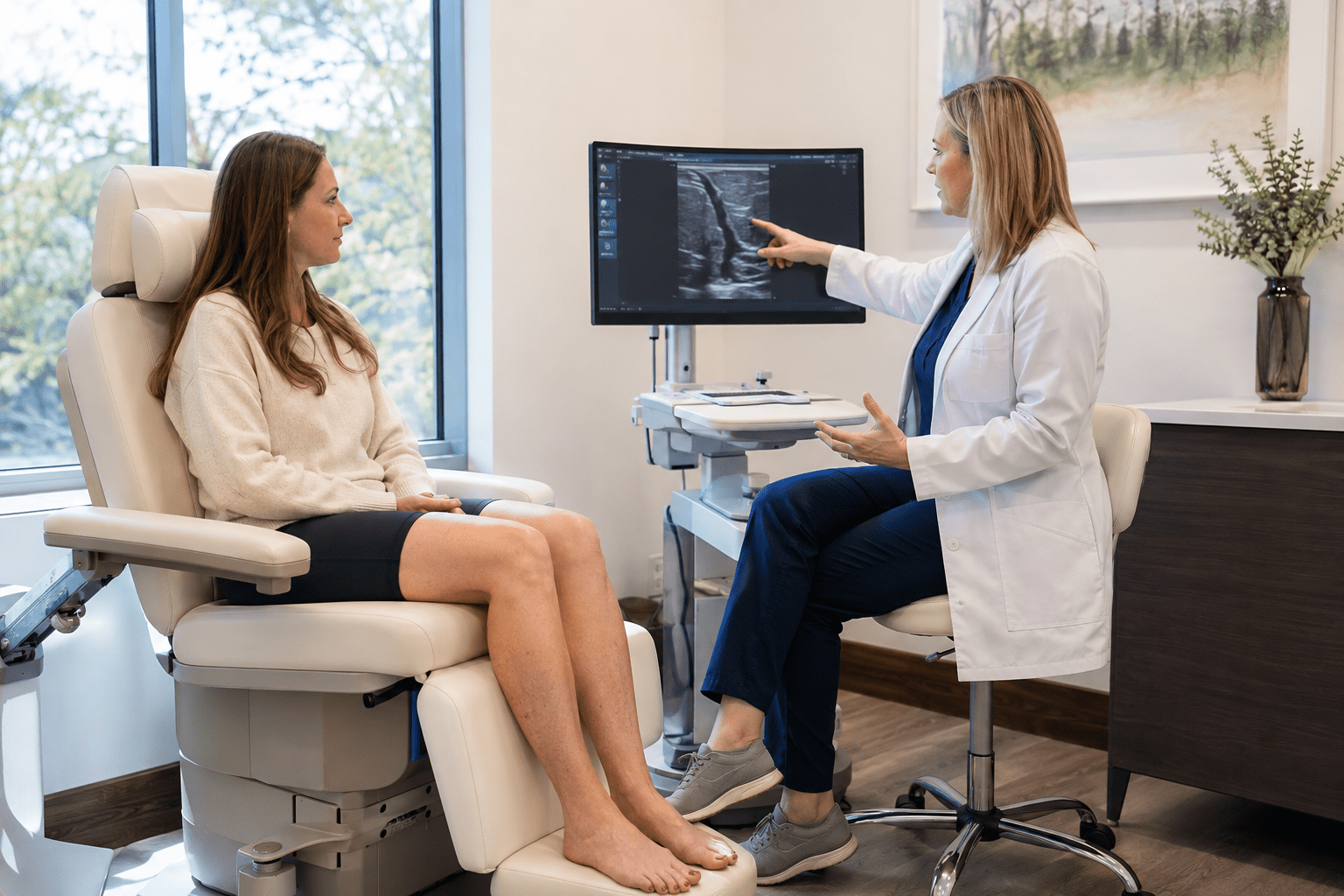
A Varicose vein specialist may use duplex ultrasound to examine the direction of blood flow. This test can identify faulty valves, abnormal circulation, and the vein responsible for your symptoms. Two patients with similar-looking veins can have different underlying problems, so appearance alone should not determine the procedure.
Nonsurgical Varicose Vein Treatment Options
Modern treatments generally work by closing an unhealthy vein rather than surgically removing it. Once the vein is sealed, blood finds another route through functioning vessels. The body then gradually absorbs the closed vein.
Different procedures use different methods to achieve this result. The following options may be considered after a complete evaluation.
Endovenous laser ablation
Endovenous laser ablation uses controlled laser energy to close a damaged vein. A physician inserts a thin laser fiber through a small opening and guides it with ultrasound. Local anesthesia helps numb the treatment area.
As the fiber is withdrawn, heat causes the vein walls to close. Patients are usually able to walk afterward. Temporary bruising, tightness, or tenderness may develop during healing, but major surgical incisions are not required.
Radiofrequency ablation
Radiofrequency ablation is similar to laser treatment, but it uses radiofrequency energy. A small catheter delivers controlled heat along the faulty vein, causing it to collapse and seal.
Patients often ask whether laser or radiofrequency treatment is better. Both may be effective for suitable veins. The decision depends on the vein’s location, size, shape, and the physician’s clinical judgment.
VenaSeal
VenaSeal closes the affected vein with a specially formulated medical adhesive. A catheter delivers small amounts of adhesive while ultrasound helps the physician confirm accurate placement.
Since VenaSeal does not use heat, it may require fewer numbing injections along the leg. Compression requirements can also differ from those associated with thermal procedures. However, allergies, inflammation risks, and vein anatomy must be considered before recommending it.
Varithena
Varithena uses an injectable microfoam to close certain damaged veins. The foam fills the targeted vessel, contacts its walls, and causes the vein to collapse. Blood then redirects through healthier pathways.
This method may be helpful when a vein is twisted or difficult to reach with a straight catheter. Some patients need more than one session, particularly when several branches are affected.
Sclerotherapy
Sclerotherapy involves injecting a medical solution into smaller varicose veins or spider veins. The solution irritates the vessel lining, causing the treated vein to close and gradually fade.
This procedure is often used for visible surface veins. If deeper reflux is feeding those veins, the source may need to be addressed first. Treating only the cosmetic concern could produce incomplete or temporary improvement.
These nonsurgical treatments for varicose veins are not interchangeable. Each has different uses, benefits, limitations, and recovery instructions.
Which Treatment Could Be Right for You?
Here is where many patients become confused. A friend may have had excellent results with laser ablation, while an online advertisement promotes medical adhesive as the latest choice. Neither example reveals what is happening inside your veins.
Consider a teacher who spends most of the day standing. She wants relief from swelling but cannot take extended time away from work. Another patient may have a history of blood clots or an allergy that affects the available options. Their symptoms may sound similar, yet their treatment plans should not be identical.
A physician should consider your ultrasound results, vein diameter, overall health, medications, mobility, and treatment goals. Sometimes one procedure is enough. In other situations, a deeper vein is treated first, followed by sclerotherapy for smaller surface branches. A personalized vein treatment plan is more valuable than simply selecting the newest procedure.
Patients who want to learn more about diagnosis and available options can explore Varicose vein treatment information before scheduling an evaluation. Online information can prepare you for the consultation, but it cannot replace an examination and ultrasound.
What to Expect During Treatment and Recovery
Most modern vein procedures are completed in an outpatient setting. The treatment area is cleaned and numbed, and ultrasound is used to guide the physician. Depending on the number of veins involved, the appointment may take less than an hour or require additional time.
You may feel pressure, pinching, or mild pulling during the procedure. Significant pain should be reported immediately. Once treatment is complete, the doctor may apply a small dressing and ask you to walk before leaving the clinic.
Many patients return to ordinary activities quickly, but “no downtime” should not be interpreted as “no recovery.” Mild bruising, tenderness, tightness, or swelling can occur. You may need to avoid strenuous exercise, heavy lifting, hot baths, or prolonged inactivity temporarily. Compression stockings may also be recommended after certain procedures.
Visible results take time. The treated vein needs to shrink, and surrounding inflammation must settle. Larger bulging veins or remaining branches may require another session. Having realistic expectations about recovery after vein treatment makes the process less frustrating.
Benefits, Limitations, and Possible Risks
Avoiding traditional surgery can offer several practical benefits. Many minimally invasive procedures use local anesthesia, require only a small skin opening, and allow early walking. This can make treatment easier to fit around work, family responsibilities, and New York’s demanding daily routine.
Still, these procedures are not risk-free. Temporary bruising, tenderness, skin discoloration, or inflammation may occur. Less common complications can include infection, nerve irritation, an allergic reaction, or a blood clot. Your provider should explain the risks connected to the specific method being recommended.
Treatment also cannot prevent every future vein problem. A successfully treated vein may remain closed, but another vein can become faulty later. Genetics, pregnancy, age, weight changes, and ongoing venous disease may influence recurrence. Reliable specialized vein care includes follow-up guidance rather than promises of permanent perfection.
When Should You Seek Professional Vein Care?
Visible veins without discomfort may appear to be only a cosmetic concern. However, an evaluation becomes more important when they are accompanied by aching, swelling, heaviness, itching, night cramps, skin changes, or discomfort that affects walking and work.
Bleeding veins, hardened tender areas, persistent ankle swelling, and slow-healing wounds also deserve medical attention. These signs may indicate that the condition has progressed beyond what is apparent. An earlier evaluation can provide a clearer picture of what is happening.
Sudden swelling in one leg, severe unexplained pain, chest pain, coughing up blood, fainting, or difficulty breathing requires urgent medical care. These symptoms should not be treated as a routine varicose vein appointment.
New York patients can review available care through a Varicose vein specialist before arranging a consultation. The goal should be to understand the diagnosis first and discuss treatment second.
Can Varicose Veins Really Be Treated Without Surgery?
For many patients, the answer is yes. Laser ablation, radiofrequency treatment, VenaSeal, Varithena, and sclerotherapy can address different types of unhealthy veins without traditional vein stripping.
However, being eligible for nonsurgical care depends on your anatomy, symptoms, ultrasound results, and health history. No single procedure is right for everyone, and the visible vein may not be the true source of the problem.
Vein and Knee Pain Vascular Group provides image-guided evaluation and treatment options for patients in New York. A consultation can help determine whether a minimally invasive approach is suitable for your condition and daily needs.
FAQs
Can varicose veins disappear without treatment?
Varicose veins rarely disappear permanently on their own. Elevation, movement, and compression stockings may reduce discomfort, but they do not usually repair damaged valves or eliminate established veins.
Is nonsurgical vein treatment painful?
Local anesthesia is commonly used to reduce discomfort. Patients may notice pressure, warmth, pinching, or temporary tenderness. The experience varies according to the procedure and individual sensitivity.
How long does a vein procedure take?
Some procedures can be completed in less than an hour. Treating several veins or performing multiple techniques may take longer. Your provider can give a more accurate estimate after the evaluation.
Can I return to work after treatment?
Many patients return to desk-based work within a short period. Jobs involving heavy lifting or prolonged standing may require extra recovery time or temporary modifications.
Can varicose veins return after treatment?
A treated vein may remain closed, but new problem veins can develop elsewhere. Follow-up care can help monitor symptoms and identify changes.