
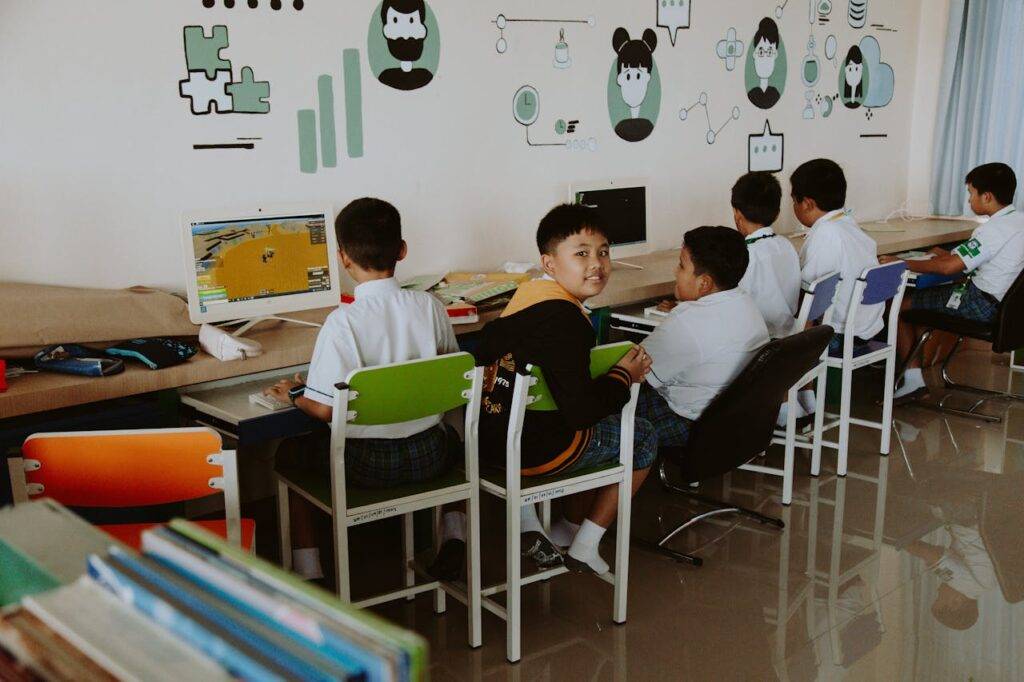
Children don’t usually tell you when something is wrong with their vision. They don’t have a baseline to compare against, so they assume what they see is what everyone else sees. A child who can’t see the blackboard, has one weak eye, or is straining their vision constantly may simply not realise anything is off. The result is that many eye conditions get caught months or years late, by which point treatment becomes harder. Vision affects everything in childhood, from learning to coordination to confidence, which is why both a parent’s watchful eye and timely support from a Child Development Center matter so much.
This article walks through the most common eye problems in children and when to seek a check-up.
Why Children’s Eye Health Often Gets Missed
A child’s visual system develops rapidly in the first few years of life and continues maturing through age seven or eight. Catching problems in this window is critical because the brain learns to use what it’s given. If one eye sees poorly during these early years, the brain can stop using it, leading to permanent vision loss in that eye even when fixed later. That’s why timely eye check-ups at a reliable Best Eye Hospital are a real part of childhood health care.
1. Refractive Errors: Short-Sightedness, Long-Sightedness, and Astigmatism
These are the most common eye problems in children today, and the numbers are rising fast. Short-sightedness (myopia), where distant objects appear blurry, is increasing sharply, partly linked to too much screen time and too little outdoor play. Long-sightedness and astigmatism are also common.
Signs to watch for include sitting very close to screens or books, squinting, complaints of headaches, holding the head at unusual angles, or copying answers from a classmate’s notebook. These are usually correctable with glasses.
2. Squint (Strabismus)
Squint is when the eyes don’t align properly, with one or both eyes turning inwards, outwards, upwards, or downwards. It can be constant or appear only when the child is tired. Squint is more than a cosmetic issue. It can lead to lazy eye, double vision, and depth perception problems if untreated.
Early treatment, often with glasses, eye exercises, patching, or surgery, can correct the alignment.
3. Lazy Eye (Amblyopia)
Lazy eye is when one eye doesn’t develop normal vision, even though the eye itself looks fine. It usually happens when there’s an imbalance, such as one eye being significantly weaker than the other, an uncorrected squint, or a structural problem.
Amblyopia is one of the most important conditions to catch early because it’s largely treatable up to about age seven or eight. Patching the stronger eye to force the weaker eye to work is the most common treatment.
4. Allergic Eye Conditions
Allergic conjunctivitis is extremely common in Indian children, especially in dusty or polluted areas. It causes itching, redness, watering, and swelling of the eyelids. Children often rub their eyes constantly, which can worsen the problem.
While not usually serious, persistent allergies need proper management, since chronic rubbing and inflammation can lead to complications.
5. Eye Infections
Bacterial and viral eye infections also show up frequently in children, particularly in school environments where they spread quickly. Symptoms include redness, discharge, swelling, and sometimes light sensitivity. Most cases respond well to medication, but recurrent infections need careful evaluation.
6. Blocked Tear Duct in Babies
Many babies are born with a blocked tear duct, causing watery, sticky eyes from very early on. In most cases, it resolves on its own by age one with gentle massage and hygiene.
7. Congenital and Rare but Serious Conditions
Some eye conditions, though less common, need immediate attention. Congenital cataracts, retinal problems, and rare conditions like retinoblastoma can present with a white pupil on flash photos, poor visual response, or unusual eye movements. Any such sign warrants an urgent specialist consult.
Signs Every Parent Should Watch For
Frequent eye rubbing or blinking. Sitting too close to screens or holding books close to the face. Tilting the head to look at things. One eye that wanders. Frequent headaches, especially after reading or screen time. Squinting, watering, or persistent redness. Avoiding reading. A drop in school performance for no obvious reason. Any white reflex in flash photos. All warrant a paediatric eye check-up.
When Should Children Have Eye Check-ups
Ideally, every child should have an eye screening in infancy, again before starting school, and then routinely every one to two years. School screenings help, but aren’t a substitute for a proper paediatric eye exam.
Conclusion
Children’s eyes do a huge amount of work as they grow, learning, exploring, building coordination, and connecting with the world. Yet kids rarely flag a vision problem in words, which makes it the parent’s job to spot the signs early. Watch the behaviour, not just the symptoms. Get those routine check-ups done.
FAQs
Q1. At what age should my child have their first eye check-up? The first newborn check usually happens at birth. A full screening is recommended around age 3, and again before starting school.
Q2. Is screen time really damaging my child’s eyes? Excessive screen time is linked to rising myopia. Encouraging outdoor play and regular breaks helps significantly.
Q3. Can lazy eye be fixed in adults? Treatment is most effective before age seven or eight. After that, the results are limited.
Q4. My child rubs their eyes a lot. Should I be worried? Frequent rubbing can signal allergies, refractive errors, or eye strain. A check-up is worth doing if it’s persistent.
Q5. Do children need glasses if both parents have good vision? Yes, possibly. Children can develop refractive errors regardless of family history.