
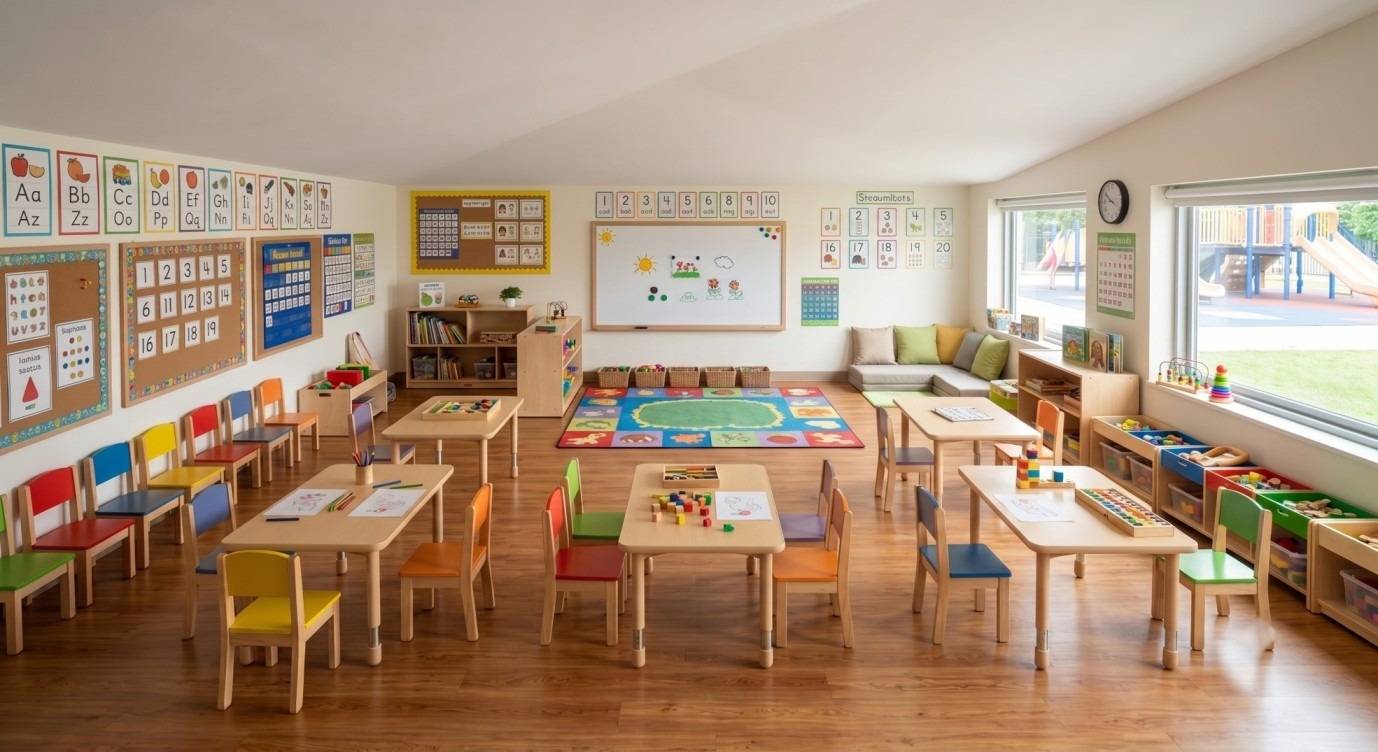
Most schools buy cheap desks. Two years later, the tops are scratched, the legs wobble, and students are shifting in their seats every ten minutes. That is not a furniture problem. That is a planning problem.
Not every classroom has the same needs. A college lecture hall needs something completely different from a fifth-grade science room. Getting that wrong means spending twice.
This article breaks down what to look for, which desk types work where, and a few solid options worth considering before placing any bulk order.
What Makes a Student Desk Actually Good for Institutional Use
Most buyers focus on price. That is fair. But price alone has burned a lot of purchasing managers who ended up replacing desks within three years. Here is what actually matters:
- Material builds the foundation. Steel-frame desks with laminate tops outlast MDF in high-traffic classrooms by years. MDF looks fine on day one. By year two, edges, chips, and surfaces start to peel under daily use.
- Size affects the whole room. A writing surface around 24 by 18 inches is the standard for most classroom setups. Too small, and students are balancing notebooks on their laps. Too wide, and the room loses an entire row.
- Storage is more useful than it looks. An under-seat book basket or a pencil groove along the top edge makes classroom management noticeably easier. Teachers feel it daily, even if procurement teams never think about it.
- Adjustability earns its cost. For mixed grade levels or inclusive classrooms, height-adjustable desks remove the need to buy separate furniture for different student sizes. One desk covers more ground.
- Stackability saves real time. Schools that use the same room for exams, assemblies, and regular classes need desks that stack cleanly. That alone cuts custodial labor every single week across an entire building.
Student Desk Types Broken Down by Setting
Not every desk works in every room. The setting decides the furniture, not the other way around. Here is how the main types break down:
Traditional Four-Leg Classroom Desks
This is the most common type in elementary and middle schools. A separate chair pairs with the desk, which keeps things simple and cost-effective for bulk orders. These come in fixed and adjustable heights, and most institutional suppliers stock them in large quantities. Straightforward, reliable, and easy to replace when needed.
Combo Desk-Chair Units (Tablet Arm Desks)
These are built for college lecture halls, testing centers, and auditoriums where space is tight, and rows need to stay organized. The writing surface folds out from the chair arm, keeping the footprint small. One thing many buyers miss: these come in right-hand and left-hand versions. Left-handed students get ignored more often than anyone admits. Always order a percentage of left-hand units when buying in bulk.
Activity Tables for Collaborative Classrooms
These are not traditional student desks, but more schools and colleges are adding them to STEM labs, design studios, and group-work rooms. They seat two to four students at a shared surface and usually have adjustable heights. The shift toward project-based learning has pushed demand for this type up noticeably over the last few years. If the classroom is meant to encourage discussion and teamwork, a standard single desk layout is going to feel limiting very quickly.
Practical Tips Before You Place a Bulk Order
Buying student desks in bulk is not like ordering office supplies. One wrong decision at this scale is expensive and slow to fix. Keep these points in mind before signing anything.
Always Request a Sample First
Most suppliers will send one or two units before a full order. Use that. Sit at it, check the finish, test the stability. What looks good in a catalog photograph does not always hold up in a real classroom.
Build Lead Time Into Your Planning
School furniture typically takes six to ten weeks from order to delivery. Placing an order two weeks before the semester starts is a mistake that happens more often than it should. Order early and confirm delivery windows in writing.
Check Replacement Parts Availability
Glides wear out. Writing surfaces crack. Seat shells break. Before committing to any desk model, confirm that individual replacement parts are available and reasonably priced. A desk with no serviceable parts is just a future disposal problem.
Look at Warranty Terms Carefully
Most commercial-grade student desks carry five to ten-year warranties. Anything shorter than that on an institutional product deserves a second look. A strong warranty signals that the manufacturer actually stands behind what they built.
Where to Buy Student Desks for Schools and Colleges
Knowing what to buy is only half the job. Knowing where to buy it matters just as much.
- Institutional furniture suppliers are the most reliable option for large orders. They understand school procurement cycles and usually offer volume pricing.
- Amazon Business and Walmart Business accounts work well for smaller orders or last-minute needs.
- Local commercial furniture dealers can cut down delivery times significantly, especially for regional schools with tight timelines.
- One thing worth repeating: avoid consumer-grade desks for institutional settings. The price looks right until the desk falls apart in year one.
To Summarize
Student desks are not a glamorous purchase. Nobody gets excited about them. But the right choice holds up for a decade, and the wrong one creates problems every single semester.
The best desk is the one that fits the room, suits the age group, and survives daily use without constant maintenance. That combination is more achievable than most buyers expect. It just takes a bit more thought before the order goes in.