(photo credit: Microsoft Stock Images)
Manufacturing efficiency has entered a new age. Instead of simply making improvements to existing processes, many organizations are now seeking to bring their systems, data, and equipment together as a unified operation. A smart factory is a system of technologies working together to improve visibility, speed, and reliability in a factory. Integration is what enables digital technologies to function as a unified system, rather than as separate entities.
Connecting Operational Technology and Information Technology
One of the first steps in creating a smart factory is to connect operational technology with information technology. Operational technology includes machines, sensors, and control systems. These devices can provide valuable data to organizations, but it is not useful data unless it can be integrated into information technology to provide better decision-making opportunities for leaders. By integrating these two types of technology, organizations can better respond to problems and align production goals with business goals.
Utilizing Sensors and Data to Provide Real-Time Insight
Sensors are a critical component. These devices are used to monitor temperature, vibration, and pressure within a factory. By integrating these sensors into a unified system, organizations can provide real-time insight into trends in performance. Integration can also be used to compare different lines or facilities to standardize best practices.
Making Workflows Across Systems More Automated
System integration makes the power of automation even more compelling. Integrated systems, such as manufacturing execution systems, inventory management, and scheduling systems, can be designed to change processes based on the current state. For instance, orders for materials can be integrated with production changes, or quality issues can cause a production line to stop before the quality issues become widespread.
Designing the Physical and Virtual Infrastructure
A smart factory also needs infrastructure that is designed with the flexibility to integrate future technologies. Even something as simple as the cable used to assemble the equipment, such as the assembly cable, can have a significant impact on the ease of integrating the equipment. Designing the infrastructure with future integration in mind can save future costs and help the smart factory grow.
Making the Smart Factory More Secure
As the smart factory becomes more integrated, security and data management become increasingly important. Integrated systems need to be designed with security and data management in mind to protect the sensitive information needed to run the factory, while also allowing access to the data when necessary.
Training Teams to Work With Integrated Systems
The success of technology integration lies in the people’s ability to work with the technology. This means that the people who operate the technology, the engineers who design it, and the managers who oversee the process should be trained on how to work together. This way, the employees will be able to trust the information they receive.
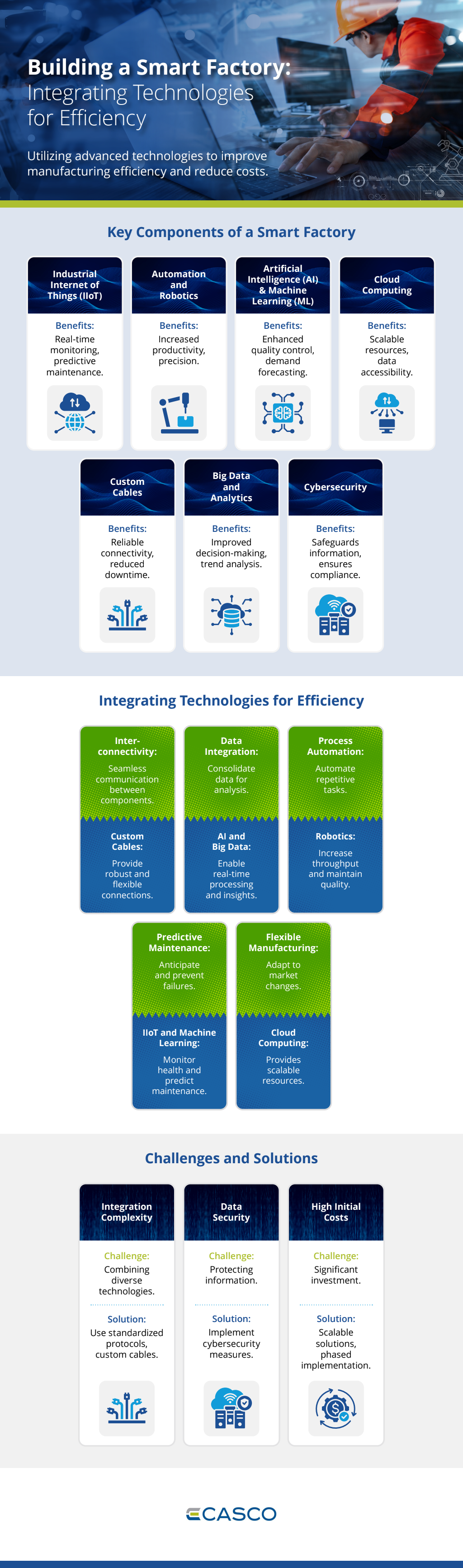
A smart factory is about making technology work together. This means that integration is about creating a seamless system where information can flow freely, machines can operate quickly, and people can work together productively. Look over the infographic below for more information.