
Hybrid work removed the conditions that once masked poor leadership practices.
For years, many leadership habits worked because the environment supported them. Physical proximity of teams to their leaders made it easier to stay aligned. You could read the room, sense momentum, step into conversations, and adjust quickly without needing everything to be clearly defined. It created a feeling of alignment, often without the need for real clarity.
That dynamic no longer exists in the same way. What hybrid work has exposed is less about a lack of capability and more about a reliance on habits that no longer translate.
Many leaders are still operating as they always have by staying close to the work, jumping in with quick answers, using meetings to create alignment, and relying on visibility to stay connected. The intent is positive, but the impact is increasingly limited in a hybrid environment.
Those habits were built for a different context.
When people are not consistently in the same space, presence can’t carry performance. Access doesn’t guarantee awareness, and involvement doesn’t automatically create accountability. What matters more now is clarity, intention, and a leader’s ability to develop others.
This is where leaders feel pressure and try to compensate. They add more structure, increase check-ins, tighten processes, and introduce more tools to create visibility. It feels productive, but it often creates noise rather than clarity.
More meetings don’t fix unclear expectations. More updates don’t build trust without clear ownership. More oversight doesn’t improve performance if people aren’t growing.
In many cases, these efforts have the opposite effect. Leaders get pulled deeper into the work, trust erodes, and ownership quietly shifts back to the leader, even when that’s not the intention.
Hybrid work doesn’t reward more involvement. It makes its limits obvious.
The shift required is not about doing more, but about leading differently.
At the centre of that shift is trust, not as a stated value, but as something built into how work actually happens. In a hybrid environment, building a culture of trust is what allows teams to move forward without constant supervision. It enables people to make decisions, take ownership, and stay focused on outcomes rather than activity.
Trust is often misunderstood. It’s not about stepping back completely or being hands-off. It comes from clarity and consistency: clear outcomes, clear ownership, and clear priorities.
When that level of clarity is missing, leaders tend to fill the gap with control. When it’s present, control becomes far less necessary.
This also changes how accountability shows up.
In traditional environments, accountability was often reinforced through visibility, seeing progress unfold, and addressing issues in real-time.
In hybrid settings, that visibility is reduced, which means many leaders lean more heavily on tracking and reporting.
Accountability, however, doesn’t come from process alone. It comes from ownership, and ownership is built through conversation.
People need to be clear on what success looks like in concrete terms and have the space to determine how they will get there. When things don’t go as planned, the response matters. The goal isn’t just to correct, but to understand what happened, what was learned, and what should change next time.
This is where leadership coaching creates dependency or builds capability.
Coaching becomes essential in this context as an everyday approach to leading. With fewer informal interactions, the conversations leaders choose to have carry more weight. How leaders show up in those moments matters more than ever.
Coaching starts with paying closer attention. Listening to understand rather than to respond. Holding back the instinct to jump in and solve. Creating space for others to think through challenges. From there, better questions follow: What are you seeing? What options are you considering? What do you think is the right next step?
These aren’t soft questions. They build judgment and ownership over time. People begin to think more independently, take greater responsibility and stay focused on outcomes.
As that happens, the leader’s role shifts from being the point of control to the point of development.
That shift can feel uncomfortable. Stepping out of the details can feel like losing control. Asking instead of telling can feel slower. But staying too involved creates its own problems.
Leaders become bottlenecks, teams wait instead of acting, and performance becomes dependent on constant input.
Coaching breaks that pattern by redistributing thinking and strengthening accountability without relying on oversight; it also develops the leader. Coaching well requires awareness of your own habits, like when you interrupt, when you make assumptions, and when you default to giving answers under pressure.
That awareness shows up in real moments. Over time, behaviour shifts; you pause more, you listen longer, and you ask more thoughtful questions. That’s where leadership starts to evolve.
The real challenge with hybrid work is not the model itself, but how quickly it has outpaced traditional leadership approaches. Many leaders are still operating as if proximity, predictability, and control are givens. The truth is, hybrid work has removed those conditions.
What remains is a simpler, more demanding standard: can you create clarity, build trust, and develop capability without relying on physical presence?
From our consulting work, three practices consistently make a difference:
1. Get relentlessly clear on outcomes and ownership
If people don’t understand what they own or what success looks like, performance will suffer. Most issues in hybrid environments stem from a lack of clarity, not a lack of effort.
2. Shift from answering to asking
Leadership isn’t about having the quickest answer. It’s about building stronger thinking across the team. Questions help people develop judgment and take ownership in real time.
3. Make accountability a thinking conversation
When something goes off track, resist the urge to add more control. Take the time to understand what happened and focus on learning and adjustment. That’s how accountability becomes something people take on, not something imposed on them.
Hybrid work hasn’t lowered the bar for leadership. If anything, it has raised it. Ultimately, leadership is reflected in the growth of the team.
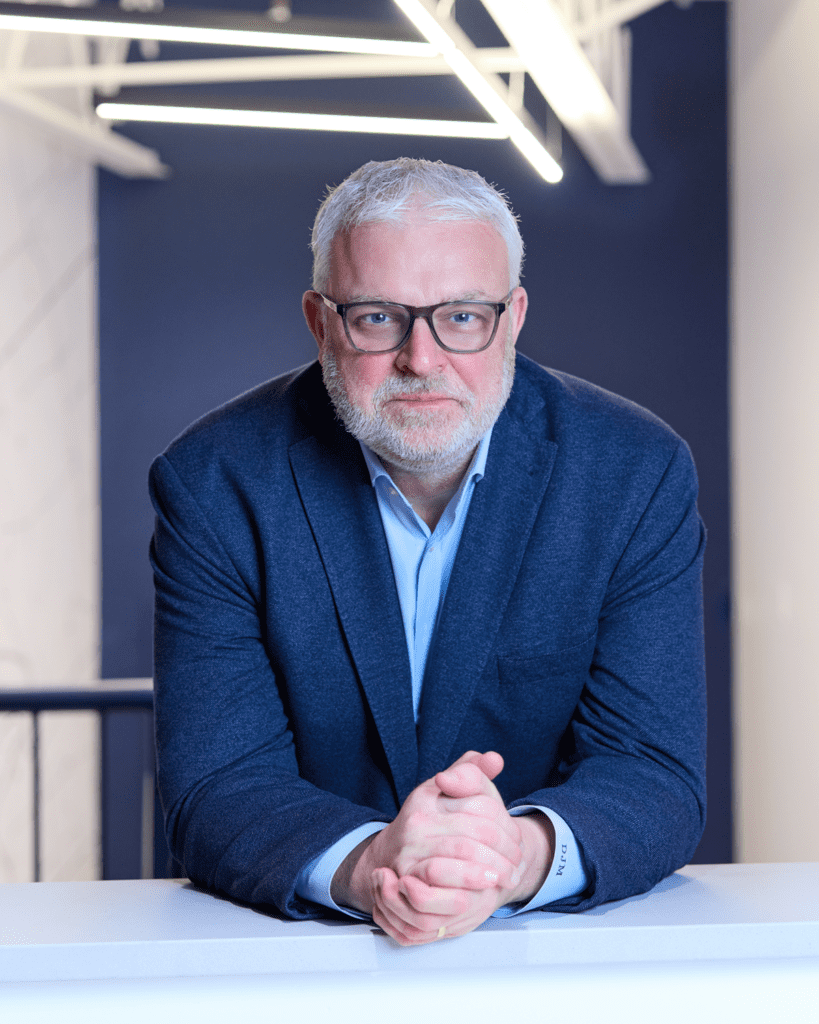
Drew Munro is Co-Founder and Principal at LEAD for Growth, with decades of global leadership experience across North America, Europe, and Australasia. He has guided senior teams in transforming organizations, building high-performance cultures, and driving sustainable growth across industries from consumer goods to technology, healthcare, and professional services. A certified executive coach and organizational strategist, Drew combines hands-on business experience with deep expertise in leadership development to help leaders unlock their potential, make confident decisions, and create lasting impact. Munro is the co-author of Lead for Growth, releasing this spring.