(photo credit: Microsoft Stock Images)
Sustainability no longer waits patiently on the sidelines of construction. It interrupts. It nudges. It insists on being considered while schedules are still flexible and materials are still hypothetical. Modern jobsites feel this pressure early, where decisions ripple forward and echo for decades. Environmental responsibility has moved from aspiration to expectation, threaded tightly into how projects break ground and reach completion.
Materials That Carry a Longer Memory
Materials arrive with histories now. These choices quietly reshape supply chains. Less extraction upstream. Shorter transport routes. Performance remains intact, sometimes improved, while environmental strain softens in measurable ways.
Durability shifts from bonus to baseline. Materials that resist wear slow replacement cycles and reduce maintenance demands years after crews have packed up. Sustainability here feels cumulative. It builds quietly. Layer by layer. Fewer repairs translate into fewer disruptions and fewer resources consumed long after the ribbon cutting fades from memory.
Sites That Waste Less by Default
Waste rarely announces itself. It sneaks in through overordering, poor storage, and rushed sequencing. Sustainable practices counter this through clarity rather than complexity. Digital inventory tools show what arrives, what lingers, and what leaves.
Sorting stations become routine. Reuse plans feel practical rather than idealistic. Cleaner sites follow, bringing safer movement and calmer workflows. Sustainability often reveals itself first as efficiency, reducing friction before reducing emissions. Crews notice. Supervisors breathe easier. The jobsite starts to behave.
Energy Decisions That Shape the Build
Energy use during construction often hums quietly in the background. Generators idle. Temporary lighting burns longer than needed. Smarter scheduling tightens these leaks. Monitoring tools help crews shut down what no longer serves the task at hand, saving fuel without slowing progress.
Design choices extend the impact. Orientation captures daylight. Insulation reduces future heating loads. Mechanical systems have influenced energy demand for decades. Sustainability shows its strength when these decisions happen early.
Infrastructure Renewal With Fewer Miles Traveled
Sustainability reaches outward to roads, access lanes, and paved surfaces surrounding the structure itself. Rebuilding does not always require starting from scratch. Recycling existing pavement reduces hauling, limits emissions, and keeps materials close to where they began.
Full-depth reclamation contractors play a role here, rebuilding road foundations using existing asphalt and base layers. Fewer trucks enter the site. Closures shorten. Neighborhood disruption fades faster. Infrastructure renewal becomes quieter, more efficient, and far less extractive.
Data That Refuses to Stay Abstract
Numbers bring clarity. Emissions tracking, waste diversion rates, and material usage reports turn intent into evidence. Patterns emerge. Adjustments follow. Sustainability stops floating as a concept and starts behaving like an operational metric tied to schedules and budgets.
Clients notice this transparency. Investors follow. Competitive bidding sharpens when environmental performance is demonstrated rather than promised. Data transforms sustainability into something tangible, something repeatable, something that scales across projects without losing momentum.
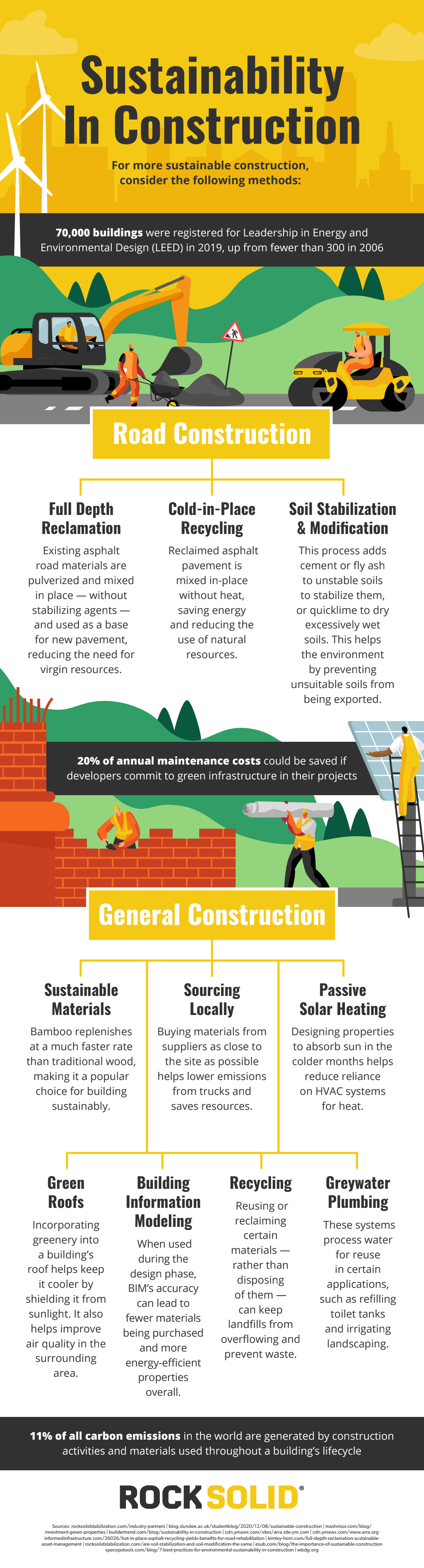
Sustainability in construction works best when folded directly into daily execution. Material choices, site discipline, energy planning, and infrastructure renewal blend into a steady shift in how projects move from concept to completion. Check out the infographic below to learn more.