

Key Takeaways
- Scrap iron and steel can be processed into raw material for new products instead of going to a landfill.
- Common sources include vehicles, appliances, construction debris, tools, machinery, and steel containers.
- Sorting ferrous metal from aluminum, copper, brass, and trash can make recycling safer and simpler.
- Hazardous or pressurized items need separate handling before they enter a scrap load.
- Local recycling rules, accepted materials, and payment practices can vary by facility.
Table Of Contents
- What Scrap Iron Means
- Common Uses for Recycled Scrap Iron
- How Scrap Iron Is Processed
- Everyday Items That Contain Scrap Iron
- Why Scrap Iron Recycling Matters
- How to Prepare Scrap Iron for Recycling
- Safety and Disposal Concerns
- Choosing a Local Recycling Option
Old metal can look like clutter, but it often has another useful life. The short answer to what is scrap iron used for is that it is usually processed into feedstock for new steel and cast-iron products. Raimo Scrap Iron & Metal is a New Jersey recycling and salvage company with roots dating back to 1910, providing ferrous and non-ferrous metal recycling services to residential, commercial, and industrial customers across Sussex, Passaic, and Morris counties.
Whether the material comes from a garage cleanout, an appliance replacement, a renovation, a demolition project, or a retired machine, recycling gives iron-bearing metal a route back into manufacturing. Knowing what qualifies as scrap, how it is processed, and what should be kept out of the pile helps make the process more efficient.
What Scrap Iron Means
“Scrap iron” is a broad everyday term for unwanted iron and steel. These materials are generally classified as ferrous metals, meaning they contain iron. Many ferrous items respond to a magnet, although stainless steel and certain alloys may behave differently. Non-ferrous metals, such as aluminum, copper, brass, and zinc, do not use iron as their main ingredient and are normally sorted separately.
A recycler evaluates material by factors such as weight, grade, size, cleanliness, and contamination. A clean stack of steel shelving is easier to prepare than a mixed load containing plastic, wiring, wood, dirt, and several types of metal.
Common Uses for Recycled Scrap Iron
Once sorted and processed, recycled ferrous scrap can support a wide range of familiar products and industries. The U.S. Geological Survey notes that iron and steel scrap is a vital raw material for new steel and cast-iron products, and that the steel industry has recycled scrap for more than 150 years.
- Structural steel for buildings, bridges, rebar, and support systems.
- Vehicle frames, body panels, replacement parts, and automotive components.
- Washers, dryers, stoves, refrigerators, and other household appliances.
- Tools, fasteners, fencing, storage racks, farm equipment, and machinery.
- Steel cans, drums, packaging, and industrial containers.
- Cast-iron machine parts, pipes, cookware, and heavy equipment components.
How Scrap Iron Is Processed
The recycling path differs by material, but most loads follow a similar sequence from collection to remelting.
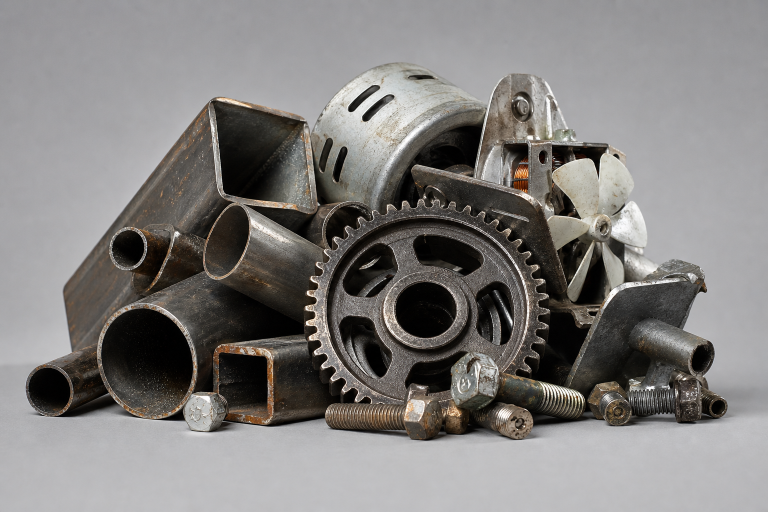
- Collection: Metal is gathered from homes, businesses, vehicles, construction sites, demolition work, and factories.
- Inspection: Workers look for unsafe items, excess contamination, fluids, batteries, or materials requiring special handling.
- Sorting: Ferrous metals are separated from non-ferrous metals, plastics, rubber, glass, and debris.
- Preparation: Large pieces may be cut, flattened, baled, bundled, or handled with heavy equipment.
- Shredding and separation: Bulky appliances and vehicles may be reduced into smaller pieces, while magnets pull iron and steel from other materials.
- Shipment and remelting: Prepared scrap is sent to mills or foundries, where it can be remelted into new metal products.
Everyday Items That Contain Scrap Iron
Useful ferrous scrap can be found in more places than many people expect. Common examples include old cars and car parts, steel shelving, filing cabinets, grills, lawn equipment, cast-iron cookware, water heaters, steel doors, ductwork, rebar, beams, pipes, tools, and obsolete commercial equipment.
For example, a homeowner clearing a garage might have a rusty grill, metal shelving, a steel toolbox, copper wiring, and aluminum lawn furniture. A contractor may have rebar, steel studs, pipe, fixtures, and mixed demolition debris. Separating those materials before transport can reduce unloading time and help the recycler properly classify the load.
Why Scrap Iron Recycling Matters
Recycling keeps recoverable metal in circulation and can reduce demand for newly mined raw materials. It also helps divert heavy metal items from the waste stream. The U.S. Environmental Protection Agency reports that 19.2 million tons of ferrous metals entered the municipal solid waste stream in 2018, of which 6.36 million tons were recycled. Its ferrous metal data also show that appliances, durable goods, and steel packaging remain significant sources of recoverable material.
Recycling is not a substitute for safe disposal. Refrigerants, oils, batteries, lead-containing components, chemicals, and electronics may need to be removed or managed through a separate approved program.
How to Prepare Scrap Iron for Recycling
- Separate iron and steel from aluminum, copper, brass, and other metals when practical.
- Remove loose trash, wood, insulation, plastic, and excessive dirt.
- Secure sharp edges and load heavy pieces carefully to avoid shifting during transport.
- Keep batteries, chemicals, pressurized containers, and refrigerant appliances separate.
- Ask in advance whether the facility accepts the item and whether pickup is available.
- Bring ownership or vehicle paperwork when required for cars, trailers, or equipment.
Payment can depend on weight, grade, preparation, and market conditions, so there is no universal price for a load of scrap. Calling ahead with a description of the material is the most reliable way to understand current requirements.
Safety and Disposal Concerns
Handle Heavy Metal Carefully
Scrap can have rusty edges, broken glass, unstable parts, trapped fluids, and crushing hazards. Wear sturdy gloves, closed-toe work boots, eye protection, and appropriate clothing when moving metal. Use help or suitable equipment for appliances, machinery, and oversized loads.
Do Not Cut or Crush Unknown Containers
Sealed tanks, propane cylinders, fire extinguishers, aerosol containers, and unknown drums can create serious hazards. Do not cut, crush, puncture, or place them in a general scrap pile without professional inspection. Contact a qualified recycler or local waste authority for instructions.
Choosing a Local Recycling Option
Before choosing a recycler, ask whether it accepts your material type and quantity, serves residential or commercial customers, offers containers or pickup, explains its weighing and classification processes, and identifies items that require special handling. A facility should also clearly explain identification, ownership, scheduling, and service-area requirements.
Scrap iron is more than unwanted clutter. With careful sorting, safe loading, and the right recycling outlet, it can become part of a new vehicle, appliance, tool, bridge, or building product, making a cleanup project easier to manage.