
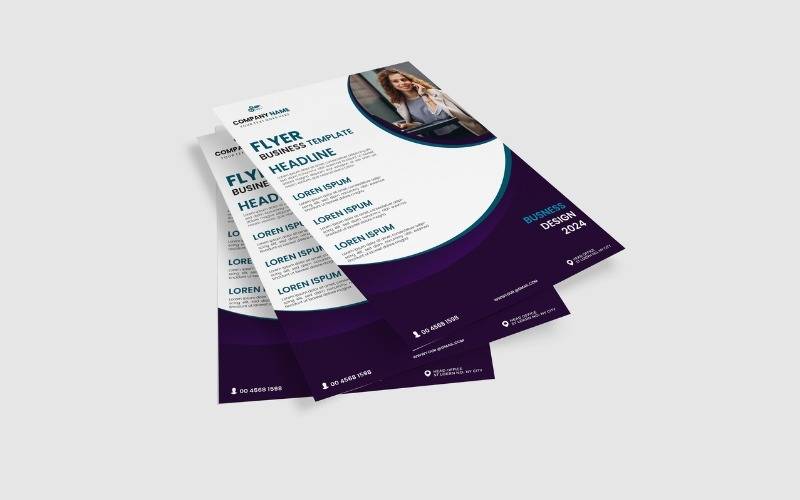
Printed materials like flyers hold a significant place in the marketing world. They are memorable and tangible. People use flyers to share offers and important events. However, if the flyer design isn’t done well, your target customers might ignore it and throw it away. This not only leads to slow response but also wastes budget.
Understanding the common mistakes is the best way to save money and time and achieve outcomes that truly impress. In this blog, we will discuss the top mistakes you need to avoid with flyer printing in Aurora.
- Choosing a Cluttered Layout
Your low-cost flyer printing must appear clean and organized. A messy layout can discourage your target customers from reading what’s in it or keeping it. Cluttered flyer designs can make it difficult for the readers to follow the message and sabotage its purpose. Choose the correct brochure size to ensure the content is balanced out. Use a clear layout, which will separate the images and text. Don’t put too many ideas in a specific location to keep the flyer content readable.
- Overloading It with Too Much Text
You might have to share a lot of details with your target customers. However, this doesn’t mean you should go all out with your flyer printing. People these days have shorter attention spans. If you include excessive information on the flyer, it will make the flyer text difficult to digest. Studies have shown that people only read 20%-25% of the flyer page. Hence, it is necessary to ensure that the flyer content is easy to skim. Remember, it is not a place where you can add long descriptions. Your flyer is your visual invitation that will encourage your potential customers to take action.
So, to keep it clutter-free, add a headline, the benefits of using your products or services, and a straightforward CTA. Don’t forget about the whitespace. It helps redirect focus where it is required.
- Not Adding a Clear Call-to-Action
Another mistake that businesses make with premium flyer printing is forgetting to add a clear call to action. No matter whether you are using high-quality material or premium finishes, you can lose out on your potential customers if they are left confused about what they should do next. A clear call to action will tell them the exact action you want them to take. For instance, you can ask them to email you or visit your store to take advantage of a discount.
- Failing to Proofread Before Printing
You might have come across a flyer with a typo. It is embarrassing and undermines the trust of your customers. For instance, if you own a restaurant and your menu card has a spelling mistake, you can appear unprofessional. It will leave your customers confused as to what you are offering. This is the reason you should proofread the text before you send the design for printing at an online flyer printing service. The message has to be clear to your audience. In case there is incorrect information or misspellings, your intended message will fail to reach the target audience. The best way to proofread a text is to read the text backwards.
- Not Paying Attention to the Image Resolution
Poor resolution images are one of the most common flyer printing problems. They might appear fine when you check them on your laptop or computer screen, but they can lose out on their quality during printing. Images that you download from the internet are usually of low quality and not suitable for printing. Always choose images of a minimum of 300 dpi. Avoid enlarging images just to make them fit. Scaling up doesn’t always add detail. Check the resolution at the start and close to the end of the design process.
- Overusing Special Effects
Using excessive design effects, such as gradients and shadows, can make the flyer appear unprofessional and outdated. These extras tend to distract the readers from the primary message rather than boost it. Stick to minimal and clean effects that go with the design instead of stealing the spotlight. To get a clean and classy look, you must stick to a simple design.
- Neglecting Paper Quality and Finishes
The paper stock you choose has an impact on the feel and look of the piece. The same artwork tends to feel cheap on glossy and thin paper but high-end on thick matte paper. While choosing the paper for your flyer, go for heavier stocks. Ask your printing service for a sample kit so that you get to feel the paper finish before finalizing.