
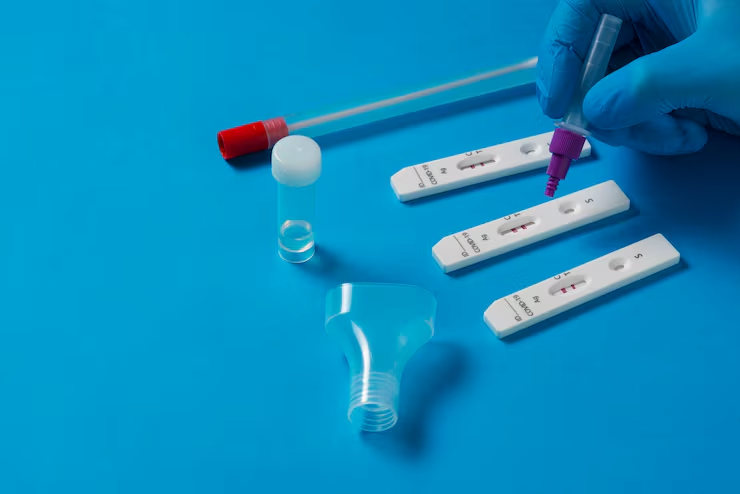
Accuracy is one of the most important factors in modern clinical diagnostics and biomedical research. Laboratories handling disease detection, hormone analysis, and biomarker monitoring require testing methods capable of producing highly sensitive and reproducible results. As diagnostic technologies continue to evolve, laboratories are increasingly shifting toward advanced immunoassay systems that provide faster turnaround times and improved analytical performance.
Among the most trusted technologies in laboratory diagnostics today, Chemiluminescent Immunoassay (CLIA) has become widely recognized for its exceptional sensitivity and compatibility with automation. Many research facilities now depend on Chemiluminescent Immunoassay (CLIA) Kits to support accurate disease screening, protein analysis, and biomarker detection. Unlike traditional testing methods that rely on color-based reactions, CLIA technology uses light-producing chemical reactions to identify target molecules with greater precision.
Understanding CLIA Technology
Chemiluminescent Immunoassay is a laboratory method that combines immunological reactions with chemiluminescent detection. The assay uses antibodies to bind specific target molecules such as antigens, hormones, proteins, or antibodies. Once binding occurs, a chemical substrate produces light through a luminescent reaction.
The emitted light is measured using a luminometer, and the intensity of the signal reflects the amount of the target analyte present in the sample. Because light-based detection is highly sensitive, CLIA technology can detect substances at much lower concentrations than many traditional immunoassays.
Why Clinical Laboratories Prefer CLIA Kits
Clinical laboratories require testing systems that deliver accurate results while handling large sample volumes efficiently. CLIA technology addresses both of these needs.
Enhanced Analytical Sensitivity
One of the primary advantages of CLIA assays is their ability to detect trace amounts of biomarkers. This improved sensitivity is especially valuable in early disease detection, where analyte concentrations may initially be very low.
For example, clinicians monitoring infectious diseases or cancer progression often rely on highly sensitive assays to identify biological changes before symptoms become severe.
Reduced Background Interference
Chemiluminescent reactions generally produce cleaner signals compared to colorimetric assays. Lower background noise improves assay precision and reduces the risk of false-positive or false-negative results.
Faster Turnaround Time
Many CLIA systems are designed for rapid processing, allowing laboratories to analyze large numbers of samples in shorter periods. This faster workflow supports high-demand diagnostic environments.
Excellent Automation Compatibility
Modern automated analyzers commonly integrate CLIA technology because it supports high-throughput testing with minimal manual intervention. Researchers in laboratory forums often note that automated CLIA systems improve consistency and reduce operator-related variability. (reddit.com)
Major Applications of Chemiluminescent Immunoassay Kits
CLIA kits are widely used across healthcare, pharmaceutical, and life science industries because of their flexibility and reliability.
Infectious Disease Diagnostics
Hospitals and diagnostic laboratories frequently use CLIA assays to detect viral and bacterial infections. High sensitivity helps identify infections earlier, improving patient management and treatment decisions.
Endocrinology and Hormone Testing
Hormone testing is one of the most common applications for CLIA technology. The assays are capable of measuring extremely low hormone concentrations accurately, making them useful in thyroid testing, fertility analysis, and metabolic studies.
Oncology Research
Cancer research laboratories use CLIA kits to monitor tumor markers associated with disease progression and treatment response. Sensitive detection supports more accurate biomarker evaluation.
Cardiovascular Biomarker Detection
CLIA assays are also valuable in cardiovascular research, where precise measurement of inflammatory and cardiac biomarkers is critical for risk assessment and disease monitoring.
Autoimmune Disease Testing
Many autoimmune conditions involve antibodies present at low concentrations. CLIA technology enables laboratories to detect these antibodies with greater sensitivity and specificity.
Key Considerations When Selecting CLIA Kits
Choosing the appropriate Chemiluminescent Immunoassay kit can significantly impact research quality and diagnostic reliability.
Assay Validation
Researchers should select kits validated for the intended analyte and sample type. Validation data helps confirm accuracy, reproducibility, and specificity.
Detection Limits
Detection sensitivity varies between assays. Laboratories should carefully review product specifications to ensure the kit meets experimental requirements.
Sample Compatibility
Different CLIA kits are designed for different sample matrices, including serum, plasma, urine, tissue lysates, and cell culture samples. Researchers often emphasize checking compatibility before ordering specialized assays.
Workflow Simplicity
Easy-to-follow protocols and organized reagents improve efficiency, especially for laboratories adopting CLIA workflows for the first time.
Technical Support Availability
Access to reliable technical support can help researchers troubleshoot experimental issues and optimize assay performance.
Final Thoughts
Chemiluminescent Immunoassay (CLIA) kits continue to redefine modern clinical diagnostics by offering exceptional sensitivity, rapid processing, and reliable analytical performance. From infectious disease testing to oncology and hormone analysis, CLIA technology supports laboratories seeking more accurate and scalable diagnostic solutions.
As biomedical research and clinical testing demands continue growing, advanced CLIA kits remain an essential tool for laboratories focused on precision, efficiency, and reproducible scientific results.