
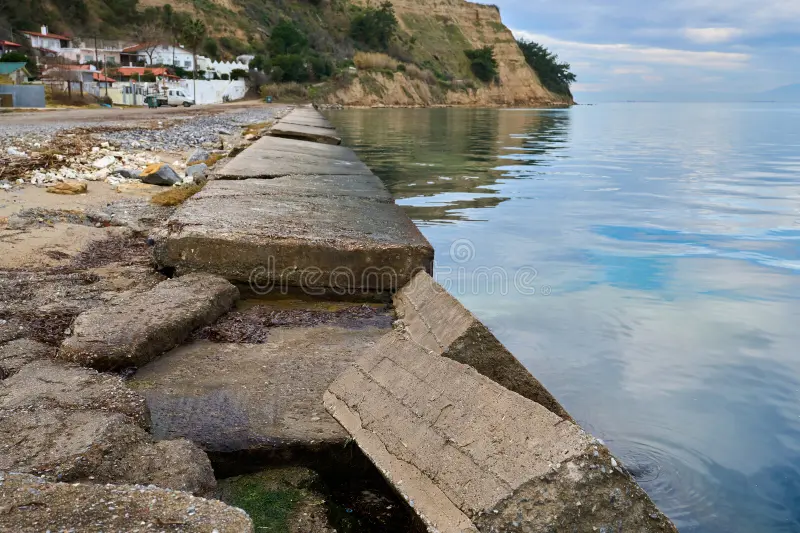
Florida’s waterfront properties are among the most desirable in the country — and among the most demanding when it comes to structural maintenance. The same tidal forces, storm surges, and saltwater exposure that make waterfront living appealing also relentlessly attack the seawalls that protect those properties from erosion and flooding. Understanding why seawalls fail and what professional intervention involves is essential knowledge for any Florida waterfront property owner.
What Seawalls Actually Do
A seawall is a vertical or near-vertical structure installed along the waterline to retain soil, prevent erosion, and protect the land behind it from wave action and tidal fluctuation. In Florida’s coastal environment, that means withstanding daily tidal cycling, periodic storm surge, boat wake, and the corrosive effects of saltwater on concrete, steel, and other construction materials.
A properly constructed and maintained seawall keeps the soil behind it from washing into the waterway, maintains the elevation and structural integrity of the property, and protects docks, boat lifts, and other waterside structures that depend on stable ground for their foundations. When a seawall begins to fail, every structure attached to or dependent on it is at risk.
The Most Common Failure Modes
Florida seawalls fail through several predictable mechanisms, most of which develop gradually before producing dramatic visible damage.
Soil erosion behind the wall is the most common initiating factor. Water infiltrates the wall through cracks, joints, and tie-back penetrations, progressively washing fine soil particles through and behind the structure. The visible surface of the wall may look intact while a void develops behind it — a situation that can result in sudden and dramatic collapse.
Tie-back rod failure is another common failure mode. Seawalls are anchored to deadman anchors in the soil behind them using steel tie-back rods. In saltwater environments, those rods are subject to corrosion. As they lose structural integrity, the wall loses its capacity to resist lateral soil pressure and begins to lean toward the water.
Concrete spalling and cracking occur as saltwater penetrates concrete seawall panels, reaches the reinforcing steel inside, causes rust expansion, and fractures the surrounding concrete. Once this process begins, it accelerates — each crack admits more water, advancing the corrosion further.
Settlement and heaving of the cap or footing can result from soil movement, utility line failures, or changes in groundwater level, destabilizing the top of the wall and creating gaps that admit water and debris.
Recognizing Warning Signs Early
Early detection of seawall damage dramatically reduces repair costs. Property owners should watch for gaps or cracks in the wall face or cap, soil sinkholes near the base of the wall on the land side, the wall leaning or bowing toward the water, water staining or mineral deposits indicating active water infiltration, and erosion of vegetation or hardscape near the waterline.
Any of these signs warrants prompt evaluation by a qualified marine contractor. A wall that is repaired at the first sign of significant deterioration typically costs a fraction of one that is allowed to reach catastrophic failure.
What Professional Repair and Replacement Involves
Professional seawall marine services florida contractors bring the equipment, materials, and engineering knowledge to address seawall deterioration at every stage — from early remediation to full replacement.
Repair options include void filling using pressure-injected grout behind the wall, tie-back rod replacement or supplementation, panel repair and waterproofing, and cap reconstruction. For walls that have deteriorated beyond repair, full replacement involves driving new sheet pile panels — typically vinyl or concrete — along the waterline, installing new tie-back systems, and pouring a new cap.
Material selection is an important consideration. Vinyl sheet pile has become increasingly common in Florida residential seawall construction because it is inherently resistant to saltwater corrosion, requires less maintenance than steel or wood alternatives, and has a substantially longer service life in marine environments.
Permitting and Regulatory Requirements
Seawall construction and major repair in Florida require permits from multiple agencies, including the Florida Department of Environmental Protection and, in many areas, the Army Corps of Engineers. Experienced marine contractors manage this permitting process — understanding the applicable regulations, preparing required documentation, and ensuring that work is conducted in compliance with environmental and construction standards.
The Cost of Waiting
Seawall deterioration follows a compounding logic: each failure mode enables and accelerates others. A small crack becomes a pathway for erosion. A voided area behind the wall accelerates tie-back failure. A leaning wall approaches collapse. Property owners who address problems early spend less and protect more. Ignoring visible warning signs until the situation becomes dramatic is one of the most expensive decisions a waterfront property owner can make.