
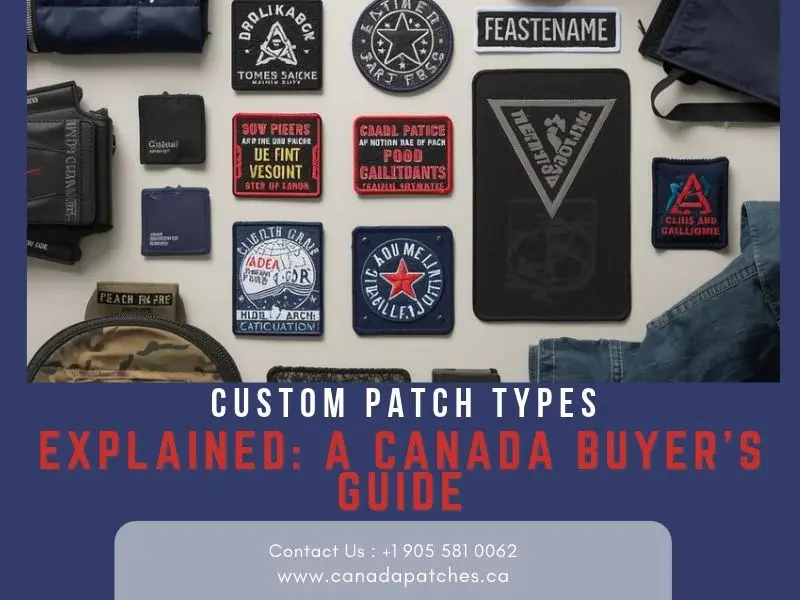
Ordering custom patches for the first time can feel more complicated than it should be. Between fabric types, backing options, and finishing styles, it’s easy to end up overwhelmed before you’ve even picked a design. If you’re outfitting a sports team, branding staff uniforms, or just adding a personal touch to a jacket, knowing your options ahead of time saves you from a costly reorder.
This guide breaks down the patch types available across Canada, how they’re made, and where each one actually works best. By the end, you’ll know exactly which patch fits your project and why.
What Makes One Patch Different From Another
Before comparing patch types, it helps to know what actually separates them. Three things decide how a patch looks, feels, and holds up over time.
- First is the material. Thread, plastic, leather, or woven fabric all give a completely different texture and finish.
- Second is the backing, which determines how the patch attaches to your fabric. Some are sewn on for a permanent hold, while others use heat or adhesive for quicker application.
- Third is the edge finish, which affects both durability and appearance. A clean, stitched border holds up better on items that get washed often, while a simpler cut edge works fine for lighter use.
Once you understand these three factors, choosing between patch types becomes a lot easier.
The Main Types of Custom Patches
Each patch type brings something different to the table, so picking the right one comes down to how and where you’ll use it.
1- Embroidered Patches
Embroidered custom patches Canada patches are stitched with colored thread on a fabric base, giving them a raised, textured look and feel. The stitching adds thickness, which helps the design hold its shape even after repeated washing and daily wear.
This makes them a solid pick for work uniforms, team jerseys, and everyday apparel where the patch needs to survive a busy season, not just look good on day one.
2- Woven Patches
Woven patches use much finer threads than embroidery, so they can handle small text and detailed logos without the design turning into a blur of stitches. The finish is flatter too, so there’s no raised texture getting in the way of fine lines. If your design includes lettering, thin borders, or a logo with a lot of small elements, woven usually reproduces it more accurately than embroidery can.
3- PVC Patches
Made from flexible plastic, PVC patches resist water, fading, and rough weather far better than fabric-based options. They don’t fray at the edges, and the color stays sharp even after months outdoors.
That’s why they’re a common choice for outdoor gear, tactical vests, and anything that spends real time exposed to sun or rain.
Many businesses sourcing patches choose PVC specifically for this kind of durability, since the material holds its color and shape season after season without cracking or peeling.
4- Leather Patches
Leather patches give a rugged, classic finish that works well on jackets, caps, and bags. Logos or names can be embossed, debossed, or printed directly onto the surface, so the design becomes part of the material rather than something layered on top.
This makes leather a popular option for brands wanting a premium, long-lasting look rather than a quick promotional item.
5- Chenille Patches
Chenille patches have a soft, fuzzy texture created from looped yarn stitched onto a felt or fabric base. The raised, plush finish stands out on varsity jackets and school apparel, especially for bold letters, numbers, or mascots that need to be seen from across a room. It’s a style built for visibility over subtlety.
6- Printed Patches
Printed patches use a dye-sublimation process that transfers full-color designs directly into the fabric rather than stitching them on top. This makes them ideal for photo-quality artwork, gradients, or any design with fine color detail that embroidery or weaving can’t reproduce as cleanly. They also tend to have a smoother, thinner profile than stitched patches.
How a Patch Attaches to Your Fabric
The backing decides how a patch stays on, and how easy it is to apply.
Sew-on backing gives the strongest hold and is standard for uniforms and gear that gets washed often.
Velcro backing lets you attach and remove patches whenever you want, which is useful for tactical vests, backpacks, or anything that switches designs regularly.
If you’re looking for something quick and beginner-friendly, iron on patches Canada options are widely available and only need a household iron to apply. There’s no sewing involved, and the patch bonds directly to the fabric within a few minutes, making it a practical choice for personal projects or last-minute additions to clothing.
| Backing Type | Best For | Application |
| Sew-on | Uniforms, heavy-wear gear | Needle and thread |
| Iron-on | DIY projects, quick fixes | Household iron |
| Velcro | Removable or swappable patches | Peel and attach |
What to Check Before You Order
A few practical checks before placing your order can save you from delays or a batch that doesn’t hold up.
- Order quantity: Larger orders usually bring the per-patch price down, so check bulk pricing before settling on a small batch.
- Durability needs: If the patch goes on gear used outdoors or washed often, prioritize materials like PVC or embroidered over lighter options.
- Turnaround time: Ask for a clear production timeline upfront, especially if you’re ordering for a specific event or season.
- Sample quality: Request a sample or proof before the full run, so you can check stitching, colour accuracy, and edge finishing.
- Backing type: Confirm the backing matches how the item will be used, since sew-on and iron-on aren’t interchangeable once applied.
Checking these details before you order means fewer surprises once the patches arrive.
Common Questions, Answered
- How much do custom patches cost in Canada?
Prices generally range from $1 to $7 per patch, depending on size, material, and order quantity. Small orders of 10 to 25 pieces usually cost more per patch, while bulk orders of 100 or more bring the price down significantly, sometimes to $1 to $2.50 per patch for standard embroidery.
- What’s the best patch type for outdoor or tactical gear?
PVC patches are the strongest choice for outdoor or wet conditions since they’re waterproof by design and resist fading. Embroidered patches with sew-on or Velcro backing are a solid second option if you prefer a more traditional look.
- Is iron-on or sew-on backing better?
It depends on how the item will be used. Sew-on backing holds up longer through repeated washing and heavy use, making it better for uniforms and daily wear. Iron-on backing applies faster with just a household iron, which makes it a practical choice for personal projects or smaller items that won’t see constant wear.
- How long does it take to receive custom patches in Canada?
Most orders ship within 7 to 10 business days after the design is approved, though this can vary by patch type and order size. Larger or more detailed designs, like bullion or chenille, often take longer to produce.
- Is there a minimum order quantity for custom patches?
Minimums vary by supplier, but many allow orders as small as 5 to 25 pieces. Larger minimums are common for specialty types like bullion, since the hand-stitched process makes small runs less practical.
Your Next Step
Choosing a custom patch comes down to matching the material and backing to how it’ll actually be used. Embroidered and PVC patches suit daily wear and outdoor gear, while woven and printed options work better for detailed logos or full-color designs. The backing matters just as much as the patch itself, since sew-on holds up longer while iron-on gets the job done faster for smaller projects.
Before placing an order, confirm your quantity, check a sample if you can, and make sure the turnaround time fits your timeline. Getting these details right the first time means the patch does its job without needing a reorder.