
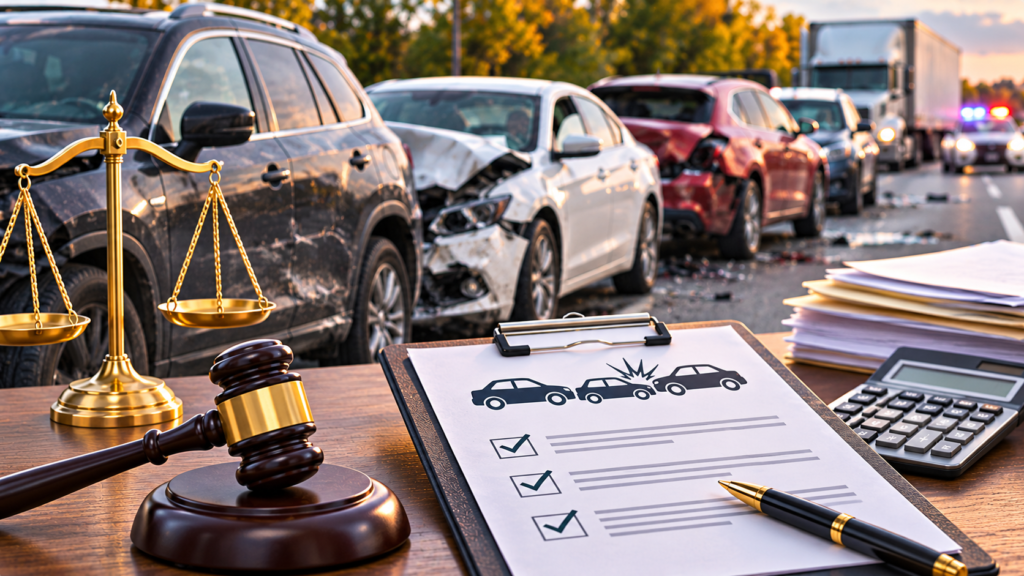
Long Island’s crowded parkways, busy local roads, and daily commuter traffic can turn a sudden collision into a chain-reaction crash involving several vehicles. For an injured person, the aftermath can quickly become confusing, especially when drivers and insurers offer different versions of how the wreck unfolded. A multi-vehicle pileup creates multiple injury claims, disputed accounts, and overlapping insurance policies, so determining responsibility requires a close look at each vehicle’s role. The financial side can be equally difficult when medical care interrupts work, or an injury affects daily life for months.
Rather than accepting an insurer’s early view of the crash, injured people can benefit from understanding how New York law assesses responsibility and compensation. A Long Island car accident lawyer from Friedman & Simon can review the circumstances, available coverage, and collision-related losses. This approach gives an injured person a clearer basis to pursue compensation that fairly reflects the harm the crash caused and its consequences.
Evidence That Connects Each Impact
Photographs should show the vehicle’s position, damage, skid marks, debris, traffic signals, and road conditions. Video from traffic cameras, nearby businesses, dashboard systems, or passengers can clarify the order of events.
A police report provides insightful information, but it does not decide civil liability. Investigators compare the report with witness statements, vehicle data, phone records, inspection findings, and accident reconstruction evidence. Medical records then connect particular injuries to the collision.
A prompt medical examination also protects the claim. Some injuries appear gradually, especially neck, back, and head injuries. Gaps in treatment give insurers an argument that the crash did not cause the condition or that it was less serious than claimed.
After a serious collision, legal guidance should match the location, the number of vehicles, and the available insurance coverage. A car accident lawyer f can review the crash sequence, identify responsible parties, and explain which records support a compensation claim. Early advice also helps protect statements, deadlines, and evidence before insurers build their positions.
How Fault Develops In A Pileup
Investigators examine each impact in order. A driver who follows too closely, speeds, changes lanes carelessly, or drives while distracted can cause the initial collision. Another driver might then strike a stopped vehicle after failing to leave enough space.
The first crash does not automatically make that driver responsible for every injury. A later driver can share fault if that person had enough time to stop or reacted unreasonably. Weather, road conditions, vehicle defects, and poor visibility can also affect responsibility.
State law controls how courts assign fault. Some states reduce compensation based on an injured person’s percentage of responsibility. Other states limit recovery after the person reaches a specified fault percentage. An attorney must apply the rules in the state where the crash occurred.
How Compensation Is Calculated
A claim usually begins with documented economic losses. These losses include emergency care, hospital treatment, medication, rehabilitation, transportation to appointments, vehicle damage, and lost wages during recovery.
Future expenses require careful proof. A serious injury might require additional treatment, assistive equipment, home changes, or reduced work capacity. Medical opinions, employment records, pay statements, and vocational evidence help connect those projected losses to the collision.
Non-economic damages address pain, emotional distress, physical limitations, sleep problems, and reduced enjoyment of daily activities. Their value depends on the injury, recovery, medical findings, and effect on daily routines. A settlement should account for both present harm and documented future consequences.
Managing Multiple Insurance Claims
Several insurers can become involved in a single pileup. Each driver may carry separate liability coverage, and the injured person’s policy may include uninsured or underinsured motorist protection. Commercial vehicles, rideshare vehicles, and employer-owned vehicles can create additional coverage questions.
Insurance companies review liability and damages separately. An insurer might accept that its policyholder caused one impact while disputing whether that impact caused a particular injury. Claimants should avoid recorded statements, broad medical releases, or quick settlements before reviewing the full medical outlook.
A settlement with one insurer can affect claims against other parties. Release language matters because it might end claims connected to additional drivers or insurers. Legal review helps preserve rights while the investigation continues.
Steps That Protect A Claim
An injured person should report the crash, seek medical care, follow prescribed treatment, and keep copies of every record. A simple daily log can document pain levels, missed work, sleep disruption, and limits on daily activities.
Preserve photos and contact information promptly. Also avoid social media posts, because insurers can use isolated images or comments against a claim. Keep communication with insurers accurate, brief, and limited to known facts.
Each state sets deadlines for filing injury and property claims. Those deadlines can differ when a government vehicle, a minor, or a fatality is involved. Waiting until treatment ends can therefore create a legal problem.
Conclusion
Fair compensation after a pileup depends on proving which impact caused each injury and documenting every resulting loss. Injured people should obtain medical care, preserve photographs and records, avoid premature statements, and review all settlement releases before signing. A prompt case assessment can identify insurance layers, filing deadlines, and evidence that could disappear. The practical next step is to gather the crash report, medical records, wage documents, and policy information for a focused legal review.