
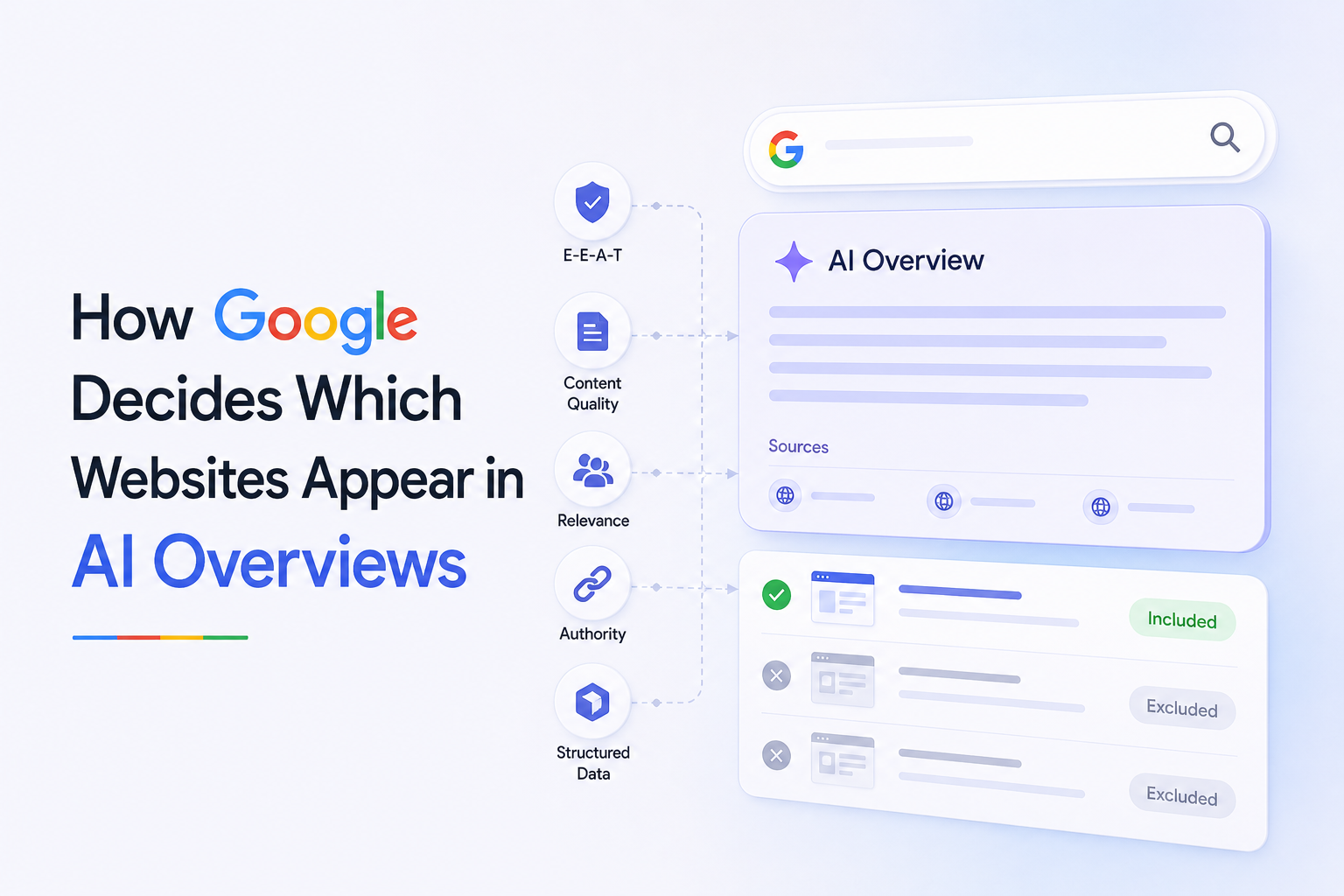
Google Search has evolved far beyond displaying a simple list of blue links. With the introduction of AI Overviews, users can now receive summarized answers generated from multiple trusted sources directly within search results. This shift is changing how people discover information and how businesses compete for online visibility. Instead of focusing only on ranking in traditional search results, website owners must now create content that demonstrates expertise, credibility, and real value if they want to be considered for AI-generated responses.
Although Google has not published an exact formula for selecting websites that appear in AI Overviews, it has provided clear guidance on the qualities it values. Helpful, accurate, and trustworthy content remains the foundation. Websites that consistently publish original information and satisfy user intent are more likely to become reliable sources for AI-powered search experiences.
Content Quality Comes First
Google’s AI systems prioritize content that provides complete, accurate, and well-structured answers to user questions. Articles that simply repeat information already available elsewhere are less likely to be referenced than those offering unique insights, practical advice, or firsthand experience.
Content should be written for people rather than search engines. Clear explanations, logical organization, and language that is easy to understand help both readers and AI systems interpret information more effectively. Comprehensive articles that address a topic from multiple perspectives also have a better chance of being recognized as valuable resources.
Experience, Expertise, and Trust Matter
Google continues to emphasize Experience, Expertise, Authoritativeness, and Trustworthiness (EEAT) when evaluating content quality. AI Overviews rely heavily on information that appears credible and comes from sources demonstrating genuine knowledge of a subject.
Businesses can strengthen trust by publishing expert-written articles, citing reliable sources when appropriate, maintaining updated content, and providing transparent information about their organization. Author profiles, company credentials, and consistent publishing standards contribute to a stronger reputation over time.
Rather than attempting to manipulate rankings, businesses should focus on becoming dependable sources of information within their industry.
User Intent Is More Important Than Keywords
Modern search algorithms evaluate whether content truly answers the question behind a search rather than simply matching keywords. AI Overviews aim to provide concise, useful responses, so websites that directly address user intent are more likely to be referenced.
Understanding why someone performs a search is essential. Informational content, buying guides, comparisons, tutorials, and problem-solving articles each serve different purposes. Aligning content with those intentions improves its usefulness for both readers and AI systems.
Many businesses investing in digital marketing services are now expanding their SEO strategies to include content optimized for AI-driven search experiences rather than focusing exclusively on traditional keyword rankings.
Technical Website Quality Still Matters
Even the highest-quality content benefits from strong technical optimization. Google continues to evaluate factors such as website speed, mobile responsiveness, crawlability, structured data, internal linking, and secure browsing.
Fast-loading pages provide better user experiences while making it easier for search engines to access and understand website content. Logical navigation and clear page structures also help Google connect related topics throughout a website.
Technical SEO alone cannot guarantee inclusion in AI Overviews, but it supports the visibility of valuable content by improving accessibility and overall website quality.
Building Topical Authority
Google increasingly favors websites that consistently publish useful information within a particular subject area instead of covering unrelated topics. Developing topical authority demonstrates expertise and helps search engines better understand a website’s focus.
Rather than creating isolated articles, businesses should build interconnected content covering beginner, intermediate, and advanced topics. This creates a comprehensive resource that improves user experience while strengthening overall search visibility.
Many experienced digital marketing agencies Dubai now recommend topic clusters and content hubs because they help establish authority while supporting both traditional SEO and AI-powered search visibility.
Keeping Content Fresh and Relevant
AI Overviews prioritize information that reflects current knowledge whenever possible. Businesses should regularly review older content, update statistics, improve explanations, replace outdated references, and expand articles as industries evolve.
Fresh content signals that a website remains active and committed to providing accurate information. Regular updates also help maintain user trust while ensuring search engines continue viewing pages as relevant resources.
Consistency matters just as much as publishing frequency. Maintaining high editorial standards across all content builds long-term credibility that supports future search performance.
Conclusion
AI Overviews represent a significant shift in how people discover information online. While Google’s exact selection process remains proprietary, the principles behind successful content remain clear. Websites that provide accurate information, demonstrate expertise, prioritize user intent, maintain technical quality, and consistently publish trustworthy content are more likely to earn visibility in AI-powered search experiences.
Instead of chasing algorithm changes, businesses should focus on creating genuinely helpful resources that answer real questions and solve real problems. As AI continues to reshape search, organizations that invest in quality, credibility, and long-term authority will be better positioned to reach audiences through both traditional rankings and AI-generated search results.